Global Political Shifts: Ukraine Conflict, Western Political Turmoil, and the Specter of Trump

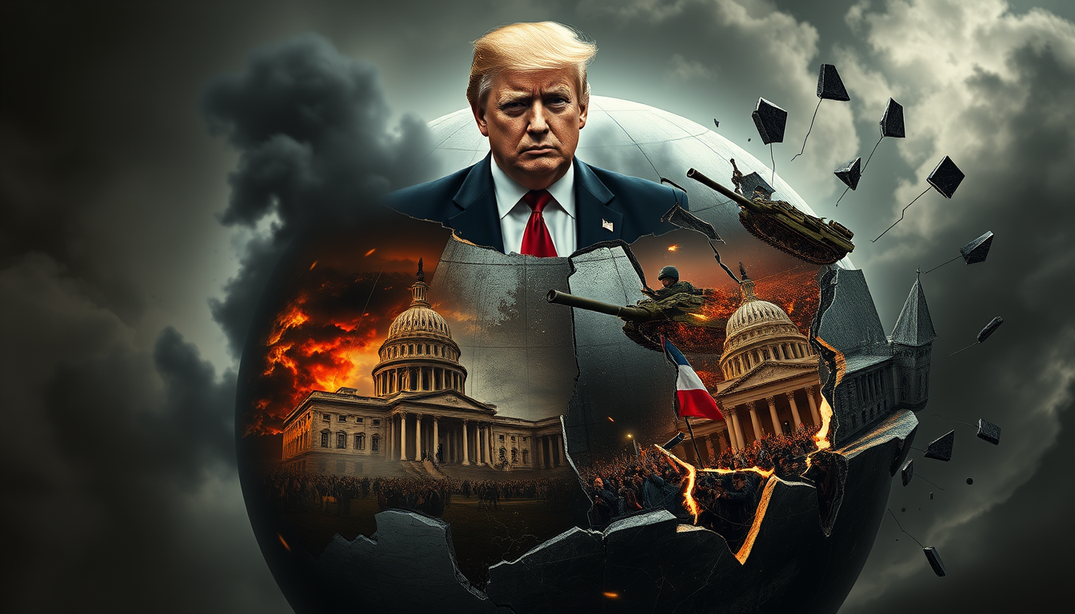
The global political landscape resembles a perpetually churning storm, a maelstrom of interconnected crises and power plays. The ongoing conflict in Ukraine serves as the tempest's eye, radiating instability outwards. Simultaneously, Western political parties grapple with internal fractures and ideological clashes, while the enduring, almost spectral, presence of figures like Donald Trump continues to haunt the halls of power. This isn't merely a collection of isolated incidents; it's a complex web of cause and effect, where decisions made in one nation reverberate across continents. Are we, as some analysts suggest, witnessing a fundamental and irreversible realignment of global power, a tectonic shift in the established order? Or are these merely temporary disruptions, albeit severe ones, that will eventually subside, allowing a new equilibrium to emerge? The answer remains elusive, shrouded in uncertainty. Yet, understanding the underlying trends – the motivations, the vulnerabilities, and the potential consequences – is absolutely crucial for anyone attempting to navigate the treacherous waters of the modern world. This article will dissect these interconnected issues, analyzing their causes, dissecting their impacts, and speculating on their potential future trajectories. It’s not just about reporting the news; it’s about understanding the forces shaping our world, even if those forces seem chaotic and unpredictable. Buckle up, because it's a bumpy ride.
Ukraine's Ongoing Struggle: A Test of Western Resolve and a Crucible of Geopolitical Change
The brutal reality of the war in Ukraine continues to dominate international headlines, a grim reminder of the fragility of peace and the enduring threat of aggression. Recent reports, such as those from the Associated Press, detail Russian advances near Kursk, highlighting the persistent vulnerability of critical infrastructure and the ever-present danger of further escalation. CNN corroborates these reports, underscoring the sustained threat to Ukrainian sovereignty and the agonizing humanitarian crisis that continues to unfold. But let's cut through the headlines: what does this relentless pressure mean for Ukraine's long-term ability to defend itself? What level of sustained support – military, economic, and humanitarian – will be required from its allies to prevent a catastrophic collapse? And perhaps more importantly, is that support sustainable given the internal political pressures in many Western nations?
The New York Times delves into the intricate and often frustrating complexities of a potential peace plan for Ukraine, exposing the formidable obstacles that stand in the way of achieving a lasting and equitable resolution. Can a viable compromise ever be reached, one that genuinely respects Ukraine's sovereignty and territorial integrity while simultaneously addressing Russia's perceived (or manufactured) security concerns? Or are we trapped in a zero-sum game, where any concession by one side is seen as a victory for the other? The Independent offers ongoing, comprehensive updates on the war, providing valuable perspectives on the roles played by key figures such as Trump, Putin, and Zelensky, offering a crucial overview of the complex geopolitical dynamics that are constantly shifting beneath the surface.
Consider, for instance, the potential impact of a change in US administration. Would a less committed US president embolden Russia, leading to further aggression and a potential redrawing of the map of Europe? Or would it force European nations to step up and take greater responsibility for their own security, potentially leading to a stronger, more unified Europe? The answers to these questions are far from clear, but they underscore the profound implications of the conflict in Ukraine, not just for the region, but for the entire global order. Furthermore, the conflict has exposed the limitations of international institutions like the UN, which have struggled to effectively address the crisis. What reforms are needed to ensure that these institutions can play a more meaningful role in preventing and resolving future conflicts? The war in Ukraine is not just a tragedy; it's a wake-up call, forcing us to confront uncomfortable truths about the state of the world and the challenges we face in building a more peaceful and just future. According to a report by the Council on Foreign Relations, the war has also accelerated discussions about NATO expansion and the need for stronger collective defense mechanisms. Council on Foreign Relations This highlights how regional conflicts can trigger much larger geopolitical consequences.
Trump's Enduring Influence: A Wrench in the Gears of US Foreign Policy
Donald Trump's views on the conflict in Ukraine, regardless of whether he holds office or not, continue to wield considerable influence, particularly within the Republican party and among a significant segment of the American population. This is not merely a matter of political opinion; it's a reflection of a deeper ideological divide within the US, one that questions the very foundations of American foreign policy and its role in the world. NBC News reports that Trump is reportedly considering restarting aid to Ukraine only if a "minerals deal" is in place, a proposition that raises serious questions about the very nature of international relations and the conditions under which the US is willing to support its allies. Is this a pragmatic, albeit cynical, approach to securing American interests, ensuring that US taxpayers receive tangible benefits in exchange for their support? Or is it a dangerous form of transactional diplomacy, one that could ultimately undermine Ukraine's efforts to defend itself and send a chilling message to other nations facing aggression?
Trump's past actions, such as pausing tariffs on Mexico while continuing trade talks with Canada (as covered in this news.com.au live coverage), clearly demonstrate a willingness to use economic leverage as a blunt instrument to achieve specific political goals. He sees international relations not as a complex web of shared interests and mutual obligations, but as a series of individual transactions, where every interaction is an opportunity to extract maximum value for the United States. How might this approach be applied to the Ukraine conflict, and what impact would it have on the broader geopolitical landscape? Would it embolden other nations to pursue similar transactional approaches, potentially leading to a breakdown of international norms and a return to a more Hobbesian world order?
Furthermore, Trump's rhetoric often undermines the credibility of international institutions and alliances, fueling a sense of isolationism and skepticism towards multilateral cooperation. This has profound implications for the future of the liberal international order, which has been the foundation of global stability for decades. According to a Pew Research Center study, support for NATO has declined among Republicans in recent years, reflecting Trump's influence on the party's base. Pew Research Center This erosion of support for international alliances weakens the collective security architecture and makes it more difficult to respond effectively to global challenges. The question remains: can the US maintain its leadership role in the world if it continues down this path of transactional diplomacy and isolationist rhetoric? Or will it cede its influence to other powers, potentially leading to a more multipolar and unstable world? The answers to these questions will have profound consequences for the future of international relations.
UK's Political Quagmire: Reform UK's Internal Strife and Conservative Party's Identity Crisis
The United Kingdom's political scene is currently experiencing a period of intense turbulence, characterized by the rise of Reform UK (formerly the Brexit Party) and ongoing internal conflicts within the ruling Conservative party. This isn't just a matter of personalities or political maneuvering; it's a reflection of deeper societal divisions and a growing disillusionment with the established political order. The Guardian reports on the escalating discontent within Reform UK, with some members openly turning against Nigel Farage, the party's charismatic but often divisive leader. This internal strife raises serious questions about the party's long-term stability and its ability to effectively capitalize on public dissatisfaction with the mainstream political parties. Can Reform UK overcome these internal divisions and present a united front to the electorate? Or will it ultimately implode, consumed by infighting and personal rivalries?
Sky News provides detailed coverage of the escalating feud between Nigel Farage and Rupert Lowe, further exposing the deep divisions within the right-wing political landscape. These public spats not only damage the party's image but also undermine its credibility as a viable alternative to the Conservatives. The Conservative party, meanwhile, is grappling with its own identity crisis, struggling to reconcile its traditional values with the demands of a rapidly changing society. The party is torn between different factions, each with its own vision for the future of the country. Can the Conservatives bridge these internal divisions and regain the trust of the electorate? Or will they continue to drift further into irrelevance, paving the way for a Labour victory in the next general election?
The rise of smaller parties like the Green Party and the Liberal Democrats further complicates the political landscape, fragmenting the vote and making it more difficult for any single party to achieve a majority. This could lead to a period of coalition governments and political instability, making it even harder to address the pressing challenges facing the country, such as the cost of living crisis, the NHS backlog, and the climate emergency. According to recent polling data, support for both the Conservative and Labour parties has declined, while support for smaller parties has increased. Ipsos This suggests that voters are increasingly looking for alternatives to the traditional political establishment. The UK's political future remains uncertain, but one thing is clear: the country is facing a period of profound change and upheaval.
Domestic Policy Shifts: Balancing Worker Rights and Public Sector Efficiency
Beyond the dramatic headlines of international affairs and political infighting, significant shifts are also occurring in domestic policies, reflecting a broader debate about the role of government, the rights of workers, and the pursuit of efficiency. In Australia, the Sydney Morning Herald reports that the "right to disconnect" for public servants will be repealed under the Coalition government, a decision that sparks immediate controversy and raises fundamental questions about the balance between work and personal life. Is this a necessary step to improve productivity and ensure that government services are delivered efficiently? Or is it a short-sighted move that will ultimately lead to burnout, stress, and a decline in the quality of public services?
Conversely, in the UK, Sky News reports that senior civil servants will have their pay linked to performance, a move designed to incentivize better performance and improve accountability within the public sector. But will this system truly achieve its intended goals? Or will it simply create a culture of cutthroat competition and undue stress, potentially leading to unethical behavior and a focus on short-term gains at the expense of long-term sustainability? These seemingly disparate policy shifts reflect a broader trend towards greater emphasis on productivity and efficiency in the public sector, a trend driven by budgetary constraints, increasing public expectations, and a desire to demonstrate value for taxpayer money.
However, the long-term consequences of these policies remain uncertain. Will they ultimately lead to a more efficient and effective public sector, one that is better equipped to meet the challenges of the 21st century? Or will they simply exacerbate existing problems, leading to a demoralized workforce and a decline in the quality of public services? According to a study by the Institute for Government, performance-based pay systems can have unintended consequences, such as encouraging gaming of the system and discouraging collaboration. Institute for Government This highlights the need for careful design and implementation of these policies to avoid undermining their intended goals. The debate over worker rights and public sector efficiency is likely to continue for years to come, as governments grapple with the challenge of balancing competing priorities in an increasingly complex and demanding world.
Local Election Results and Shifting Political Sentiments
Local election results, often overlooked in the grand sweep of national and international news, provide invaluable insights into the undercurrents of political sentiment and the shifting allegiances of voters. These elections, fought on local issues and often decided by small margins, offer a microcosm of the broader political landscape, revealing emerging trends and exposing vulnerabilities in the major parties. In Western Australia, the ABC analyzes the key lessons learned from the recent election, while The West Australian reports on Labor's Simone McGurk potentially losing her seat to an independent candidate. These results suggest a growing dissatisfaction with the major parties and an increasing willingness among voters to support independent candidates who can address local concerns and offer a fresh perspective.
But why are voters turning away from the established parties? Is it a reflection of broken promises, a failure to address local issues, or a broader sense of disillusionment with the political establishment? And what does this trend mean for the upcoming federal elections? Will independent candidates continue to gain ground, potentially disrupting the traditional two-party system and forcing the major parties to adapt to a changing political landscape? The ABC also reports on a security breach at Avalon Regional Airport, highlighting potential vulnerabilities in security protocols and raising questions about the effectiveness of current measures. Incidents like these, while seemingly isolated, can have a significant impact on public confidence and trust in government institutions.
Furthermore, local election results can often foreshadow broader political trends, providing valuable insights into the issues that are resonating with voters and the strategies that are proving to be most effective. By analyzing these results, political analysts and strategists can gain a better understanding of the electorate and develop more targeted and effective campaigns. According to a study by the Australian National University, local election results are often a reliable predictor of future federal election outcomes. Australian National University This underscores the importance of paying attention to local politics and understanding the forces that are shaping the political landscape at the grassroots level.
Conclusion: A World in Flux – Navigating Uncertainty with Vigilance and Critical Thinking
The mosaic of events dissected in this article paints a vivid, if unsettling, picture of a world teetering on the edge of profound transformation. It's a world characterized by simmering conflicts, deep-seated political divisions, and the ever-shifting sands of international alliances. The war in Ukraine, a brutal and protracted conflict, remains a major source of global instability, casting a long shadow over the international order. Simultaneously, internal struggles within Western political parties, fueled by ideological clashes and shifting demographics, add layers of complexity to an already volatile situation. And looming over it all is the enduring influence of figures like Donald Trump, whose populist rhetoric and transactional approach to foreign policy continue to disrupt established norms and challenge the foundations of international cooperation.
These trends are not isolated incidents; they are interconnected threads in a complex web of global challenges. Domestic policy shifts, driven by a desire for greater efficiency and accountability, reflect a broader struggle to adapt to a rapidly changing world. But their long-term consequences remain shrouded in uncertainty, raising questions about the future of work, the role of government, and the balance between individual rights and collective responsibilities. As we navigate this increasingly complex and uncertain future, it is absolutely crucial to remain informed, engaged, and above all, critical in our thinking. We must resist the temptation to accept simplistic narratives and easy answers, and instead, embrace the challenge of understanding the underlying forces that are shaping our world.
Will these trends ultimately lead to a more fragmented and unstable world, characterized by increased conflict and a decline in international cooperation? Or will they pave the way for a new era of collaboration and progress, driven by a renewed commitment to shared values and a recognition of our common humanity? The answer, of course, remains unknown. But by understanding the forces at play, by challenging assumptions, and by engaging in open and honest dialogue, we can better prepare for the challenges and opportunities that lie ahead. The future is not predetermined; it is shaped by the choices we make today. It's our responsibility to ensure that those choices are informed by knowledge, guided by reason, and driven by a commitment to building a more just and peaceful world for all. The stakes are simply too high to do otherwise.