Global Outlook 2026: Economic Resilience, Emerging Security Threats, and the Evolution of Digital Policy


As the international community crosses the threshold into 2026, the global landscape is defined by a volatile intersection of market recalculations, fundamental shifts in public safety legislation, and a strategic tightening of international borders. The opening days of the year have served as a microcosm for the tensions of the decade: a desperate balance between technological acceleration and the aging infrastructure of physical security. From the devastating structural failures in the Swiss Alps to the fluctuating indices of Asian markets, 2026 has signaled a departure from the "recovery era" of the early 2020s into a period of rigorous institutional hardening. Central banks, judicial bodies, and legislative assemblies are no longer merely reacting to crises; they are proactively drafting the blueprints for a decade where digital surveillance and financial decentralization must coexist with traditional sovereignty. This report synthesizes the critical events, fiscal data, and policy shifts currently impacting global stability, offering a forensic look at the risks and opportunities defining the new year.
Global Markets and the New Financial Frontier
The dawn of 2026 has brought a measured, almost surgical start to the trading year. Institutional investors are navigating a landscape defined by moderate gains and cautionary indices, largely seen as a psychological reset following the high-velocity volatility of the previous fiscal year. According to Bloomberg, global equity markets began the year tepidly, reflecting a "wait-and-see" approach as traders digest a series of end-of-year fiscal reports that suggest a cooling of consumer demand in Western economies. This caution is not merely a reaction to numbers but a strategic pause as the market awaits clarity on interest rate trajectories and the ripple effects of energy sector transitions. The sentiment was mirrored across the Pacific, where CNBC reported on the initial performance of the ASX 200 and the Hang Seng Index. These markets established their initial 2026 thresholds with a focus on tech-resilience and manufacturing sustainment, yet they remain tethered to the health of the cooling Chinese real estate sector.
In stark contrast to the West’s hesitation, the Indian subcontinent has emerged as a primary engine for early-year momentum. As reported by the Deccan Herald, the Sensex rallied in early trade, gaining 158 points and signaling robust domestic confidence. This rally is underpinned by a massive expansion in the industrial and digital infrastructure sectors. Analysts suggest that India's liquidity is being driven by localized support mechanisms for small and medium enterprises (SMEs). For instance, TaxBuddy highlights that specialized MSME loans have become a cornerstone of the region's economic strategy, providing the necessary capital for small enterprises to scale even as global credit conditions tighten elsewhere. This localized resilience suggests a "decoupling" of sorts, where emerging markets are finding internal growth levers to bypass global stagnation.
Simultaneously, the digital asset market is undergoing its most significant structural evolution since its inception. The start of 2026 marks a milestone for cryptocurrency derivatives and institutional adoption. BeInCrypto emphasizes that a massive batch of Bitcoin and Ethereum options expired as the year began, forcing a significant re-evaluation of price floors and liquidity requirements for digital desks. This expiration event is no longer an isolated "crypto" incident; it now carries systemic weight as major hedge funds are deeply integrated into these positions. Furthermore, the infrastructure of these markets is shifting toward prediction-based finance. According to DL News, the entry of titans like Coinbase into the prediction market space is poised to challenge existing platforms like Polymarket and Kalshi. This move suggests that "event-betting" is being legitimized as a mainstream financial instrument, allowing participants to hedge against geopolitical outcomes as if they were commodities.
Public Safety and the Architecture of Legal Modernization
Domestically, 2026 is the year of the "Safety Statute." A wave of landmark laws has taken effect, aimed at tightening the belt of public order and refining the social contract between the state and its citizens. In California, the legislative focus has turned sharply toward the integration of AI and road safety. As reported by FOX LA, new driving laws now mandate higher levels of accountability for both drivers and automated assistance systems, reflecting a state-wide trend toward reducing traffic fatalities through tech-enforced compliance. These laws include stricter penalties for distracted driving and new requirements for "black box" data accessibility in the event of accidents. Nevada has followed a similar path, with 2 News Nevada reporting that new statutes have overhauled both public safety protocols and healthcare accessibility, indicating a regional shift toward viewing public safety as a holistic integration of law enforcement and medical response-time efficiency.
The success of these legislative pushes is often touted by municipal leaders who are seeing the fruits of long-term community policing and data-driven interventions. The Baltimore Mayor’s Office issued a joint statement celebrating what they termed "historic progress" in public safety throughout 2025. By leveraging smart-city technologies and community-led violence interruption programs, Baltimore has seen a measurable decline in violent crime, providing a potential template for other urban centers grappling with post-pandemic social volatility. This "Baltimore Model" is being watched closely by urban planners globally as a possible solution to the rising tide of urban instability.
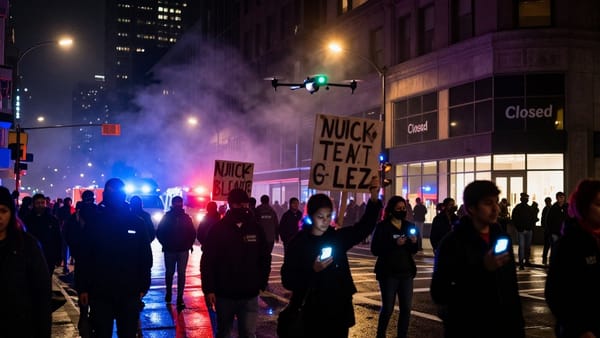
However, this transition toward a "safer" society is being met with fierce resistance from civil liberties advocates. The Electronic Frontier Foundation (EFF) has issued a scathing year-end review, arguing that 2025 was a year where governments systematically chose invasive surveillance over fundamental privacy. The EFF’s analysis highlights the proliferation of automated license plate readers (ALPRs), facial recognition in public housing, and the erosion of digital anonymity. They argue that while the crime statistics might show short-term improvement, the long-term cost is a "surveillance-industrial complex" that will be nearly impossible to dismantle. This tension between the feeling of safety and the reality of liberty is expected to be the defining legal debate of 2026, as cases regarding the Fourth Amendment and digital data ownership head toward the highest courts.
International Crises and High-Stakes Jurisprudence
While legislative bodies debate the future of privacy, the start of 2026 has been marked by tangible, visceral tragedies that underscore the vulnerability of global tourism and physical infrastructure. In Switzerland, the "inferno horror" at the Crans-Montana ski resort has sent shockwaves through the European hospitality industry. A massive fire decimated a popular entertainment venue during peak holiday season. According to the Associated Press, the blaze at the Le Constellation resort overwhelmed local emergency services, necessitating an international response. The Guardian reported that what began as a New Year's celebration rapidly turned into a desperate rescue mission, with eyewitnesses describing a catastrophic failure of fire-suppression systems. Live updates from the BBC indicate that the investigation is now pivoting toward criminal negligence, examining whether the surge in high-altitude tourism has outpaced the safety regulations of alpine construction.
Simultaneously, the world of high-profile crime continues to hit close to home for public officials in the United States. Residents of the Rocky Mountain region were recently shocked by a report from Sentinel Colorado regarding the death of Aurora’s former deputy city manager and his wife. The pair were found killed in their Texas home, an event that has sparked intensive multi-state investigations and highlighted the personal risks faced by those in public administration. This incident, while local in scope, contributes to a broader national anxiety regarding the safety of public servants and the rising frequency of targeted violence.
In the digital and legal spheres, the consequences of cyber-warfare are becoming increasingly severe and permanent. The "Wild West" era of ransomware is ending not with a whimper, but with heavy prison bars. According to ITPro, several cybersecurity "experts" who crossed the line into illicit ransomware campaigns are now facing 20-year prison sentences. This marks a significant shift in judicial philosophy; where once these crimes were seen as white-collar financial offenses, they are now being prosecuted with the same severity as physical extortion and domestic terrorism. At the same time, the celebrity legal circuit remains active, with ABP Live reporting on a complex lawsuit against Will Smith in Las Vegas, involving allegations of retaliation following a hotel encounter. These cases, while disparate, illustrate a year where accountability is the central theme, whether in the server room, the ski resort, or the luxury hotel suite.
Cultural Fluidity and the Hardening of Borders
The cultural narratives of 2026 are increasingly dominated by a fascinating paradox: the lightning-fast viral spread of art and the physical slowing of human movement. The global fascination with Punjabi culture reached a new peak with the performance of Babbu Singh at a recent major inaugural event. As The Daily Guardian detailed, Singh—famously known as "Babbulicious"—has become a symbol of the "transnational celebrity," where net worth and social influence are built on digital platforms that transcend traditional media gatekeepers. This cultural fluidity suggests a world that is more connected than ever through digital consumption, yet the physical reality for travelers tells a different story.
Geopolitical friction is manifesting in the most practical of ways: the passport. Diplomatic shifts have led to a sudden contraction of travel rights for Western citizens. As reported by Newsweek, U.S. citizens have lost access to two specific nations due to cooling relations and heightened security protocols. This move is part of a broader trend where visa access is being weaponized as a tool of statecraft. In 2026, the "freedom of movement" that defined the early 2000s is being replaced by a tiered system of access based on national alliances and security data-sharing agreements. For the average traveler, this means increased scrutiny, longer processing times, and a world that feels larger and more divided than it has in decades.
The business of aesthetics and lifestyle is also adjusting to this new reality of consolidation and caution. The Business of Fashion points to 2025 as the year of the "Big M&A" in the beauty and luxury sectors, predicting that 2026 will be the year of operational integration. Large conglomerates are no longer just buying brands; they are buying supply chains to protect themselves from the unpredictability of international commerce. This "inward-looking" economic strategy complements the hardening of national borders, as companies and countries alike look to secure their assets within defensible perimeters. The path forward for 2026 is one where culture moves through the cloud, but people and products move through significant, state-monitored gateways.
Conclusion: The Path Forward
The prevailing themes of 2026 thus far are accountability, territorial caution, and the rigorous application of law to once-unregulated frontiers. From the 20-year sentences handed down to cybercriminals to the comprehensive new traffic safety mandates in California, the "permissive era" of the early digital age is being replaced by a strict regulatory framework. The tragic fire in Crans-Montana serves as a somber, physical reminder that even in an age of digital transformation, the basic safety of human lives depends on the integrity of physical infrastructure and the diligence of oversight. Moving forward, the resilience of the global economy will depend on how effectively markets can absorb these regulatory shifts. While the Indian Sensex shows that domestic growth is possible amid global headwinds, the maturation of crypto-options and the rise of prediction markets suggest that the financial world is building new, more complex tools to manage the very risks that regulation aims to mitigate.
As the year unfolds, the central tension will remain the balance between state-led surveillance for the sake of public safety and the preservation of individual privacy. The "Surveillance vs. Safety" debate is no longer a theoretical exercise for academics; it is the lived reality of every citizen entering a smart-city or crossing an international border. Policy makers must decide if the temporary security afforded by invasive tech is worth the potential long-term erosion of civic trust. In 2026, the path forward is narrow, paved with data, and guarded by a renewed commitment to the rule of law. The world is not merely changing; it is being re-coded, and the success of this transition will define the stability of the global order for the remainder of the decade.