Global Market Shifts: Nvidia’s Strategic AI Consolidation and the Complexities of International Policy


The global socio-economic landscape is currently undergoing a period of rapid, high-stakes transformation as technological dominance, shifting geopolitical alliances, and escalating environmental crises intersect. This convergence is not merely a series of isolated events but a fundamental reshaping of how power is projected and maintained in the 21st century. In a landmark development for the semiconductor industry, Nvidia has moved to consolidate its lead in the artificial intelligence sector through a strategic licensing partnership with the startup Groq, signaling a pivot toward specialized AI inference that could redefine computing efficiency for decades. Simultaneously, the international community is grappling with the tangible fallout of climate policy stagnation, security breaches in high-volume decentralized markets, and evolving diplomatic stances in Eastern Europe that suggest an impending shift in the global security architecture. This report provides a comprehensive analysis of these developing trends, detailing the specific facts of the week while exploring the deep-seated long-term implications for global stability, market liquidity, and the future of international governance.
What We Know: Breaking News and Verified Facts
- Nvidia-Groq Partnership: Nvidia has entered a significant licensing agreement with chip startup Groq to integrate high-speed "LPU" (Language Processing Unit) inference technology into its ecosystem.
- Cybersecurity Breach: Polymarket has confirmed that a series of user account compromises were linked to vulnerabilities in a third-party authentication tool.
- Diplomatic Shift: Ukrainian President Volodymyr Zelensky has signaled a potential openness to peace concessions, marking a notable change in rhetoric regarding the ongoing conflict.
- Energy and Climate: Severe storms in Los Angeles have caused record flooding, while international observers warn of "policy neglect" heading into the COP30 summit.
- Market Expansion: The Sharjah Business Women Council and entities like IFZA in Dubai are reporting record growth in regional business formations and female-led entrepreneurship initiatives.
The Battle for AI Supremacy: Nvidia’s Strategic Move into Inference
In a move that has sent immediate shockwaves through the global technology sector, Nvidia has reached a landmark licensing agreement with the high-performance chip startup Groq. As reported by The New York Times, this deal represents a calculated tactical shift for Nvidia. For the past several years, Nvidia has dominated the "training" phase of artificial intelligence—the resource-heavy process of teaching models like GPT-4. However, the industry is now shifting toward "inference," the phase where those trained models actually generate responses for end-users in real-time. By licensing Groq’s specialized technology, Nvidia is moving to close a potential flank against competitors who have criticized their standard GPUs for being too power-hungry and slow for real-time inference tasks.
According to Bloomberg, this licensing deal allows Nvidia to integrate Groq’s high-speed chips, which utilize a "software-defined" architecture optimized for large language models. This move is less about a failure of Nvidia’s internal R&D and more about a strategic "moat-building" exercise. By co-opting the technology of a primary rival in the inference space, Nvidia effectively neutralizes a competitive threat while expanding its hardware portfolio to include low-latency solutions required by autonomous vehicles, high-frequency trading platforms, and real-time translation services. Industry analysts at CXO Today suggest that this strategy of "licensing instead of litigating" reflects a more mature, yet aggressive, phase of market consolidation.
As noted by Yahoo Finance, the broader implication of this deal is the potential stifling of the hardware startup ecosystem. When a behemoth like Nvidia absorbs or licenses the core intellectual property of the most promising newcomers, it creates a market environment where "exit through acquisition or licensing" becomes the only viable path for entrepreneurs. This "co-opting" of innovation ensures that Nvidia remains the central pillar of the AI economy, but it also raises significant questions for antitrust regulators. If the "inference economy"—which is expected to be ten times larger than the training market by 2030—is controlled by a single dominant hardware provider, the cost of AI access for all other industries could remain artificially high. For stakeholders, this means that while AI performance will likely increase in the short term, the diversity of the supply chain remains a critical vulnerability.
Cybersecurity Risks in Decentralized Finance and Digital Identity
While the hardware markets undergo a phase of consolidation, the digital infrastructure supporting decentralized finance (DeFi) is facing a deepening crisis of trust and security. Recent security breaches at Polymarket, the world’s leading decentralized prediction market, have highlighted a dangerous paradox: even as these platforms grow in valuation and user base, they remain tethered to vulnerable centralized intermediaries. According to CoinPaper, investigators have linked several high-profile user account compromises to flaws in a third-party login and authentication tool. The breach target was not the blockchain protocol itself, but the "on-ramp"—the service that allows users to log in using traditional email or social media credentials.
As reported by CoinDesk, this incident serves as a stark reminder that the "decentralized" label can be misleading if the user interface relies on centralized APIs. This vulnerability creates significant "bottleneck" risks. For institutional investors looking at DeFi as a way to hedge against traditional market volatility, these breaches are a significant deterrent. The financial loss in the Polymarket case is secondary to the reputational damage; if the gateway to the market is insecure, the integrity of the market data—used by many as a barometer for geopolitical events—is essentially compromised. This highlights an urgent need for "sovereign identity" solutions where users control their keys without relying on third-party login aggregators.
The implications of these breaches extend far beyond the crypto markets into the realm of digital safety legislation and civil liberties. The Electronic Frontier Foundation (EFF) argues that many political "solutions" to online security are rushed and fundamentally flawed. Specifically, the EFF warns that legislating against encryption or mandating backdoors in the name of safety actually creates more vulnerabilities for hackers to exploit. The Polymarket incident proves the EFF's point: the weakness was a centralized point of failure, not the decentralized architecture. For policymakers, the lesson is clear: robust digital safety requires the promotion of end-to-end encryption and user-controlled security protocols rather than surface-level regulations that primarily serve to increase government surveillance capabilities while leaving the back door open for cybercriminals.
Geopolitical Shifts: From Eastern Europe to East Asia
The current geopolitical landscape is defined by a shift from rigid ideological warfare to a more nuanced, pragmatism-driven diplomacy, though this transition is marked by significant social unrest. In Eastern Europe, the tone of the conflict has entered a new phase. According to CNN, President Volodymyr Zelensky has signaled a potential openness to peace concessions, a development that reflects the grueling, multi-year reality of high-intensity warfare and the strain on Western supply chains. This shift suggests that the primary objective is moving toward "preserving the state" rather than total territorial reclamation at any cost. This change in stance has profound implications for global energy markets and European defense spending, as it signals a possible move toward a frozen conflict or a negotiated settlement that could reshape NATO’s eastern flank for a generation.
In South and East Asia, civil and social tensions are testing the resilience of local governments. Reports from ABP Live highlight the tragic killing of a Hindu man in Rajbari, Bangladesh, over extortion claims. This incident is part of a broader, disturbing trend of targeted violence against minorities following recent political upheavals in the country. For the international community, this represents a significant humanitarian challenge and a threat to regional stability. If the interim government cannot ensure the safety of its diverse populations, the risk of a mass migration crisis increases, potentially destabilizing neighboring regions and complicating supply routes in the Bay of Bengal.
Meanwhile, in China, the death of a high-ranking population control official has reignited a fierce public debate over the legacy of the One-Child Policy and its role in the nation’s current economic stagnation. According to Reuters, Chinese social media platforms have seen a surge in criticism directed at past demographic controls, which are now being blamed for the country's shrinking workforce and aging population crisis. This social unrest is more than just historical venting; it reflects a deep anxiety about the future of the "Chinese Dream." As the labor force shrinks, China’s role as the "world's factory" is being challenged, forcing the government to decide between aggressive automation—likely powered by the very AI chips Nvidia is developing—or a fundamental restructuring of its social contract and pension systems. The intersection of demographic decline and technological demand is the next major frontier for Chinese domestic and foreign policy.
Climate Neglect and the Rise of Emerging Economic Hubs
Amidst these technological and political shifts, the global response to environmental volatility remains precariously disjointed. A report by RealClearPolitics suggests that the lead-up to the COP30 summit is being marred by "policy neglect." While world leaders continue to set ambitious 2050 targets, the immediate fiscal commitments required for grid modernization and climate adaptation are being deprioritized in favor of military spending and tech subsidies. This neglect has real-world consequences, as seen in Los Angeles this week. The New York Times covered a severe Pacific storm that brought record-breaking rain and flooding to Southern California, overwhelming infrastructure that was never built for such extreme cycles of drought and deluge. For businesses, this serves as a warning that climate risk is no longer a "future" variable but a "present" operational cost.
In contrast to the infrastructural challenges facing parts of the West, the Middle East is aggressively positioning itself as a hub for institutional resilience and economic diversification. The Sharjah Business Women Council has recently expanded its partnerships to integrate more women into high-growth sectors like tech and finance. This is not just a social move; it is a calculated economic strategy to double the available talent pool in the region. This aligns with the logistical and regulatory advancements discussed by IFZA regarding the streamlined "business plan" models for company formation in Dubai. By reducing the friction of starting a business, the UAE is successfully attracting global capital that is seeking a hedge against the regulatory uncertainty and social unrest seen in other parts of the world.
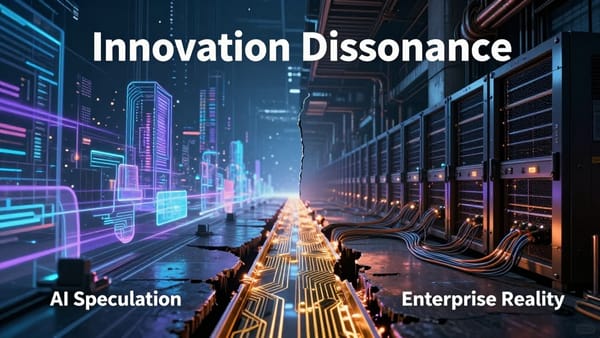
The Divergence of the "Innovation Economy" is becoming clearer: while the West focuses on consolidated tech giants and legacy infrastructure repair, the Gulf region is building new frameworks for human capital and entrepreneurship. To understand these shifting dynamics, Business Insider recently highlighted several essential readings on tech and innovation that discuss the concept of "anti-fragility" in markets—the idea that some systems actually benefit from shocks. The current global environment is a test of this theory. Those who can navigate the "policy neglect" of the environment while capitalizing on the "consolidation phase" of technology will be the ones to define the next decade of market leadership.
What We Don’t Know Yet: Unresolved Variables
- Antitrust Reaction: It remains unknown if the Federal Trade Commission (FTC) or EU regulators will mount a challenge to the Nvidia-Groq deal based on market dominance concerns.
- Ceasefire Terms: While Ukraine has signaled openness to concessions, the specific territorial or security guarantees required to reach a stable peace remain entirely undefined.
- Crypto Response: The extent to which DeFi platforms will migrate away from third-party login tools after the Polymarket breach is yet to be seen.
- Economic Data: While regional hubs show growth, the full impact of sustained high interest rates on localized sectors, such as those covered by the Telegraph Herald, remains a critical unknown for 2026 projections.
Why It Matters: The Convergence of Tech and Policy
This week’s developments underscore a pivotal moment in the global narrative. The Nvidia-Groq deal is significant because it marks the end of the "wild west" phase of AI chip development and the beginning of a consolidation phase that will determine the cost and speed of intelligence for the next twenty years. For consumers, this means better tech, but for the market, it means higher barriers to entry. Simultaneously, the security failures in DeFi and the diplomatic shifts in Europe point to a world that is desperately searching for new "centers of gravity." When traditional security and financial systems show cracks, capital moves to regions like the UAE that offer stability and clear business frameworks. Ultimately, the successful integration of technology and policy—bridging the gap between defense, environment, and economy—will be the only way to navigate this accelerated transition. The Jerusalem Post notes that the intersection of defense and tech is now the primary theater of international competition, making these corporate moves as important as diplomatic treaties.
Conclusion: Navigating the Accelerated Transition
The converging news of the day paints a stark and compelling picture of a world in a state of "accelerated transition." We are no longer discussing the future of AI or the future of climate change in abstract terms; the Nvidia-Groq deal and the devastating floods in Los Angeles prove that these forces are already redefining our present reality. The consolidation of hardware power in the hands of a few tech giants mirrors the consolidation of political power in more resilient, business-friendly regional hubs. However, this progress is inherently shadowed by the vulnerabilities of our digital and physical infrastructure. The Polymarket breach and the demographic anxieties in China serve as warnings that no amount of technological advancement can replace the need for ethical oversight and robust, human-centered policy.
Moving forward, the success of both nations and corporations will depend on their ability to integrate high-speed technological advancements with resilient, decentralized infrastructure that can withstand both cyber and environmental shocks. The "art of policy" must evolve from rhetoric to rapid, tangible action—whether that means securing digital identities, modernizing urban infrastructure against extreme weather, or negotiating peace in the face of exhausted resources. As we look toward 2026, the winners in this new global economy will be those who recognize that technology, geography, and safety are now inextricably linked. The time for "policy neglect" has ended; the era of strategic resilience has begun.
What’s Next: Upcoming Decisions and Deadlines
- Federal Oversight: Expect an initial statement from antitrust regulators regarding the Nvidia licensing model within the next 30 days.
- Diplomatic Summits: Neutral parties in the European conflict are expected to convene in early Q1 to discuss the framework for potential concessions mentioned by Zelensky.
- Market Updates: Follow the Telegraph Herald and other regional outlets for quarterly earnings reports that will reveal the impact of AI costs on mid-sized enterprises.
- Climate Action: The preliminary agenda for COP30 will be finalized shortly, which will indicate if leaders are willing to address the "neglect" cited by RealClearPolitics.