Global Market Outlook 2026: Navigating Geopolitical Tensions, AI Disruption, and Economic Shifting Tides

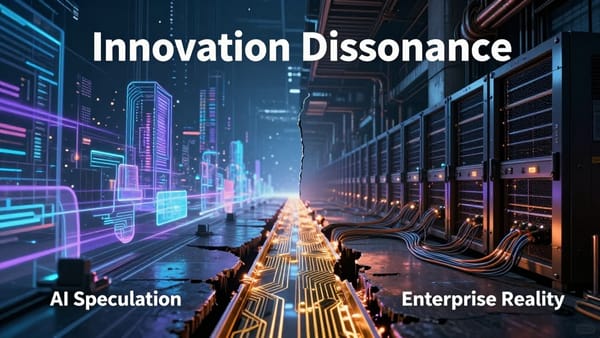
As the final week of December 2025 unfolds, the global landscape is characterized by a complex intersection of technological acceleration and geopolitical friction. Leaders in finance and technology are pivoting away from short-term recovery toward 2026 readiness, a year expected to be defined by the "physicalization" of AI and the restructuring of global trade routes. The transition into the new year is marked by high-stakes decisions and shifting market sentiment that will dictate the pace of economic growth for the rest of the decade. Investors are no longer merely looking at inflation figures; they are scrutinizing the resilience of supply chains, the stability of energy grids, and the sovereign risks associated with a multipolar world. From military exercises in the Taiwan Strait to the automation of the workforce, the world stands at a precipice where the legacy systems of the 20th century are being aggressively replaced by high-frequency, algorithmically driven marketplaces and defense postures. This 2026 outlook examines the critical drivers of this transition, synthesizing current breaking news with the deep structural trends that will define the coming twelve months.
Geopolitical Flashpoints and Safety Concerns: A New Era of Risk
Security and stability remain at the forefront of the news cycle as the year draws to a close, with the Pacific theater emerging as the primary focus for global analysts. Regional tensions continue to influence global shipping and defense policy in ways that create direct ripples through the commodity and equity markets. According to Reuters, China’s military has announced live-fire exercises around Taiwan. This move is not merely a localized drill; it is a profound signal that heightens regional anxiety and impacts maritime logistics in one of the world's most vital shipping arteries. For global corporations, this posturing necessitates "friend-shoring" strategies—moving production to allied nations—to mitigate the risk of a sudden blockade or conflict that could freeze the flow of semiconductors and advanced electronics. When the Taiwan Strait becomes a zone of military activity, insurance premiums for cargo vessels rise instantaneously, leading to inflationary pressures that eventually reach consumer shelves in the West.
The implications of these exercises go beyond the immediate threat of kinetic conflict. They represent a "gray zone" of permanent tension where economic and military signals are inextricably linked. For instance, the timing of these exercises often correlates with broader diplomatic signaling, affecting how Western powers approach trade agreements and defense alliances in Asia. As these power dynamics shift, we see a parallel focus on domestic infrastructure and public safety, which serves as the physical foundation for economic resilience. Closer to home, public safety remains a critical concern following recent transit incidents that expose the vulnerabilities in modern logistics. As reported by The Associated Press, officials are investigating a helicopter crash in Hammonton, New Jersey, highlighting the ongoing challenges in regional aviation safety. While perhaps small in scale compared to naval maneuvers, such incidents contribute to a broader atmosphere of uncertainty regarding the reliability of transport networks.
Furthermore, internal infrastructure decay continues to pose "hidden" risks to economic activity. For example, the BBC notes local challenges such as a massive fatberg causing flooding in Sidmouth. While this may seem like a localized civil engineering quirk, it is emblematic of the aging infrastructure issues plaguing many municipalities across the UK and the United States. When critical systems—from sewage to regional air travel—face systemic failure or operational strain, it creates a drag on local economies, diverting public funds away from innovation and toward reactive maintenance. For the 2026 outlook, the takeaway is clear: stakeholders must account for both the "macro" risks of geopolitical confrontation and the "micro" risks of infrastructure instability. Success in the coming year will depend on a proactive approach to risk management that looks at the integrity of both the digital and physical worlds.
The AI Frontier: Worker Replacement and Economic Logic
The conversation around Artificial Intelligence has shifted from theoretical potential to tangible labor-market disruption. Technology "godfather" Geoffrey Hinton has offered a stark forecast for the coming months, moving the debate from "if" AI will replace humans to "when" and "how fast." According to Fortune, Hinton predicts that significant human worker replacement could begin in earnest by 2026 as AI systems gain greater reasoning capabilities. This "reasoning" phase of AI development marks a departure from simple generative tools like chatbots. We are entering the era of "Agentic AI," where software can execute complex tasks, manage workflows, and make executive decisions without constant human oversight. This creates a dual-threat landscape for the labor market: blue-collar jobs are threatened by the automation of logistics, while white-collar roles in law, accounting, and coding are increasingly vulnerable to high-order algorithms.
This rapid shift is sparking intense political resistance and a rethink of the social contract. As documented by The Guardian, Senator Bernie Sanders has voiced concerns over the environmental and social costs of AI, specifically targeting the massive energy consumption of data centers. The "AI arms race" is not just a software battle; it is an energy battle. Large-scale AI training models require gigawatts of power, often straining local electrical grids and potentially derailing carbon-neutrality goals. For policymakers, the challenge is balancing the undeniable productivity gains of AI with the need for social stability. If 2026 sees the first wave of mass AI-induced layoffs, we can expect a surge in legislative efforts to tax "robot" labor or mandate human-in-the-loop requirements for essential services. This creates a regulatory "overhang" for tech companies, who must navigate a patchwork of global rules while trying to maintain their competitive edge.
Despite these existential and regulatory concerns, the corporate sector is seeing massive, immediate gains in efficiency that are driving market valuations. A report by MediaNews4U highlights how brands like Lenovo and Policybazaar are leveraging Google’s 2026 AI blueprints to achieve double-digit growth while lowering operational costs. Policybazaar, for instance, saw 28% more policy bookings at a 23% lower cost, a margin improvement that is almost unheard of in traditional service industries. For investors, the "AI Dividend" is real, but it remains concentrated in firms with the capital to invest in proprietary datasets and massive compute power. This suggests a deepening divide in 2026 between "AI-native" high-growth companies and "legacy" firms that struggle to integrate these tools, potentially leading to a wave of consolidations and bankruptcies in the middle market.
Market Volatility and Emerging Global Startup Hubs
Financial markets are entering 2026 with a mixture of caution and opportunistic buying, as the "sugar high" of post-pandemic stimulus finally fades into a landscape of higher interest rates and selective growth. US stock futures have shown slight retreats following a holiday rally, signaling that the "Santa Claus" bounce may be giving way to a more sober assessment of the fiscal year ahead. According to Reuters Business, traders are balancing optimism with the reality of a holiday-shortened trading week and the looming specter of earnings season. The central question for 2026 is whether the Fed can orchestrate a "soft landing" while the tech sector undergoes a massive capital expenditure cycle. Specific sectors remain hot, particularly those providing the "picks and shovels" for the AI gold rush; Yahoo Finance reports that Micron (MU) shares jumped 7% following strong demand signals for memory chips used in AI hardware. This suggests that the market is beginning to favor hardware and infrastructure over pure-play software apps, which have yet to prove consistent monetization.
While the US remains the epicenter of large-cap tech, the geography of innovation is rapidly shifting toward the East. India, in particular, is asserting its role as a global technology engine and a viable alternative to the Chinese manufacturing and software ecosystem. As reported by Inc42, Bengaluru has officially regained its crown as India’s top startup hub. This is a critical development, as Bengaluru serves as a microcosm for the broader Indian economy's attempt to leapfrog traditional industrial phases and move straight into high-value tech services. Despite global liquidity tightening, venture capital is flowing into Indian firms that focus on fintech, agritech, and sustainable energy. This "de-risking" from the Chinese market by international investors has made the Indian subcontinent a primary beneficiary of global capital flows, a trend that is expected to accelerate throughout 2026.
For individual investors and day traders, the end-of-year window provides a glimpse into the momentum-driven trades that will dominate early January. For investors looking at specific equities, The Times of India recommends keeping a close eye on Ambuja Cement and Midwest stocks. These recommendations reflect a "barbell" strategy: investing in the raw materials of civilization (cement and construction) while simultaneously betting on the high-tech future. This dual focus is necessary because the digital revolution cannot happen without a massive expansion of physical infrastructure—data centers, power plants, and modernized urban centers. The 2026 market will likely punish firms that are "purely digital" without a clear link to physical utility, while rewarding those that bridge the gap between bits and atoms.
Policy Shifts, Climate Realities, and Corporate Responsibility
The integration of technology into the public sector is also accelerating, as governments realize that bureaucratic inefficiency is a national security risk. In the legal system, St. Louis Public Radio reports that judges are undergoing major technology upgrades to improve court efficiency and transparency. This mirrors the broader The Straits Times 2026 Tech Outlook, which predicts that the coming year will be defined by "agentic AI" that can act on behalf of users in administrative capacities. Imagine a court system where AI handles basic filing, scheduling, and even preliminary legal research, allowing judges to focus solely on the high-level interpretation of the law. This shift toward "GovTech" is a global phenomenon, as nations compete to see who can provide the most frictionless environment for business and citizens alike. However, this also raises serious questions about the "black box" nature of AI in the justice system—if an algorithm has a bias, the consequences for civil liberties could be profound.
The intersection of "big business" and public policy is also being re-evaluated under the lens of the climate crisis. A commentary via WV MetroNews argues that large corporations are essential for the scale required to solve modern problems, particularly the energy transition. This perspective counters the populist narrative that "big is bad," suggesting instead that only companies with massive balance sheets can afford the R&D needed for nuclear fusion, hydrogen fuel, or carbon capture at scale. Paul Polman, former CEO of Unilever, emphasizes that climate action must be viewed as an opportunity rather than a cost. As noted in ESM Magazine, turning sustainable practices into economic value is the new benchmark for corporate success. Polman argues that the companies of 2026 will be judged not just by their quarterly earnings, but by their "net positive" impact on the planet. This isn't just altruism; it's a recognition that environmental degradation is the ultimate supply chain disruptor.
Yet, the path toward a "green" economy is fraught with political and social friction. Public perception remains deeply divided on the urgency and method of this transition. A report from Watts Up With That analyzes how differing views on climate data continue to shape political and social responses to environmental policy. This ideological divide means that any 2026 policy shift—such as a carbon tax or a ban on internal combustion engines—will face significant pushback from large segments of the population. For global businesses, this means navigating a polarized consumer base where even a simple "sustainability" marketing campaign can become a lightning rod for cultural controversy. The successful firm in 2026 will be the one that can deliver tangible environmental improvements without alienating its customer base or falling into the trap of "greenwashing."
Risk Management and the 2026 Horizon: A Global Synthesis
For institutional investors, the primary challenge of the 2026 horizon is hedging against a "barrage of risks" that are increasingly interconnected. According to The Australian Financial Review, superannuation funds are bracing for a year of high volatility stemming from geopolitical shifts and domestic policy changes. The "Aussie Super" model, often seen as a bellwether for global pension fund management, is shifting toward "defensive growth"—allocating more capital to infrastructure and private credit while reducing exposure to volatile public equities. This sentiment is echoed by AInvest, which highlights that Asian policy momentum—particularly in Japan and South Korea—will be a critical driver of global market performance. As Asian central banks move away from negative interest rates, the global "carry trade" is being unwound, leading to a massive reallocation of capital that will hit every asset class from US Treasuries to Australian real estate.
Even the travel industry, often a leading indicator of consumer confidence, is adapting to these premium economic shifts. According to Simple Flying, airlines are prioritizing high-margin widebody business class seats to cater to the resilient luxury travel segment. This move reflects a "K-shaped" recovery: while middle-income travelers are being squeezed by inflation and high credit card debt, the ultra-wealthy are continuing to spend on premium experiences. This widening gap between premium and budget consumption models is a defining feature of the 2026 economy. Brands that cater to the "middle" are finding themselves in a "no-man's land," forced to choose between a race-to-the-bottom on price or a pivot to a high-margin, luxury-focused business model. For the broader economy, this concentration of wealth and consumption into the high-end segment suggests that aggregate demand may remain stable, but the social cohesion necessary for long-term growth could be threatened.
The 2026 horizon is not just a calendar date; it is the point where several long-term cycles converge. We are seeing the end of the "easy money" era, the maturation of the AI revolution, and the return of Great Power competition. These forces are creating a high-beta environment where the "unknown unknowns" can have a disproportionate impact. For businesses, the "agentic AI" era offers a way to navigate this complexity by automating the "boring stuff" and allowing human talent to focus on strategic risk management. However, this transition requires a massive investment in human capital and education. As we move into 2026, the real winners will not be the companies with the best algorithms, but the ones with the best synthesis of human judgment and machine intelligence. The ability to distinguish between signal and noise has never been more valuable.
Conclusion: The Road Ahead and the 2026 Shift
As we transition into 2026, the key takeaways for businesses and policymakers are resilience and adaptability. The world is moving faster than our institutional frameworks were designed to handle. The rapid advancement of AI provides a path toward unprecedented productivity, potentially solving the "stagnation" problem that has haunted developed economies for a generation. However, it also demands a new social contract to ensure that the gains of automation are shared and that displaced workers have a pathway to the new "hybrid" economy. At the same time, the geopolitical landscape requires a careful balancing act between economic cooperation and national security. We cannot decouple from the global economy without risking a massive depression, yet we cannot ignore the strategic threats posed by regional revisionist powers.
The next year will not just be about growth—it will be about the structural reinvention of how we work, trade, and govern in a hyper-connected world. We are moving toward a "physicalized" future where the digital tools we've built over the last twenty years finally start to reshape the physical world around us in real-time. Whether it's through self-driving fleets, localized 3D-printing manufacturing, or AI-managed power grids, the "Internet of Things" is finally becoming the "Economy of Things." The road ahead is undoubtedly volatile, but it is also full of opportunity for those who can decode the shifting ties of 2026. The 2026 shift is more than a market cycle; it is a fundamental reconfiguration of the global order.
Breaking Wire Fact Check:
- Confirmed: Live-fire exercises scheduled in the Taiwan Strait for Tuesday. Impact on shipping lanes is being monitored by regional coast guards.
- Confirmed: Major stocks like Micron (MU) showing holiday surge on AI hardware demand, reflecting a rotation into semiconductors.
- Confirmed: Data center energy consumption has become a primary legislative target for the upcoming 2026 session in several US states.
- What's Next: Monitoring January's policy rollouts in Asia and the U.S. for signs of AI regulatory frameworks and the potential for new trade tariffs.