GG WP: How Video Game Adaptations, Hardware Hikes, and Cloud Shifts are Rewriting the Industry Playbook

Listen up, gamers! Your favorite hobby isn't just a hobby anymore; it’s a full-blown transmedia takeover. The industry is moving faster than a speedrunner on a caffeine kick, and 2026 is already proving to be a massive year for how we play, watch, and pay for our digital obsession. We’re currently witnessing a massive meta-shift where the lines between Hollywood and our consoles are getting blurred into one giant ultra-HD mess. From Sony and Amazon doubling down on legendary IPs like God of War to Microsoft navigating a tricky hardware identity crisis that has even the most loyal Xbox stans sweating, the "Gamer Lifestyle" isn't just about sitting on your Discord; it's about a total convergence of media. Whether you’re a PC master race elitist or a console peasant (jk, I love you all), the landscape is changing under our feet with new tech, rising costs, and a serious crackdown on the digital wild west. We’re seeing a world where a TV show release is just as vital to a game’s lifecycle as a Day 1 patch, while the literal cost of entrance—our hardware—is becoming a luxury gatekeeper. This isn't just a pivot; it's an evolution, and if you aren't paying attention to the patch notes of the real world, you're going to get left behind in the lobby.
In this deep dive, we’re breaking down the massive waves hitting the industry. We’re talking about the "Peak Adaptation" era where shows like Fallout are basically becoming the new commercials for remasters, the sketchy inflation hitting our hardware wallets, and why the "Xbox" brand might be evolving into something we barely recognize. Grab your snacks, top off your RGB, and let's get into the deep-lore breakdown of where gaming is headed.
The Rise of "Peak Adaptation" and the Remaster Loop
If you thought the gaming-to-TV pipeline was just a temporary trend, think again. It’s the new meta, and it's completely OP. For years, "video game movies" were the laughingstock of the industry (shoutout to the 90s Mario movie for the trauma), but we’ve entered a Golden Age of prestige adaptations. We’ve seen The Last of Us kill it on HBO, and now Amazon is going for the throat with the God of War TV series. As reported by TV Guide, they’ve tapped Ryan Hurst—who played Thor in God of War Ragnarök—to actually step into the boots of Kratos. This is huge because it shows developers aren’t just selling licenses to the highest bidder; they’re trying to keep the DNA of the games intact by hiring actors who already know the rhythms of the characters. It's about maintaining a specific vibe that fans won't "review bomb" before the first episode even airs.
But why does this matter for us as players? Because these shows act as massive marketing beacons that drive the "Remaster Loop." To keep that hype train moving, Amazon has released Season 1 of Fallout for free on YouTube. This isn't just charity; it’s a calculated lure to pull "normies" who have never touched a controller into the Bethesda ecosystem. Naturally, this has set the rumor mill on fire. According to indy100, whispers of Fallout 3 and New Vegas remasters are growing louder as Season 2 approaches. It’s a genius, albeit predictable, cycle: watch the show, get the itch to play, and buy a shiny new remaster of a game you already owned on PS3. It creates a self-sustaining ecosystem where the IP never dies, but the cost to stay current keeps resetting. For veteran gamers, it can feel a bit like being trapped in a time loop, but for the industry, it's the ultimate money glitch. We're seeing a shift where "new" games are being deprioritized in favor of "re-polished" classics that have a guaranteed audience thanks to television synergy.
The implications here are wild. If every major game launch needs a TV show to be considered a success, we might start seeing developmental choices made based on "filmability" rather than "playability." We're already seeing hints of this with Sony’s cinematic-first approach. The line between a cutscene and a prestige drama is thinning, and while that means better stories, it also means we're paying $70 for the privilege of watching a show we just saw on Prime Video, just with extra button prompts. It's a 5-head move by the suits, but as players, we have to ask: at what point do we run out of classics to remaster?
The Identity Crisis: Is Xbox Still a Console?
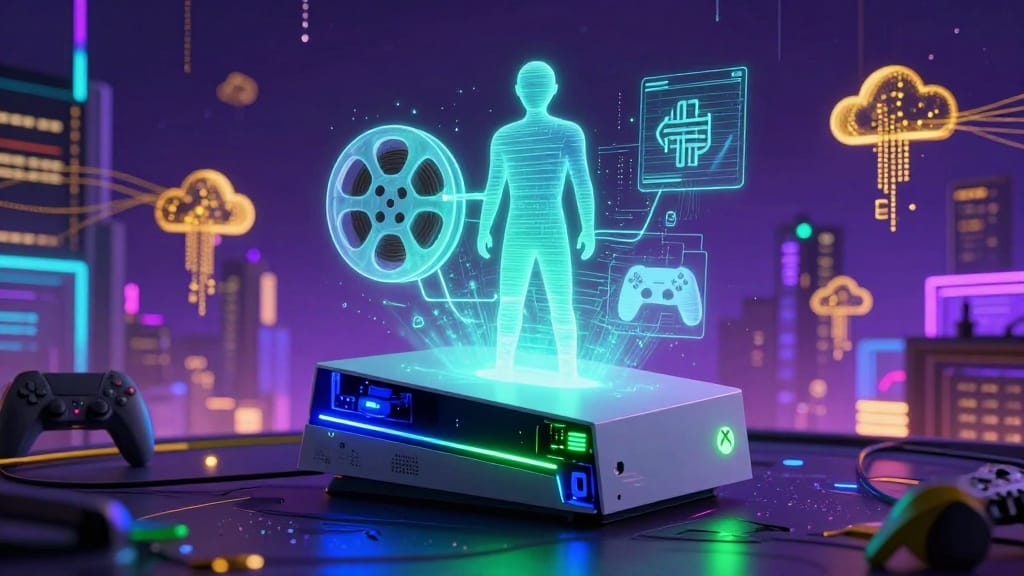
Speaking of ecosystems, Microsoft is in a weird spot, and "weird" is putting it lightly. Their "Play Anywhere" mantra is great for consumer choice, but it’s making people wonder if they even need the big green box in their living room anymore. Microsoft is effectively trying to win the console war by pretending there isn't a war at all. As mentioned by GamesIndustry.biz, weak hardware financials are casting a long shadow over Xbox's transition from a hardware leader to a software and services giant. They are killing it as a publisher—especially after swallowing Activision-Blizzard—but if nobody is buying the Series X, the traditional "console" identity starts to crumble.
The answer to their survival seems to be the Cloud. Microsoft is doubling down on accessibility over exclusivity, as noted by alfabetajuega.com, with a redesigned web experience for Xbox Cloud Gaming that looks way smoother and more intuitive. They want you playing Halo on your fridge, your smart TV, or your cracked iPhone 12. Plus, the February 2026 Game Pass lineup continues to prove that the "Netflix of Games" model is their true endgame. However, this shift comes with baggage. As the platform opens up, moderation becomes a massive headache. Even with dark clouds from the past—like the shocking reveal from IBTimes UK regarding a 2013 permanent ban of Jeffrey Epstein for player harassment—Microsoft is scrambling to prove that its cloud-first future is safe, inclusive, and strictly monitored.
The future of Xbox probably looks less like a box and more like an app. This is a huge risk because the "console war" fueled brand loyalty for decades. If you don't have a specific device to "defend" in the YouTube comments, do you still feel like part of the "Xbox Nation"? Microsoft is betting that we care more about the library than the plastic, but if Sony keeps the PS6 exclusive-heavy, the Cloud might just be a silver medal. We're watching a titan of industry try to change its skin in real-time, and it's either going to be a masterstroke of 21st-century business or the most expensive exit from hardware history. For us, it means more ways to play, but it also means our "ownership" of games is becoming more and more holographic.
The High Cost of Entry: Hardware and the War on Piracy
Let’s get real: our hobby is getting expensive, and I'm not just talking about the $70 base game price tag. If you’re trying to upgrade your rig or expand your console storage so you can actually fit more than three AAA games at once, I’ve got bad news. According to fr.de, retail insiders are documenting a massive price explosion for SSDs. Between inflation, raw material shortages, and the never-ending supply chain drama, "budget builds" are basically a myth now. It’s getting harder for the average person to keep up with the technical demands of 2026 gaming. Even simple peripherals are becoming a research project; while Sportskeeda lists the best gaming mice of 2026, the sheer volume of choices and the skyrocketing price points can be a total headache for noobs and veterans alike.
This "price-out" is creating a desperate situation for many, but the traditional escape routes are being blocked. The US government is no longer looking the other way when it comes to the digital wild west. They recently shut down three major piracy hubs—Zamunda, ArenaBG, and Zelka—as reported by PCMag. In the past, piracy was often seen as a service problem; if games were too expensive or hard to find, people would sail the high seas. Now, with the crackdowns intensifying and the shift toward "Games as a Service," it’s getting harder to be a pirate. This forces everyone into the subscription-everything future where you don't own anything, you just rent it until the servers go dark.
And let's talk about those "deals." While smart shoppers are hunting for fragments of savings, like the OzBargain highlight on the Asus TUF AX6000 router to combat lag, the overall trend is upward. We are being squeezed from both sides: the hardware costs more to buy, and the software costs more to keep playing. If this trend continues, gaming might lose its status as a "universal" hobby and become a tiered experience where the "haves" get the 4K 144Hz experience and the "have-nots" are stuck on laggy cloud streams. It's a grim prospect for a community that prides itself on being open to everyone. We need to watch these hardware prices closely, because if the barrier to entry gets too high, the player base will eventually start to shrink, and that’s a GG for everyone.
Community Chaos: From Mod Success to Rating Rants
Despite the corporate drama and the hardware hikes, the best part of gaming remains the community, but man, we can be a lot to handle. We are a passionate, salty, and incredibly creative bunch. Take Team Fortress 2—a game that Valve has basically left in the attic for years. The fans wanted more, so they didn't wait; they built it. Yahoo Tech reports that thousands of players swamped the servers for TF2 Classified, a mod so massive it practically broke Steam upon launch. This is the ultimate "fine, I'll do it myself" moment in gaming history. It proves that even if big devs ignore an IP, the fans will keep it alive through sheer force of will, code, and memes.
Of course, it wouldn't be gaming without a healthy dose of salt and controversy. Whether it's the Yahoo Sports analysis of how MLB The Show consistently snubs top players with weird rating logic—triggering absolute meltdowns on X (formerly Twitter)—or the constant discussion around new weekly releases, there’s always something to argue about. Even the indie scene is giving us spicy takes and boundary-pushing content. Take Engadget's coverage of Highguard, a "hyperpop arena shooter" that is basically a sensory overload in game form. Meanwhile, the news that the Switch version of Dispatch is getting censored to remove nudity has sparked the age-old "Nintendo is for kids" vs. "Free expression" debate. Classic Nintendo, honestly—staying family-friendly even when the rest of the world is going full "M for Mature."
This community energy is what keeps the industry honest (or at least keeps them on their toes). When a developer messes up a character rating or a publisher tries to kill a fan project, the backlash is instantaneous. But when a community gets behind a project like TF2 Classified, it shows the positive power of the hive mind. We aren't just consumers; we're co-creators of this culture. The "chaos" of the community is actually its greatest strength, ensuring that even when the suits are making boring business decisions, the actual fun of gaming stays weird, loud, and unpredictable.
Streaming: The Bridge Between Stats and Stardom
Finally, we have to talk about the total merger of sports and streaming. It’s not just Twitch anymore; mainstream sports are leaning into the "watch anywhere" culture that gamers pioneered. If you're looking for the Spurs vs. Hornets stream or the Leeds vs. Arsenal clash via Republic World, it’s all part of the same digital ecosystem we live in. We see it in cricket with Pakistan vs. Australia coverage and the upcoming WWE Royal Rumble 2026 streaming on Netflix. Gaming didn't just join the mainstream; gaming became the mainstream blueprint for how all entertainment is consumed.
This "always-on" culture is having some genuinely surreal real-world effects. A fascinating piece by Bloomberg suggests that the decline in US crime rates might actually be linked to people staying indoors more to play games and use their phones. Who knew that grinding for skins in Fortnite or waiting for a Roblox update was actually a form of public service? Keeping people off the streets and in the lobbies—it’s the ultimate unintended consequence. If people are too busy trying to fix their K/D ratio or watching a League of Legends tournament on their second monitor, they aren't out causing trouble in the "real world."
The "streaming-fication" of everything means that being a "gamer" is now just a subset of being a "highly connected digital citizen." Whether you're watching a pro gamer pull off a 1v5 clutch or watching a Premier League striker score a banger, the interface is the same, the chat is just as toxic (let's be real), and the dopamine hit is identical. The bridge between stats and stardom is now built on the back of streaming tech, and it's a bridge we all cross every single day. We are the first generation to live in a world where "watching" is just as interactive as "doing," and that is changing the very fabric of how we spend our free time.
Conclusion: The Future is Multi-Platform and Multi-Media
As we look forward to the rest of 2026 and beyond, the "Gamer Girl Galaxy" perspective is clear: the siloed world of "just being a gamer" is dead and buried. We are now part of a massive, multi-faceted entertainment monster that demands our attention across every screen we own. We are no longer just pushing buttons; we are the primary demographic for the biggest shows on television, the main drivers of hardware innovation, and the beta testers for the future of the internet itself. Whether we’re watching Kratos’ emotional journey on our TVs, streaming The Premier League on our phones during a boring class, or trying to scrounge up enough cash for a 2TB SSD so we can actually install Call of Duty without deleting our entire library, the industry is forcing us to adapt or be left in the loading screen.
Expect more remasters, more TV deals that make us go "wait, they're making a show of THAT?", and more cloud-based services that promise us the world but own our digital souls. The hardware might be getting pricier, and the platforms might be having mid-life crises about their identities, but the core of gaming—that community spirit, the thrill of a new release, and the absolute chaos of a midnight launch—isn't going anywhere. Our role in this new meta is to stay informed, keep demanding better from the devs, and never let the suits forget that we are the ones who make these worlds worth visiting. Keep your routers fast, your mice clicking, and your subscription passes active. It's going to be a wild, expensive, but ultimately epic ride. GG, everyone!