GG WP 2025: Why This Year Was Peak Gaming and What’s Breaking the Meta in 2026

Listen up, nerds! If you thought 2024 was a wild ride, 2025 just absolutely shattered the skill ceiling and left it in pieces on the floor. We aren’t just talking about a few "okay" releases to pad out a quiet quarter; we’re talking about a year that legitimately reshaped the industry's DNA. This was the year where the "next-gen" promise finally stopped being a marketing buzzword and started being a lived reality. From handheld PCs becoming the absolute meta for busy adults to a release calendar that felt like a back-to-back boss rush with no healing items, 2025 has been completely cracked. But as we look toward the horizon, the industry is shifting in ways that might make even the most seasoned sweat a little nervous. Between a predicted "release drought" for the start of 2026 and the total convergence of streaming and gaming culture, the landscape is evolving faster than a speedrunner on a world-record pace. Grab your G-Fuel, check your ping, and let's dive into the state of the game. We're looking at why 2025 was the GOAT, why the hardware wars are moving to our pockets, and why 2026 might be the year we finally—God forbid—tackle our backlogs.
The 2025 GOTY Brawl: A Decade-Defining Year for Games
Honestly, choosing a Game of the Year in 2025 was a total nightmare because almost everything was an absolute banger. When you look at the best games of 2025 ranked, it becomes clear that we’ve finally moved past the "remake" era into a period of genuine, high-budget innovation. This wasn't just a good year; according to ComicBook.com, 2025 featured some of the best games of the entire decade, pushing hardware to its absolute limits and proving that creative risks still pay off in the AAA space. We saw developers finally letting go of the PS4/Xbox One anchor, and the results were visually stunning and mechanically deep.
The variety was insane, too. Whether you're a platformer purist who lives for frame-perfect jumps or an RPG sweat who spends forty hours in the character creator, the Ars Technica top 20 video games of 2025 list shows a massive breadth of quality that wasn't just limited to the big-name studios. We saw smaller titles take huge risks with narrative structure and gameplay loops that paid off massively, earning them high-profile recognition in the GamingTrend 2025 Trendsetter Awards. This shift is a massive W for us as players. It suggests that the community is finally getting bored of the same old "Ubisoft-tower" formula—you know, the one where you climb a thing, reveal the map, and do fetch quests until your brain turns to mush. Instead, 2025 gave us experiences that actually respect our time and intelligence, offering emerging gameplay and choices that actually *mean* something.
Why does this matter? Because for the last few years, it felt like gaming was stuck in a loop of sequels and "safe" bets. In 2025, the industry realized that to get us to part with our hard-earned cash, they had to offer something more than just 4K textures. They had to offer new ways to interact with the world. We saw the rise of more sophisticated AI NPCs, physics engines that didn't break the second you touched a chair, and seamless world-loading that made fast travel feel like its name implies. These advancements aren't just technical flexes; they change how a game *feels*. When you aren't staring at a loading screen every five minutes, you're more immersed, more invested, and way more likely to pull an all-nighter. The ripple effect here is that 2025 has set a new baseline for what we consider "standard" quality. Anything less than what we saw this year is going to feel like a massive downgrade in 2026 and beyond.
Hardware Evolution: PC Master Race or Handheld Supremacy?
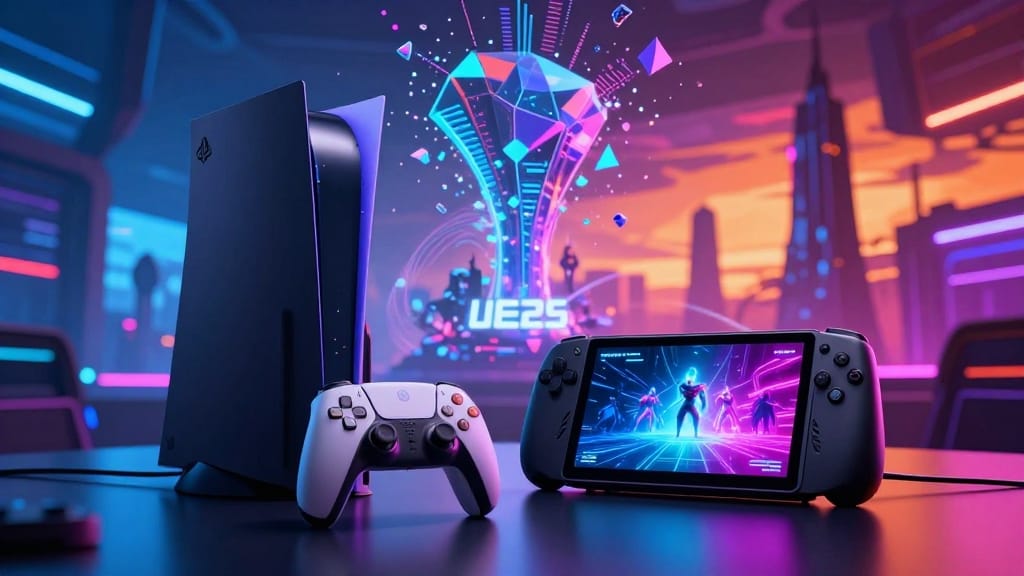
If you're still building massive towers with enough RGB to be seen from space, don't panic—PC gaming isn't going anywhere—but the way we play is getting way more portable. I’ve been obsessed with how handhelds are evolving, and as Pocket-lint points out, the "ROG Xbox Ally" style of portable PC gaming is finally hitting that sweet spot of power, battery life, and convenience. It’s basically having a Series S in your pocket, and it’s a total game-changer for clearing your backlog while you're commuting or pretending to listen during a family dinner. The "handheld meta" is no longer just for indie titles or low-spec platformers; we're talking about running AAA titles on a device you can throw in your backpack.
That said, if you *are* leaning into the desktop life, you can't just slap parts together and hope for the best anymore. Systems are getting more demanding, and optimization is sometimes... let's say "questionable." To avoid getting bottlenecked and seeing your frame rate tank during an intense firefight, you need to know the best gaming CPU of 2025 according to PC Gamer’s hardware awards. It’s all about IPC gains and TDP efficiency these days, people! Once you’ve got your chips in order, don't be a total noob—follow the TechRadar guide on checking a new gaming PC. Trust me, nothing ruins the vibes like a driver crash or a thermal throttle in the middle of a high-stakes raid. Checking your XMP profiles and fan curves isn't just for nerds; it's for anyone who doesn't want their expensive rig to sound like a jet engine taking off.
While we’re talking hardware, let’s pour one out for the weird stuff that didn't quite make the cut. Innovation requires failure, and ComicBook.com's list of ridiculous accessories reminds us that for every hit like the Steam Deck or the DualSense Edge, there’s a total peripheral fail lurking in gaming history. Looking at you, weird haptic vests that cost as much as a mortgage payment! The future of hardware in 2026 seems to be heading toward modularity and cloud integration. We're seeing more TVs with built-in gaming hubs, reducing the barrier to entry for casuals while the "pro" tier of players continues to chase 500Hz monitors and ultra-low latency peripherals. The gap between "playing for fun" and "playing to win" has never been wider in terms of the gear required to stay competitive.
The Xbox Ecosystem: Value Reigns Supreme in the Service Wars
Xbox really leaned into the "value king" role this year, and honestly, it’s working. While the green team might still be chasing Sony in terms of raw console sales, their ecosystem play is massive brain energy. Looking at the Xbox year in review 2025 provided by TechRadar, it's clear their strategy is all about Game Pass. It’s not just a subscription; it’s a lifestyle at this point. The sheer volume of content is wild; just check out the full list of all games added to Xbox Game Pass in 2025 as compiled by Insider Gaming. It's basically a buffet for gamers, allowing you to try titles you’d never dream of buying individually.
This "buffet" model has changed how we consume games. Instead of buying one $70 title and playing it for three months, we're tasting five or six games a month. Even better, for those of us who love a good bargain, the Xbox Boxing Day deals reported by The Independent made it easier than ever to jump into the ecosystem without selling a kidney. While the big hitters like "Halo" or "Starfield" updates got the glory, there were some sleeper hits too, like the frostbitten survival title Skinwalker 3D on Xbox, which proved that the platform is a great home for indie horror and niche genres. Interestingly, the community and critics didn't always see eye-to-eye this year. Pure Xbox's GOTY results showed that the "popular" choice isn't always the "best" choice when you look at the data from the hardcore fans who spend 1,000+ hours in these worlds.
The impact of this service-heavy model is profound. It’s forcing Sony and Nintendo to rethink their online offerings. While Sony’s PS Plus is catching up, Xbox’s day-and-date release strategy for first-party titles remains a massive "OP" advantage. In 2026, we expect to see even more cloud-native features, where you can start a game on your console, continue it on your phone during lunch, and finish it on your laptop at night without losing a single frame of progress. It’s the death of the "local save" and the rise of the "universal player profile," and honestly, I'm here for it. No more carrying memory cards like it's 2004!
The Dark Side of the Lobby: Hacking and the Toxicity Boss Fight
Of course, it wasn't all GGs and "thank you for the carry." The competitive scene took some absolute haymakers this year, specifically in the tactical shooter space. In one of the weirdest flexes I've seen in my decade of being chronically online, Rainbow Six Siege was hacked in a way that felt like Robin Hood on steroids. Instead of stealing stuff, attackers literally gave players billions in in-game currency. It sounds cool in theory—who doesn't want free skins?—but it absolutely nuked the game's economy, invalidated months of grinding for legitimate players, and forced Ubisoft into a massive, desperate damage-control mode. It’s a stark reminder that no matter how much we spend on hardware, the software is always one exploit away from total madness.
This incident highlights a growing concern: the "arms race" between anti-cheat software and hackers. As the stakes get higher and esports prize pools grow, the incentive to cheat becomes more attractive to the basement-dwelling noobs who can't point-and-click to save their lives. We’ve seen kernels-level anti-cheat become the standard, but even that is being bypassed by AI-assisted hardware cheats. It’s getting toxic out there, folks. Beyond just the hacking, the community vibe in many competitive lobbies reached a boiling point in 2025. Developers are starting to use AI-driven voice moderation to ban the trolls, but it’s a game of whack-a-mole. If we want 2026 to be a better year, we’ve got to do better as a community. Don't be that guy screaming into a $5 mic because you missed a flick shot.
The fallout from these security breaches also impacts how we view digital ownership. If a hacker can just "give" everyone everything, what is the value of the digital items we work for? This is why we're seeing a push toward more secure, perhaps even blockchain-adjacent (don't @ me) verification methods for rare items. In 2026, expect "Security" to be a major selling point for new multiplayer titles. If you can't guarantee a fair lobby, your game is going to be "dead on arrival." We’re also seeing a rise in "private" competitive circles where players are vetted before they can join, creating a more professional—if slightly more exclusive—gaming environment.
Streaming Culture: Movies, Sports, and the All-In-One Future
Being "online" in 2025 means way more than just clicking heads—it's about the entire media ecosystem we consume around our gaming. The line between platforms is blurring into one giant "entertainment" soup. For instance, the Roku Channel winning best free streaming service at the Cordie Awards shows that the "free-to-play" model isn't just a gaming tier anymore; it’s a total lifestyle tier. People are constantly looking for ways to watch their favorite content without a subscription boss-fight, searching for how to find free streaming movies via Softonic or catching festive hits like Die Hard on Peacock during the holiday downtime.
The sports world is also invading our digital space in a major way. Whether you're trying to figure out how to watch Senegal vs RD Congo or keeping an eye on the latest film rumors, it’s all connected via the same apps and devices. We’re seeing a massive trend of "co-watching," where streamers aren't even playing games—they're just chilling with their community watching a movie or a match. Speaking of films, we're seeing some weird crossover events that feel like they're straight out of a fever dream. As reported by World of Reel, a teaser for David O. Russell’s "Madden" suggests a streaming-only 2026 release. This feels like the final admission that the "always-on" internet culture has won the war for our attention. Movies are becoming more like interactive events, and games are becoming more like cinematic seasons of TV.
What does this mean for us? It means our consoles are becoming the central hub of the living room, even more than they were during the Xbox One "television" era (RIP). We’re seeing deeper integration where you might get an in-game reward for watching a specific movie or attending a virtual concert. The "Metaverse" might have been a cringe buzzword in 2022, but in 2025/2026, the *actual* version of it is just us being able to do everything from one dashboard. Integration is the name of the game. If you're a content creator, you aren't just a "gamer" anymore—you're a curator of a digital lifestyle. Expect 2026 to bring even more "transmedia" projects where a game's lore is expanded through a streaming series that drops the same day as a major DLC.
Wait, is 2026 Actually Going to Suck? The Looming Release Drought
Okay, stay with me—don't throw your controller across the room just yet. While 2025 was a certified bop with back-to-back bangers, there’s a looming shadow over next year that we need to talk about. According to ComicBook.com, 2026 is going to start very slowly for new video games. This "release drought" is something we see occasionally when a hardware cycle plateaus, or when massive delays hit the AAA pipeline as studios realize they need more than "crunch" to finish a polish-pass. It’s the hangover after the 2025 ringer. It means we might have to actually... *checks notes*... play our backlogs? I know, it's a terrifying thought.
But let's look at the "glass half full" side of this drought. A slower start to 2026 gives smaller, indie studios a chance to breathe and find an audience that would normally be too busy playing "Final Fantasy XVII" or whatever massive sequel is hogging the spotlight. It's the perfect time for those "hidden gems" to shine. We saw this in previous cycles—whenever the big guns go quiet, the weird, experimental stuff gets its chance to go viral. Think of it as a "save point" for the industry. Developers can take the feedback from the 2025 hits and actually implement it without rushing a 2026 Q1 launch. We're also seeing a shift toward "Long-Tail" gaming, where games like "No Man's Sky" or "Cyberpunk 2077" continue to evolve years after launch. If there are no new games, the existing ones get better updates.
The danger, obviously, is that the hype train might lose steam. If there's nothing new to stream, viewers might drift away from Twitch and YouTube Gaming, which could hurt the ecosystem. However, most analysts expect a "back-heavy" 2026. The second half of the year is likely to be packed as studios target the holiday season with the projects that just missed the 2025 window. So, my advice? Use the early 2026 drought to finally finish that 100-hour RPG you started three years ago. Or, you know, maybe touch grass for like five minutes. Just five! Then come back inside because the grass has terrible graphics and the physics are inconsistent.
Conclusion: The Future is Multi-Platform and Meta-Driven
As we wrap up an absolutely legendary 2025, the takeaway for every gamer out there is clear: gaming is no longer just about the plastic box under your TV. It’s a hybrid, multi-dimensional world where PC specs matter as much as your Game Pass tier, and where your favorite streamer is just as likely to be watching a 20-year-old action movie with you as they are to be carrying you through a high-stakes lobby. We have graduated from being a "subculture" to being the primary culture. 2025 proved that the industry has the creative chops to move beyond the remake-and-sequel trap, even if it took us a decade to get here.
While 2026 might start on a slow note, don't let the lack of Day 1 hype bring down your K/D. The level of technical and narrative innovation we saw this year ensures that the industry is just charging its ultimate ability. We are on the precipice of a new era of AI-enhanced gameplay and seamless cross-platform social hubs that will make the "console wars" of the past look like a playground squabble. The future of gaming is about access, community, and experiences that blur the line between virtual and reality. So, stay caffeinated, keep your drivers updated to the latest version, and remember that even in a drought, there’s always a classic worth replaying. GG everyone, let's see what the next level brings.