Gaming's Next Level: AI, Enhanced Esports Data, and the Future of PlayStation

What's up, gamers? Galaxy Girl here, ready to drop some truth bombs about the ever-evolving world of video games. We're not just talking about incremental updates, people; we're on the cusp of a full-blown revolution! From AI-generated content threatening to either empower or obliterate game developers (no in-between, obvs) to esports getting a serious data boost that’s about to turn every match into a scene from *Moneyball*, and the tantalizing whispers of a PS5 Pro that could melt your eyeballs with its graphical prowess, the industry is about to level up HARD. Forget everything you *think* you know about gaming because the game is about to change. Get ready to dive deep into the trends that will shape your gaming experience in the coming years. I'm not just talking about playing games; I'm talking about *living* them. It's gonna be a wild ride, so buckle up, buttercups! Seriously, if you're not hyped right now, check your pulse. You might be a bot.
AI: Friend or Foe in Game Development? The Algorithm Cometh
AI is no longer a futuristic fantasy ripped from the pages of William Gibson; it's here, it's real, and it's making waves – tsunami-sized waves – in game development. The question isn't *if* AI will impact gaming, but *how* and *to what extent.* Are we truly ready for AI-generated video games? The Guardian explores the possibility of AI tools like Microsoft Muse and Google Gamengen creating entire games. Imagine a world where anyone, even your grandma, can generate a game tailored to their exact specifications. Sounds kinda cool, right? Like, imagine your own personal Skyrim, but with cats! But hold your horses! This raises some serious questions that need answering. Will these AI-generated games be any good? Will they lack the artistic vision and soul that human developers bring to the table, or will they be soulless corporate creations? Or will they empower indie devs to create more content than ever before, flooding the market with a tidal wave of both brilliance and, let's be honest, a whole lotta garbage?
The impact on the industry could be massive, potentially triggering a seismic shift in the landscape. If AI can handle the grunt work of level design, churning out endless variations of dungeons and forests, or asset creation, freeing artists from the drudgery of modeling every single blade of grass, developers can focus on the creative aspects. This could lead to more innovative and unique experiences… or it could lead to developers getting lazy and churning out the same tired tropes with slightly shinier graphics. On the other hand, it could lead to job losses for some developers, especially those in more technical roles. It's a double-edged sword forged in the fires of Mount Doom, and we need to be aware of both the potential benefits and risks. The future? Maybe a blend of human creativity and AI efficiency, where AI assists developers in bringing their visions to life, acting as a powerful tool rather than a replacement. Think of it as Iron Man's suit for game devs. But only time will tell, and you know I'll be here to give you the real talk, no matter how uncomfortable it gets.
Let's dive deeper into the potential pitfalls. One major concern is the homogenization of game design. If AI is trained on existing games, it might simply regurgitate familiar patterns and mechanics, leading to a lack of originality. We could end up with a sea of cookie-cutter games that all feel the same. Imagine every RPG having the same fetch quests and every shooter having the same corridor shooting sequences. *shudders* Moreover, the reliance on AI could stifle creativity and experimentation. Developers might become hesitant to deviate from established formulas, fearing that AI won't be able to handle unconventional ideas. This could lead to a stagnation of the industry, where innovation is sacrificed in the name of efficiency. Conversely, AI could allow developers to create hyper-realistic worlds, procedurally generated with unique assets and interactions. Imagine a city populated by thousands of characters with their own routines and backstories, all generated by AI. Or a sprawling wilderness where every plant and animal is unique. The possibilities are mind-boggling. It's a gamble, but one the gaming world is already deeply invested in.
Esports Gets a Data Overhaul: Numbers Never Lie (Unless They're Bugged)
Esports is booming, exploding in popularity like a well-timed grenade, and with that comes the need for more sophisticated data analysis. Gone are the days of simply relying on gut feeling and anecdotal evidence. Now, it's all about the numbers, baby! Business Wire reports on GRID launching GRID Play, which unlocks advanced in-game data solutions for competitive games. This is HUGE for teams, coaches, and even us, the fans. Think about it: real-time analytics, detailed player performance metrics, and predictive algorithms. This isn't just about knowing who's got the best K/D ratio; it's about understanding the nuances of gameplay, identifying strategic weaknesses, and predicting opponent behavior with unnerving accuracy. We're talking about dissecting every move, every decision, every pixel of gameplay to gain a competitive edge.
This kind of data can give teams a massive competitive edge, allowing them to fine-tune their strategies and make data-driven decisions instead of relying on hunches and superstitions. Imagine a coach being able to pinpoint exactly when a player's performance starts to dip due to fatigue or stress, allowing them to make strategic substitutions. Or a team being able to identify an opponent's favorite map and develop specific counter-strategies. For fans, it means a deeper understanding of the game and a more engaging viewing experience. Imagine watching a match with real-time stats overlayed on the screen, giving you insights into the players' decision-making process. You'll be able to see their win probability in real-time, giving you an edge in your betting pool with your friends. It's like Moneyball for esports, transforming the way we watch and understand competitive gaming! The implications for the esports industry are clear: more sophisticated analysis, more competitive matches, and a more data-driven approach to the game. Forget "git gud"; it's all about "git data" now. And according to Esports Insider, even established organizations are still making moves in the scene, with Falcon Esports joining Rainbow Six Siege, showing the continuing growth of the industry and the increasing demand for top-tier talent.
But let's not get carried away with the data hype. There's a danger of over-reliance on analytics, leading to a robotic and predictable style of play. Esports is still a human endeavor, and factors like teamwork, communication, and mental fortitude play a crucial role in success. Data can provide valuable insights, but it shouldn't be the sole determinant of strategy. We don't want to see esports become a soulless optimization game where creativity and spontaneity are sacrificed in the name of efficiency. It's a careful balance, and teams need to find the right way to integrate data into their overall approach. What do you think would happen if an AI was coaching a team, and it benched a well-loved player because their stats were down, even if they were crucial to team morale? Chaos, that's what! Furthermore, access to advanced data analytics could create a divide between the haves and have-nots in esports. Well-funded organizations will be able to afford the best data tools and analysts, giving them a significant advantage over smaller teams with limited resources. This could lead to an uneven playing field, where the rich get richer and the poor get crushed. It's important to ensure that data analytics is accessible to all teams, regardless of their financial situation. Maybe we need some sort of esports data co-op?
PS5 Pro: Is a Mid-Gen Upgrade Worth It? Prepare Your Wallets!
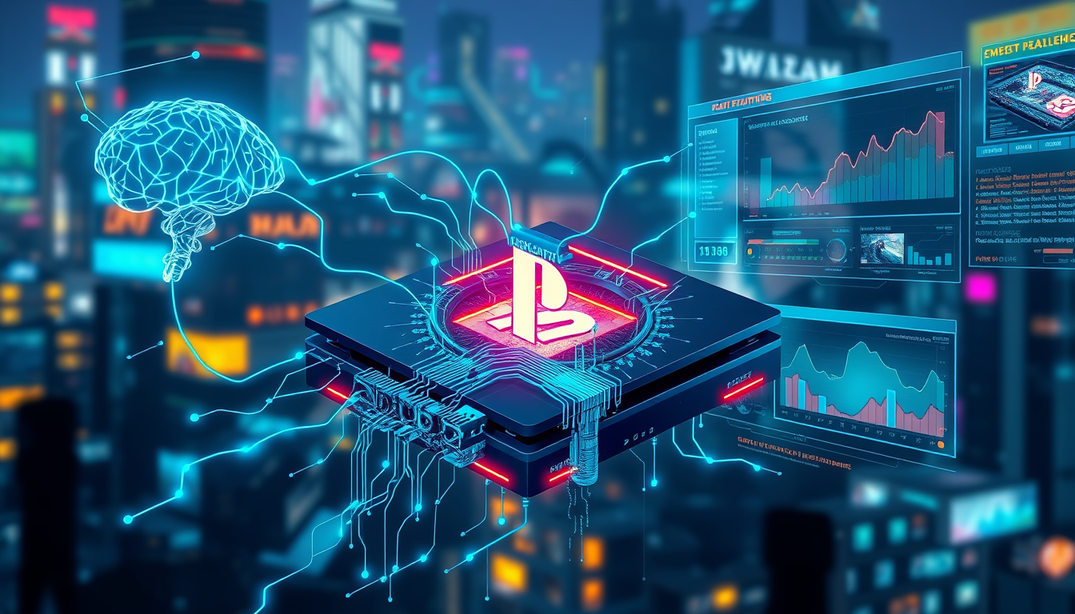
The rumor mill is churning faster than a high-end gaming PC, and the PS5 Pro is the hottest topic on everyone's lips. Will it be the graphical powerhouse we've all been waiting for, the console that finally unlocks the true potential of 4K gaming and beyond? Or will it be a glorified paperweight, a marginal upgrade that leaves us feeling underwhelmed and ripped off? Gamerant speculates on the potential graphical upgrades coming in 2026. We're talking enhanced resolution, improved frame rates that could make even the most demanding PC gamers jealous, and maybe even ray tracing on steroids, bathing our games in glorious, realistic lighting. For those of us rocking 4K TVs or VR headsets, this could be a game-changer (pun intended!), transporting us to new levels of immersion and visual fidelity. Imagine exploring the vast landscapes of *Elden Ring* with even more detail and clarity, or experiencing the heart-pounding action of *Call of Duty* at a buttery-smooth 120 frames per second. My body is ready!
But is it really necessary? The PS5 is already a beast, capable of delivering stunning visuals and smooth performance in most games. Is a mid-gen upgrade worth the investment, especially if it means shelling out hundreds of dollars for a marginal improvement that only the most discerning eyes will notice? Some say yes, especially if it paves the way for smoother VR experiences and more visually impressive games that push the boundaries of what's possible on a console. Others argue that developers should focus on optimizing games for the current hardware instead of chasing the latest tech, ensuring that everyone can enjoy a great gaming experience regardless of their console. I mean, remember the PS4 Pro? It was cool, but not *that* cool. Push Square offers a review of Age of Mythology: Retold on the PS5, showing that the current console can still deliver engaging experiences. It's a tough call, a real Sophie's Choice for gamers, and ultimately it comes down to individual preferences and budget. If you're a hardcore gamer who demands the absolute best, the PS5 Pro might be worth the splurge. But if you're happy with the current PS5, there's no shame in sticking with what you've got. And let's not forget Mark Cerny and FSR 4; according to Eurogamer, it's set to play a key part in the next evolution of PSSR upscaling, so the future looks bright! Don't forget that you can grab a Dualsense controller on sale too according to Polygon. You'll need more than one if you have friends, duh.
The potential impact of the PS5 Pro extends beyond just graphical improvements. It could also pave the way for new gameplay experiences and features. Imagine games that leverage the console's extra processing power to create more complex AI, more detailed physics simulations, or more expansive open worlds. We could see games that are truly next-generation, pushing the boundaries of what's possible in interactive entertainment. However, there's also a risk that the PS5 Pro could fragment the PlayStation ecosystem, creating a divide between those who have the latest hardware and those who don't. Developers might prioritize the PS5 Pro, creating games that look and perform significantly better on the upgraded console. This could leave PS5 owners feeling left behind, unable to fully enjoy the latest games. It's important for Sony to ensure that all games are still playable and enjoyable on the original PS5, even if they don't look quite as good. This article doesn't mention the Xbox Series X Pro, which goes to show that Sony is still leading the console wars!
Beyond the Headlines: Other Trends Shaping Gaming's Multiverse
While AI, esports data, and the PS5 Pro are grabbing headlines and dominating the conversation, several other trends are quietly shaping the gaming landscape, influencing everything from how we play to how games are made. These trends might not be as flashy, but they're just as important, and they deserve our attention. Here's a quick rundown of what's on my radar:
- Responsible Gaming: Yahoo! News reports on WVU hosting a symposium on responsible gaming. This is crucial as the industry grows, ensuring players have access to resources and support to prevent addiction and promote healthy gaming habits. We need to treat gaming addiction the same way we treat any other addiction.
- Cloud Gaming Advancements: How-To Geek highlights the things Nvidia GeForce Now gets right, suggesting that cloud gaming is becoming a viable option for many players, offering access to games without the need for expensive hardware. Say goodbye to expensive gaming rigs!
- Quantum Computing: According to Yahoo! Finance, quantum computing is on the horizon and could revolutionize game development and gameplay with its unprecedented processing power. Imagine games with near-infinite possibilities!
- Gaming as Spectacle: Sports continue to be sports, as can be seen in highlights from Yahoo! Sports' Kings vs. Clippers and Yahoo! Sports' Nuggets vs. Thunder games. It's a reminder that the thrill of competition, be it physical or digital, remains a core human interest. Get rekt, noobs!
It's not all sunshine and rainbows, though. I'm still trying to figure out this Hanging Thread. Like, what even IS that? And Forbes is raving about Split Fiction, which sounds kinda interesting, but I need to see some gameplay footage before I'm sold. Hype is cheap, but gameplay is forever. And finally, for the brainiacs among us, The Times of India has your daily Quordle hints and answers. No shame in needing a little help, right? We all have our weaknesses. What's more, let's not forget the steady rise of VR and AR, which are slowly but surely transforming the way we experience games. While VR headsets might not be mainstream yet, they're becoming more affordable and accessible, and the technology is constantly improving. Imagine playing *Half-Life: Alyx* with even better graphics and more realistic interactions. It's only a matter of time before VR becomes an integral part of the gaming landscape. And AR has the potential to blend the digital and physical worlds, creating entirely new gaming experiences. Think *Pokemon Go* on steroids, where you can battle virtual creatures in your living room or explore hidden worlds in your neighborhood.
Streaming Wars and Beyond: What We're Watching When We're Not Gaming
Gaming isn't the only thing evolving at warp speed; streaming is too! The battle for your eyeballs is fiercer than ever, with new platforms and content constantly emerging, vying for your attention and your hard-earned cash. How-To Geek compares Pluto TV and Tubi, highlighting the growing competition in free streaming services. Who doesn't love free stuff? The entertainment landscape is changing rapidly, with new platforms and content constantly emerging. Even Trump is reacting to "The Apprentice" streaming on Amazon Prime Video, according to The New York Post and Fox 10 Phoenix. The availability of streaming services is something to keep in mind, especially if you plan to watch *Mufasa: The Lion King* when it drops on Disney Plus, according to People and AOL.
The availability of diverse content options and platforms is a win for consumers, allowing for greater choice and flexibility in how they consume entertainment. Whether you're into binge-watching your favorite shows, catching up on the latest movies, or discovering new indie gems, there's a streaming service out there for you. Just like in gaming, competition drives innovation and ultimately benefits the audience. The more platforms there are, the more incentive they have to offer compelling content and competitive pricing. But let's be real, all I watch are gaming streams. The streaming wars are also impacting the gaming industry in significant ways. Streaming platforms like Twitch and YouTube have become essential tools for game developers to market their games and connect with their audience. Streamers can showcase new games, provide tutorials, and build communities around their favorite titles. This has created a symbiotic relationship between the gaming and streaming industries, where each benefits from the other's success. But just like in any industry, the streaming world has its dark side. There have been controversies surrounding streamer misconduct, platform policies, and the exploitation of content creators. It's important to address these issues and create a more ethical and sustainable streaming ecosystem.
Conclusion: The Future is Now, Gamers! Embrace the Chaos!
So, there you have it, my fellow gamers. From AI-generated games that could revolutionize game development to esports data analytics that are transforming the competitive landscape and the potential of a PS5 Pro that promises to melt our eyeballs with its graphical prowess, the gaming world is in constant flux. These changes bring both excitement and uncertainty, but one thing is for sure: the future of gaming is looking brighter (and potentially more data-driven) than ever before. The next few years are going to be a wild ride, filled with new technologies, new experiences, and new challenges. But one thing will remain constant: our passion for gaming. So keep your eyes peeled, your controllers charged, and your minds open. Embrace the chaos, experiment with new games and technologies, and never stop exploring the ever-expanding universe of interactive entertainment. The future is now, and it's ours to shape. This is Galaxy Girl, signing off. GG!
But before I go, let me leave you with a few final thoughts. The gaming industry is not just about technology and entertainment; it's also about community and connection. Gaming brings people together from all walks of life, creating friendships and fostering a sense of belonging. Whether you're playing online with strangers, attending a local gaming event, or simply chatting with friends about your favorite games, gaming provides a powerful way to connect with others who share your passion. So let's celebrate the gaming community and continue to build a more inclusive and welcoming space for everyone. And remember, gaming is not just a hobby; it's a lifestyle. It's a way to express ourselves, challenge ourselves, and escape from the stresses of everyday life. So embrace your inner gamer, let your freak flag fly, and never be afraid to be yourself. Game on, everyone!