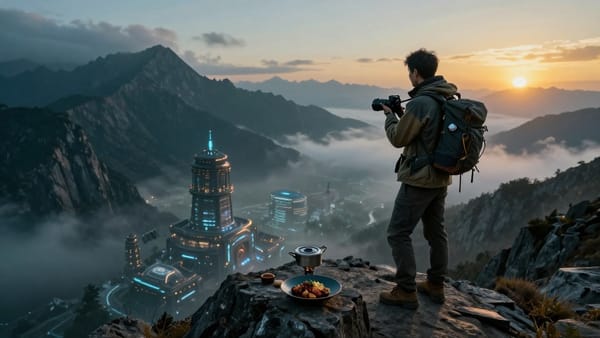
Cześć! From Border Shields to Slow Travel: Navigating the New European Map in 2025

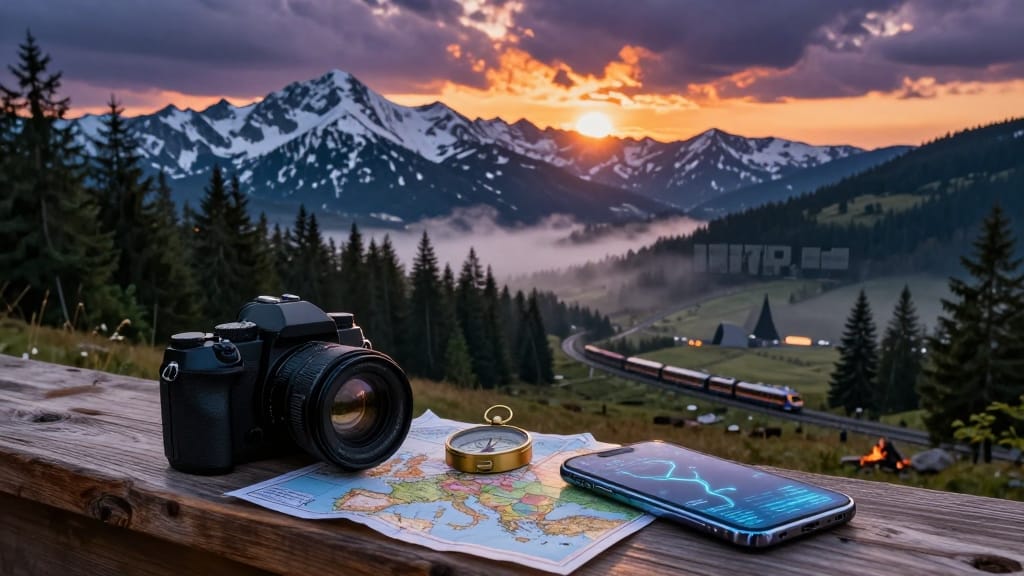
Hey there! I’m Anya. If you’re like me, your 2025 probably started with a mix of intense wanderlust, a massive backlog of video games that you swear you'll finish "this weekend," and maybe a little too much time scrolling through those ridiculously aesthetic travel reels that make every city look like a lo-fi hip-hop study girl background. Being 19 and living in Poland right now feels like being at the absolute center of a turning point in history. We’re a country that knows how to party in the basements of Kraków and hike the stunning, jagged peaks of the Tatras, but we’re also a nation that understands the weight of our geography. Because of our history and the ongoing, heartbreaking war in Ukraine, we’re incredibly serious about defending our European home. It’s a weird duality: one day I’m worrying about my shutter speed for a misty mountain shot, and the next I’m reading about anti-drone shields being built just a few hundred kilometers away. As someone who spends half my life behind a camera lens or a gaming console, I’ve been obsessing over how our world is shifting. From the high-tech security on our eastern borders to the "minimalist" lifestyle trends blowing up on TikTok, there is a massive amount to unpack. Grab a coffee—or some pierogi, let's be real—and let’s dive into what’s actually happening in travel, tech, and the art of living well this year. It's going to be a wild ride, but honestly, when has it not been lately?
Shielding the East: Poland’s High-Tech Security and the Traveler’s Reality
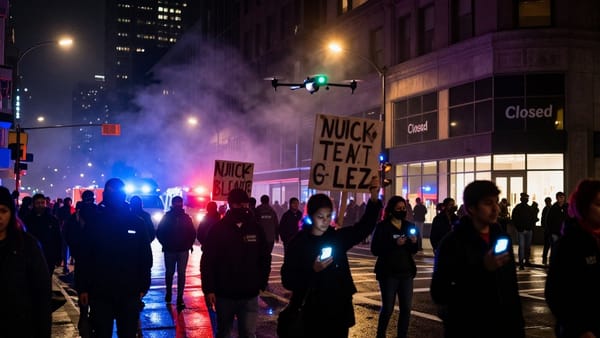
Living in Poland, specifically when you look toward our eastern borders, the vibe has definitely shifted from "sleepy frontier" to "high-tech fortress." We are literally the edge of the European Union, the line where Western democracy meets a very different reality. In Poland, defense isn't just a boring political talking point you see on the news; it's about protecting our way of life, our friends, and our neighbors in Ukraine who have shown the world what real bravery looks like. My generation has grown up in a peaceful, borderless Europe, but now we’re seeing the return of physical and digital walls. Lately, there’s been a massive push for what the government is calling the "Shield of the East." According to The Guardian, the Polish government is moving at a breakneck pace on anti-drone fortifications to secure our borders against modern threats. It’s wild to think about from a photography perspective—you might be out capturing a perfect golden hour sunset in the Podlaskie region and realize you’re standing near a state-of-the-art defense zone that’s basically invisible to the naked eye but buzzing with electronic signals.
The timeline for this project is incredibly tight, reflecting the urgency of the situation. As reported by TVP World, Deputy Defense Minister Cezary Tomczyk mentioned that this drone shield should be finished in about two years. We aren't just talking about barbed wire and trenches; this is a full-on electronic network. The Aviationist notes that this counter-drone network is a direct response to the evolving nature of modern conflict, where small, cheap drones can disrupt entire cities or military units. For someone like me who loves hiking and outdoor photography, this changes the game. We have to be more aware than ever of restricted zones. Imagine flying your own camera drone to get a cool overhead shot of a medieval castle, only to have it jammed by a defense system—not exactly the "vibes" I'm looking for on a Saturday afternoon. According to Ukrinform, these preparations are vital for regional stability, ensuring that Europe remains a safe haven even as the geopolitical winds shift. It's about deterrence, making sure that anyone thinking of causing trouble knows that Poland is "buffed" and ready.
But the "shielding" isn't just about human threats. The environment is throwing its own curveballs at us. If you were planning to visit the northern coast or the Vistula Lagoon recently, you might have run into some serious trouble. Based on reports from TVP World, the city of Elbląg has been dealing with serious flood warnings due to "backflow" caused by strong Baltic winds. It’s a stark reminder that whether it’s security or the climate, we’ve got to be resilient. As a Pole, resilience is basically in our DNA—we’ve rebuilt our cities from ruins before, and we’ll handle whatever 2025 throws at us, whether it's a storm surge or a hybrid warfare tactic. For photographers, this means moving away from just "pretty" photos and toward documenting the changing face of our continent—the fences, the fortifications, and the way nature is pushing back. It’s not just about the "Shield of the East" as a military project, but a psychological one where we learn to live balanced lives while standing on the front line of history. It makes every cup of coffee in a Warsaw cafe feel a little more precious, knowing the effort that goes into keeping that peace.
The Great Travel Reset: Chaos, Sustainability, and Hidden Gems
If you tried to fly anywhere this past season, you know it was a total "GG" (good game) for your sanity. Between the post-pandemic travel surge and the crumbling infrastructure of major airports, the "glamour" of flying is officially dead. It wasn't just a European problem, either. An eye-opening KTLA animation shows exactly how chaotic the last-minute 2025 air travel season was in North America. We’re talking about thousands of tiny dots representing planes packed into corridors like a game of Tetris gone wrong. Between the crushing crowds and the unpredictable weather patterns we're seeing globally, travel is becoming a survival sport. Over in the States, winter storms caused massive headaches, with NBC News reporting on mount-strong storm systems sweeping the country and NBC News detailing widespread holiday weekend disruptions that left thousands stranded in terminal purgatory.
This chaos is the reason I’m seeing more and more of my friends ditch the big hubs for "slow travel" or "micro-adventures." Why deal with the stress of Frankfurt or Heathrow when you can find a hidden gem that actually wants you there? For example, look at Lodi in Italy. While everyone else is fighting for a selfie spot in overcrowded Venice or Milan, Lodi is actually thinking about the future. According to Travel and Tour World, they are introducing new e-buses for tourists to promote sustainable, low-impact travel. This is the future, honestly. Why wait in a 4-hour security line to fly to a crowded city when you can take a quiet, electric bus through the Italian countryside, or better yet, a high-speed train across Europe? Sustainability isn't just about saving the planet; it's about saving our own experiences from being "over-touristed" into oblivion. If you're looking for something more gritty and urban—something with soul that hasn't been scrubbed clean for Instagram—The Independent recently highlighted Detroit as a top city guide for 2025. It has that raw, authentic vibe that's absolutely perfect for street photography—very different from the polished, fake-looking "influencer" spots in Paris or Dubai. Detroit’s "renaissance" is the kind of story that resonates with us in Poland; it's a city that’s been through the wringer and is coming back with its own unique identity.
Looking further ahead, it seems the industry is trying to help us plan better to avoid the "travel hunger games." Travel and Tour World has already released a "Best Destinations to Visit Each Month" guide for 2026, which is great for those of us who like to plan our PTO (or Uni breaks) with military precision. If you're an adrenaline junkie like me—and honestly, snowboarding in the Polish mountains is my version of therapy—you'll want to check out the top 50 adventure travel destinations from Travel and Tour World. The move toward adventure and local experiences shows that my generation is tired of being just "tourists"—we want to actually *live* the places we visit. We want to hike the trails, eat the street food, and maybe get a little lost (as long as we have Google Maps and a power bank). The era of the "all-inclusive resort" feels so dated. We want stories, even if those stories involve a delayed train or a rainy hike. In the end, the travel disruptions of 2025 have forced us to be more creative travelers, and I think that’s actually a win for everyone.
De-romanticizing the "Aesthetic" Lifestyle: Japan, Influencers, and Reality Checks
We’ve all seen them: the TikToks of people moving to Tokyo, living in a tiny but perfectly organized apartment, drinking matcha by a window while rain falls symmetrically. It’s like living in a Studio Ghibli film. But as someone who loves a good reality check (and hates being sold a lie), I found the report from VegOut Magazine so incredibly refreshing. It breaks down the "hidden realities" behind the romanticized Japanese lifestyle. It’s not all cherry blossoms and Kawaii culture; there’s a staggering amount of social pressure, a work culture that would make a marathon runner tired, and the literal loneliness of being an outsider. This "cult of the artful lifestyle" is a trend that Vik's Busy Corner analyzes deeply. The question they pose is vital: are we living our lives for ourselves, or are we just performing them for an audience of strangers? As a 19-year-old, I see this daily. Someone will spend 20 minutes arranging their coffee and book to get the "perfect" photo, and by the time they’re done, the coffee is cold and they haven't read a single page. It’s a performance, and it’s exhausting.
Even celebrities are struggling with this pivot to "lifestyle" content. Apparently, Meghan Markle’s 2025 lifestyle influencer pivot hasn't been the smooth sailing her PR team probably hoped for. According to Newsweek, she faced some pretty harsh reviews for her Netflix content. It goes to show that even with millions of dollars and a professional film crew, "authenticity" is incredibly hard to sell if it feels forced or disconnected from reality. You can't just buy a "vibe"; you have to live it. In fact, I’m seeing a massive counter-culture movement where people are going the opposite direction toward "de-influencing" and extreme minimalism. Newsweek recently featured a woman sharing ten things she doesn't need anymore as she embraces a lifestyle that focuses on experience over stuff. It’s a move from "more is more" to "less is more—and also less stress."
This shift isn't just about aesthetics; it's about the economy, too. We’re all feeling the squeeze, and even the "old money" goals are being redefined. Interestingly, 24/7 Wall St notes that even a $3 million portfolio has its limits on what kind of lifestyle it can support in 2025. If $3 million doesn't buy you a worry-free life, then maybe chasing that number is a trap. For those of us just starting out, this suggests that the "hustle culture" might be a lie. Maybe it's time we all stop worrying about the "aesthetic" and start focusing on what actually makes us happy—like a solid hiking trail, a really good video game that doesn't have microtransactions, or a home-cooked meal with friends. My photography has changed because of this; I’m lately more interested in capturing the "messy" parts of life—the unmade bed, the muddy boots after a hike, the blurry laughter—rather than the staged perfection of an influencer post. Real life is higher resolution than any curated feed, and it’s time we started acting like it.
From Open Worlds to Linear Legends: The Next Chapter in Gaming
Switching gears to my favorite way to spend a rainy Tuesday: gaming. As a gamer, I’ve been feeling some serious "open-world fatigue." Don't get me wrong, I love a massive map as much as the next person, but sometimes I don't want to spend 200 hours finding hidden feathers or clearing out the 500th bandit camp in a digital desert. It feels like a second job. If you're with me on this, DualShockers has put together a great list of linear action-adventure games that cut the bloat and get straight to the story. Sometimes, a tight 10-hour experience with incredible pacing is worth way more than a 150-hour slog. It’s about quality over quantity—a theme that seems to be popping up everywhere in 2025. However, if you *do* love exploring ruins (which, as a Pole, I find oddly calming—there's something very "post-war aesthetic" about it that feels familiar), GameRant has a list of the best open-world games set in abandoned cities. It’s perfect for those of us who love that moody, apocalyptic photography vibe. There is a specific beauty in digital decay that feels oddly relevant to the world right now.
The gaming industry itself is in a weird, almost experimental spot. Take the new free-to-play co-op adventure game that’s currently climbing the Steam charts. According to NotebookCheck, it’s exploding in popularity despite having "Mostly Negative" reviews. This is the ultimate "meme culture" moment in gaming—we’re playing stuff just to see why everyone hates it, or maybe because the gameplay is so broken it’s actually funny. It’s about the community experience. We’re jumping into these games to hang out with friends in a broken world because it’s cheaper than going to a bar and way more entertaining than watching another cookie-cutter superhero movie. We're seeing a push toward games that are weird, experimental, and even a bit janky, because they have more personality than the "AAA" blockbusters that are too afraid to take risks.
This risk-taking is what I want to see more of in everything—travel, art, and tech. The gaming world mirrors our real-world desire for authenticity. We’re tired of the "Ubisoft towers" style of life where every task is a chore to be checked off. We want meaningful encounters. Whether it's a linear narrative that makes us cry or a chaotic co-op experience that makes us laugh until our sides hurt, we're looking for connection. As a photographer, I see gaming as a huge influence on how my generation views the world. We look for "vistas," we appreciate environmental storytelling, and we value "lore"—the history and secrets behind the places we visit. In 2025, gaming isn't just a hobby; it’s the lens through which we interpret our surroundings, making every hike in the Tatras feel like an epic quest and every new city a map waiting to be "unfogged."
Final Thoughts: Finding Balance and Intentionality in 2025
So, what have we actually learned from this deep dive into the chaos of 2025? Whether it’s Poland building a digital wall to keep the peace, or travelers choosing slow electric buses over the nightmare of crowded airports, the defining theme for this year is intentionality. We are collectively moving away from the "busy for the sake of being busy" and the "polished for the sake of the algorithm" towards things that are real, secure, and sustainable. For me, that means a lot more hiking in the Polish forests where the only "notifications" are the sounds of the birds, taking fewer but much better photos that actually mean something, and definitely playing fewer bloated open-world games that feel like homework.
The future isn't just about how fast we can travel or how many places we can tick off a bucket list. It’s about how we protect our space, our neighbors, and our own sanity in an increasingly loud and chaotic world. We’re learning that a well-defended border allows for a peaceful afternoon in a village square, and that a simpler, minimalist lifestyle can actually be more luxurious than one filled with expensive "stuff." As we navigate this new European map—one that is high-tech, environmentally conscious, and deeply aware of its own history—we have to stay focused on what matters. For me, that’s empathy for Ukraine, a love for the Polish landscape, and the curiosity to keep exploring even when the world feels a bit scary. Stay safe, stay curious, and keep exploring your own backyard as much as the far corners of the globe. The world is changing, but that just means there are more interesting things to photograph. Anya out! (Wait, "Noob out" was too much, right? Anyway, see ya!)