Consolidation and Complexity: The Evolving Landscape of Artificial Intelligence and Consumer Tech in 2025

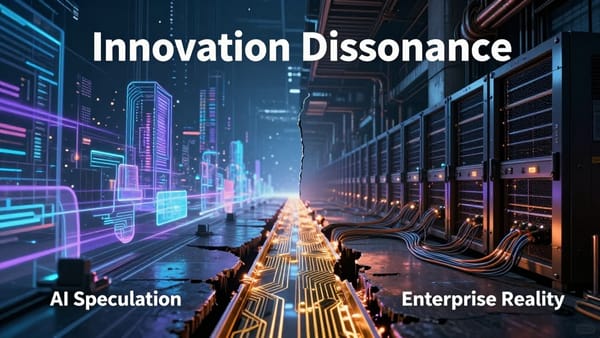
As 2025 draws to a close, the technology sector is undergoing a profound transformation characterized by massive infrastructure investments, the maturation of generative AI, and a shift toward specialized hardware. The era of speculative experimentation—the "wild west" of 2023 and 2024—has given way to a period of strategic consolidation. We are witnessing a phase where market leaders are no longer merely chasing the next shiny object; instead, they are securing the talent, intellectual property, and silicon necessary to maintain dominance in the long term. This transition is marked by a move away from general-purpose solutions toward highly optimized, vertical integration. From massive multi-billion dollar acquisitions in the semiconductor space to the nuanced evolution of AI coding agents that are beginning to write the very software we rely on, the industry is moving toward a future defined by efficiency and practical application.
This "great settling" is not merely about who has the fastest processor, but who can provide the most reliable, scalable, and cost-effective ecosystem. For the first time since the mobile revolution of the late 2000s, we are seeing a fundamental reshaping of the stack, from the physical layer of the data center to the user interface of the consumer device. For stakeholders, from institutional investors to the end-user, the implications are clear: the cost of entry into the high-tech tier is rising, and the complexity of the systems we interact with is deepening. In this analysis, we will deconstruct the pivotal deals and trends that defined the year, exploring why these shifts matter and how they will dictate the trajectory of innovation as we head into 2026.
The $20 Billion Play: Nvidia’s Strategic Acquisition of Groq
In a move that signals a tectonic shift in the semiconductor industry, Nvidia has reportedly reached an agreement to acquire AI chip startup Groq. According to reports from Yahoo Finance and CNBC, the deal is valued at approximately $20 billion, marking it as one of the largest and most strategically significant acquisitions in Nvidia's history. Groq, founded by former Google engineers who were instrumental in the development of the Tensor Processing Unit (TPU), has gained notoriety for its Language Processing Units (LPUs). Unlike Nvidia’s traditional GPU architecture, which was born from a need for parallel processing in graphics, the LPU is designed specifically for inference speed, removing the latency bottlenecks that often plague large language models (LLMs) in real-time applications.
The strategic value of this deal cannot be overstated. As noted by Reuters, this acquisition allows Nvidia to bridge the gap between training massive models and serving them efficiently to billions of users. While GPUs remain the gold standard for the "training" phase—where models ingest petabytes of data—the "inference" market is where the industry’s long-term profitability lies. Inference is the actual act of an AI generating a response to a prompt. As AI moves from back-end experimentation to front-end consumer interaction (such as real-time voice translation or autonomous reasoning), the requirements shift from raw power to "tokens per second." Nvidia’s H100s and B200s are powerhouses, but Groq’s deterministic architecture provides a specialized efficiency that Nvidia desperately needs to maintain its lead against in-house chip efforts from the likes of Amazon and Google.
The Information suggests that this megadeal is a defensive and offensive masterstroke. Defensively, it prevents a competitor—perhaps Intel or AMD—from leveraging Groq’s architecture to challenge Nvidia’s dominance in the inferencing space. Offensively, it allows Nvidia to integrate specialized licensing into its CUDA ecosystem, a point further elaborated on by Bloomberg. For the broader market, this acquisition signals that the "one size fits all" era of the GPU is ending. To reach the next level of AI performance, hardware must be as specialized as the software it runs. This move essentially cements Nvidia’s role as the "Standard Oil" of the AI age, controlling not just the refineries (training) but the pipelines (inference) through which all AI value must flow.
Beyond the Chip: Infrastructure and the "Phase 2" of AI
While Nvidia dominates the hardware headlines, the industry is increasingly looking toward the infrastructure that supports these chips. The initial hype of the generative AI boom was centered on the models themselves—GPT-4, Claude, Gemini. However, as we have moved through 2025, the narrative has shifted toward the "plumbing" of the AI era. Long-term sustainability in AI requires massive cloud capacity, sophisticated database management, and, perhaps most importantly, reliable power. Evidence of this shift is clear in the performance of legacy tech giants who have successfully pivoted. For instance, MarketBeat argues that companies like Oracle are the true winners of "Phase 2" of the AI boom, providing the essential cloud residency and integrated software suites that enterprises need to turn raw compute power into actionable business tools.
This "Phase 2" is defined by the transition from experimentation to production. Large enterprises are no longer interested in "chatting" with a bot; they are interested in building RAG (Retrieval-Augmented Generation) systems that can query their private data securely. This requires a robust cloud infrastructure that can handle low-latency requests while maintaining strict data sovereignty. Oracle’s success stems from its ability to offer hybrid cloud solutions that allow companies to keep their data local while leveraging top-tier AI compute. This is a critical distinction that many pure-play cloud providers missed. The focus has moved from the quantity of data to the quality of the pipeline. As energy costs for data centers skyrocket, the "Phase 2" winners will be those who can optimize the entire lifecycle of a request, from the database query to the AI response, with minimal energy loss.
This push for digital transformation is not limited to big tech. Even traditional sectors are feeling the pressure to modernize. As analyzed by MPA Mag, there is no room for complacency regarding technology adoption in sectors like brokerage and finance. The competitive gap is widening between firms that integrate advanced software workflows and those that rely on legacy systems. This trend is a hallmark of the 13 tech trends that defined 2025, according to the Irish Independent. The publication highlights how AI has permeated everything from consumer entertainment to regulatory battles over digital piracy, specifically citing the "dodgy box wars" as a symptom of a larger struggle between decentralized tech and traditional copyright holders. 2025 has shown us that AI is not a standalone industry; it is a catalyst that is forcing every other industry to redefine its operational basics.
The Technical Underpinnings: Coding Agents and AI Risks
The practical application of AI is perhaps most visible in the software engineering space. We are seeing a transition from simple "autocomplete" suggestions, like the early versions of GitHub Copilot, to fully autonomous "coding agents." An in-depth look by Ars Technica explains how these agents work "under the hood," utilizing complex feedback loops to debug and refactor code with minimal human intervention. These agents are capable of spinning up their own test environments, identifying bugs, and iterating until the code passes established benchmarks. For the professional developer, the role is shifting from a writer of code to a director of agents, a change that promises to exponentially increase software output while simultaneously lowering the barrier to entry for complex system architecture.
However, this leap in productivity is not without its costs. As we entrust more of our digital infrastructure to autonomous agents, the risk of "cascading failures" increases. If an agent refactors a legacy system without fully understanding the esoteric dependencies that have existed for decades, it could introduce vulnerabilities that are difficult for human overseers to detect. This brings us to a pivot in the AI conversation: the psychological and ethical risks of a hyper-automated world. As AI becomes more immersive and capable of generating hyper-realistic content, the consequences for human perception are coming under scrutiny. We are entering an era of "digital vertigo," where the line between synthetic and organic experience is increasingly blurred.
A recent report from Futurism discusses the emergence of what some researchers are calling "AI psychosis." This term refers to the potential mental health risks associated with startups producing increasingly hallucinatory, unsettling, or hyper-realistic AI-generated imagery. The concern is twofold: first, the potential for bad actors to use these tools for psychological manipulation, and second, the inherent stress placed on the human brain when it is consistently exposed to "uncanny valley" content that triggers deep-seated cognitive dissonance. This tension between technical capability and human well-being remains one of the most significant hurdles for the industry. While the Silicon Valley mantra of "move fast and break things" has served the industry well in the past, breaking the human perception of reality carries risks that no software patch can easily fix. As we move into 2026, the demand for "Agile Ethics" will likely become as loud as the demand for faster chips.
Consumer Hardware and the Utility of Mature Tech
In the consumer sphere, 2025 was a year of refinement rather than radical reinvention. After years of chasing foldable screens and VR headsets that struggle to find a mainstream audience, the focus has shifted back to battery efficiency, portability, and reliable accessories—the "boring" tech that actually makes a difference in daily life. Industry reviewers at ZDNet released their definitive list of the best products tested in 2025, highlighting devices that offer tangible value over marketing hype. The consensus among analysts is that the consumer is suffering from "feature fatigue"; they no longer want more features, they want the features they already have to work more reliably and for longer periods without a charge.
High-capacity peripherals have become essential for the mobile professional who now carries a suite of AI-capable devices. For instance, The Verge notes that power banks from brands like Anker and essential console deals continue to dominate consumer interest. This represents a "utility first" mindset. Even the most advanced AI laptop is useless if its battery dies three hours into a cross-country flight. This resurgence of interest in high-end power management and peripheral connectivity proves that while software is moving at light speed, hardware remains tethered to the laws of physics and chemical energy storage. The "Gear of the Year" for 2025 isn't just about the newest smartphone, but the ecosystem of tools that keep that smartphone functional in a high-demand environment.
This integration extends into the automotive world, which is arguably becoming the largest mobile device in the consumer ecosystem. Car and Driver recognized this in their "Gear of the Year 2025" awards, noting that the most impressive automotive technology no longer lives solely under the hood, but in the software-defined cabins. We are seeing a homogenization of the digital experience; your car’s interface now mimics your smartphone to reduce cognitive load on the driver. However, technology isn't always about the next big thing; sometimes it's about the comfort of the familiar. This is evident in the continued popularity of casual digital experiences, such as the NYT Connections puzzles. Even as we build AGI, ABP Live reports that users still deeply care about small cultural touchstones like the Google Holiday Doodles—their occasional absence or change in 2025 sparked genuine user backlash. It serves as a reminder that tech is ultimately a tool for human connection and daily habit, not just a metric for architectural supremacy.
Conclusion: The Path Toward 2026
The narrative of 2025 is punctuated by a sense of maturing ambitions. We have moved past the initial shock of generative AI's capabilities and entered a period of disciplined execution. Nvidia’s acquisition of Groq is the definitive signal that the hardware arms race is moving into a more specialized and efficient "inference" phase, prioritizing the delivery of intelligence over the mere creation of it. At the same time, the success of companies like Oracle underscores a critical reality: the AI revolution is as much a triumph of data infrastructure and logistics as it is a breakthrough in neural network design. The "winners" of 2025 were those who recognized that the AI stack is interconnected; you cannot have a world-class model without world-class silicon, and you cannot have world-class silicon without a cloud infrastructure capable of supporting its massive power and data demands.
Looking forward to 2026, the primary challenge for the technology sector will be managing the friction between rapid technical acceleration and the societal frameworks—psychological, ethical, and regulatory—needed to sustain it. As coding agents begin to redefine professional labor and consumer gadgets prioritize utilitarian reliability over novelty, we are entering an era of "integrated AI." In this new paradigm, technology will become less visible but more pervasive. The goal is no longer to be "awed" by the machine, but to have the machine seamlessly enhance human productivity and creativity. As the Tech Observer, I anticipate that the next twelve months will be defined by how well we navigate the risks of "AI psychosis" and autonomous vulnerabilities while reaping the undeniable rewards of this new computational age. The era of the "experiment" is over; the era of the "system" has begun.