CES 2026 Innovation Clashes with Retail Shifts and Civil Unrest

Lead: A wave of technological breakthroughs at CES 2026 and new political recruitment efforts are shaping the start of the year, even as localized retail closures and public safety incidents signal ongoing domestic volatility. From Intel’s new semiconductor milestones to a chaotic vehicle incident at a Los Angeles protest, the opening weeks of 2026 reveal a nation balancing rapid industrial modernization with deep-seated social and economic friction.
The dawn of 2026 has arrived with a sharp divide between the high-tech promises of "agentic" artificial intelligence and the terrestrial realities of a shifting retail landscape. While global tech giants gathered in Las Vegas to showcase the future of computing and automotive engineering, local communities from Texas to Maryland are grappling with the departure of long-standing businesses and a rise in commercial security concerns. This dichotomy highlights a period of intense transition where the digital economy accelerates even as physical storefronts in the furniture and apparel sectors face a reckoning. Simultaneously, the political theater for the upcoming election cycle has intensified with high-profile recruitment in the Pacific Northwest, suggesting a strategic realignment as parties prepare for a rigorous legislative battle. This report synthesizes the technological, political, and public safety developments currently defining the national landscape, offering a comprehensive look at the forces driving change in the early weeks of the new year.
The Hardware Frontier: CES 2026 and Breakthrough Tech
The technology sector is currently defined by a move toward highly integrated, "agentic" systems. As reported by Axios, Anthropic’s Claude is moving deeper into office environments, part of a broader race to deploy software that can autonomously manage information tasks rather than just generating text. This shift toward "AI agents"—software capable of planning, using tools, and completing multi-step goals—represents a departure from the simple chatbots of years past. At CES 2026, this software capability met its hardware match. According to ZDNET, the week-long event featured transformative announcements across laptops and consumer gadgets that prioritize seamless AI integration, moving the technology from the cloud directly onto local devices.
A central pillar of this hardware evolution is Intel’s new 18A process technology, which serves as the foundation for its latest chipsets. As noted by The Outerhaven, the new Panther Lake chips are designed to eliminate the need for multi-device setups by providing the power required for heavy video encoding alongside high-efficiency mobile performance. For creators and professionals, this means the end of choosing between a powerful desktop and a portable laptop; the 18A process allows for a thermal efficiency that was previously unattainable in slim form factors. This innovation arrives as MIT Technology Review released its annual list of 10 Breakthrough Technologies for 2026, highlighting a year where theoretical science, including advanced robotics and quantum-resilient encryption, is rapidly transitioning into commercial application.
The boundaries of traditional industries are also blurring, as the "everything is a computer" philosophy reaches the automotive sector. In a notable pivot, the Chinese appliance manufacturer Dreame Technology moved away from vacuums to debut the Nebula Next 01 hypercar concept. This vehicle is aimed at competing with luxury brands like Rimac and Bugatti, utilizing advanced vacuum-honed aerodynamics and high-density battery arrays. This cross-sector expansion indicates that the next phase of tech growth will rely on applying high-end sensor and battery technology developed for home robotics to the automotive and industrial sectors. For consumers, this implies a future where brand loyalty is no longer confined to specific product categories, but rather to the technological ecosystems that power them.
Furthermore, the integration of technology into the home is becoming more invisible yet more pervasive. Innovations in "ambient computing" were a recurring theme at CES, with companies showcasing smart glass and haptic surfaces that replace traditional screens. The goal for 2026 appears to be the reduction of "screen fatigue" by embedding intelligence into the environment itself—a move that relies heavily on the low-latency processing enabled by those same Intel 18A chips. When the processor can handle massive datasets locally, the reliance on constant internet connectivity is reduced, potentially solving many of the privacy and lag issues that plagued the previous generation of smart home devices.
Retail Volatility and Economic Transitions
While the tech sector looks toward expansion, the traditional retail sector is facing a contraction that signals a fundamental shift in consumer habits. In Ohio, Value City Furniture has initiated going-out-of-business sales at 21 locations. This liquidation represents more than just a single company’s struggle; it reflects a broader challenge for large-format retailers who must manage expensive floor space while consumers increasingly prefer direct-to-consumer models or high-end bespoke experiences. This trend of brick-and-mortar consolidation is felt at the local level as well; for instance, the downtown staple Nash Bros. Stores in New Braunfels announced it will close by the end of January after 14 years of operation.
Economic shifts are also being felt in luxury and custom markets, where the focus has moved from inventory quantity to design services. According to The Georgetowner, high-end custom cabinetry firms like Ateliers Jacob are attempting to maintain a foothold by focusing on large-scale, 3,300-square-foot showrooms that emphasize design and personal consultation over mere product sales. This indicates a bifurcation of the market: while middle-tier retailers are closing, specialized luxury services and ultra-low-cost e-commerce platforms are seeing relative growth. For real estate owners, this transition is creating a "donut hole" in suburban shopping centers, where once-stable anchor tenants are disappearing, leaving smaller shops vulnerable.
However, small business stability is currently threatened by more than just market forces. A rise in property crime is adding an unexpected operational expense to an already stressed sector. In Maryland, Baltimore County police are investigating a "burglary spree" targeting small businesses along Frederick Road, as reported by WMAR 2 News. Nearby, WBAL-TV confirmed that detectives are examining a series of commercial break-ins in Catonsville, highlighting a spike in property crime that is forcing local owners to reconsider their security investments. These "smash-and-grab" incidents, often occurring overnight, result in losses that go beyond stolen inventory, including significant repair costs for storefronts and rising insurance premiums that may ultimately drive more small entrepreneurs out of the physical marketplace.
The long-term implications of these closures are significant for local tax bases and urban planning. As large retailers like Value City Furniture vacate large footprints, cities are forced to rethink zoning laws to perhaps allow for mixed-use developments or "ghost warehouses" for delivery services. This transition period, while painful for employees and local shoppers, is carving out a new role for the suburban storefront, shifting it from a place of transaction to a place of fulfillment and high-touch service. The success of this transition will likely depend on whether local governments can provide the safety and infrastructure necessary to keep both employees and customers coming back to physical locations.
Public Safety and Civil Unrest
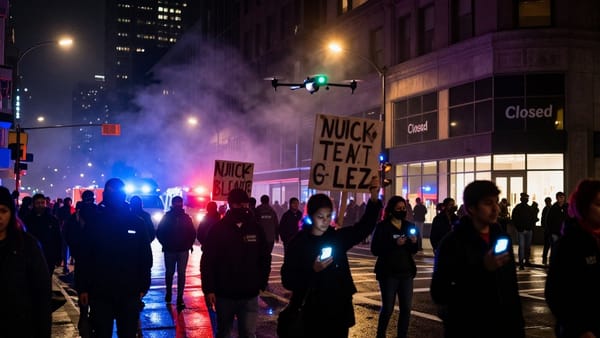
Civilian safety and the right to peaceful assembly have been tested by political friction in the opening weeks of the year. A chaotic scene unfolded in Westwood, California, when a U-Haul drove into a crowd during a rally against the Iranian regime near the federal building. While the LAPD continues to investigate the intent behind the driver's actions, the incident serves as a grim reminder of the vulnerability of public protests in an era of heightened geopolitical sensitivity. Such incidents underscore the tensions surrounding international policy and how global conflicts are increasingly mirrored in domestic city streets. This sentiment was echoed on the opposite coast, where protesters in Florida filled intersections in Cape Coral to demand changes to U.S. foreign and immigration policies, highlighting a growing public appetite for federal reform and a willingness to use civil disruption as a tactic for visibility.
In response to these digital and physical safety concerns, state governments are moving toward stricter oversight and more robust protective measures. As reported by The Verge, New York Governor Kathy Hochul has made the regulation of platforms like Roblox a centerpiece of her policy, aiming to protect minors from online risks ranging from financial exploitation to inappropriate contact. This push for "digital boundaries" mirrors the physical boundaries being tested at rallies; both represent a state-level effort to reclaim a sense of order in spaces—both virtual and literal—that have recently felt chaotic. Governor Hochul’s focus on Roblox specifically highlights the unique challenges posed by decentralized gaming platforms that function as social networks for children, often operating outside the traditional rules of social media moderation.
This regulatory push is occurring alongside changes in corporate IT infrastructure that reflect a similar desire for control. Petri reports that a new Windows 11 policy now allows administrators to automatically remove Microsoft Copilot, giving organizations more control over their digital environments amid privacy and productivity concerns. For enterprise IT managers, the ability to selectively disable AI features is a crucial tool in managing data sovereignty and ensuring that automated systems do not lead to accidental data leaks. This move suggests that while the tech industry is pushing "AI everywhere," the actual adoption of these tools will be gated by safety and compliance protocols that allow humans to pull the "eject" handle.
The convergence of these events—vehicle-involved unrest in California, immigration protests in Florida, and digital safety laws in New York—paints a picture of a nation grappling with the limits of freedom and the necessity of protection. Whether it is shielding children from online predators or protecting demonstrators from lone-actor violence, the common thread is a demand for more proactive intervention from both the state and private tech providers. As these policies take shape, they will likely face legal challenges that test the balance between security and individual liberty, a debate that is expected to dominate the 2026 legislative sessions.
Politics and Professional Shifts
The institutional landscape as of January 2026 is also undergoing significant leadership reassessments, ranging from the world of professional sports to the highest levels of government. In the NFL, the future of the Green Bay Packers is under intense scrutiny as The Athletic reports Coach Matt LaFleur is meeting with team president Ed Policy to discuss his tenure and the team's direction beyond the 2026 season. These high-level organizational meetings typically signal either a renewed long-term commitment or the beginning of a transition phase, and the outcome will significantly impact one of the league’s most storied franchises and its community-owned business model.
On the national political stage, the Democratic Party has scored what many analysts consider a major recruitment victory for the 2026 midterms. According to The New York Times, former Congresswoman Mary Peltola has officially announced a run for the Senate in Alaska. This move is viewed as a critical component of the party’s strategy to navigate a difficult electoral map and attempt to reclaim control of the Senate chamber by targeting traditionally Republican-held regions with a candidate who holds a proven track record of cross-party appeal and a focus on local resource management and fishing rights. Peltola's candidacy is expected to turn Alaska into one of the most expensive and closely watched battlegrounds of the year, testing whether a "moderate-localist" approach can overcome partisan polarization in a statewide race.
The entry of Peltola into the race changes the national math for Senate control, forcing the opposition to spend resources in a market they previously considered safe. This professional shift mirrors a broader trend where established figures are moving from the legislative "safe zones" of the House into more competitive statewide arenas. It also reflects a realization that in 2026, personal brand and localized messaging may be more effective than generic national platforms. As the primary season approaches, voters will likely see more candidates attempting to emulate this "non-traditional" path, focusing on specific regional economic issues like infrastructure and energy rather than polarizing social debates.
Ultimately, these leadership shifts—whether in a front office in Green Bay or a campaign headquarters in Anchorage—demonstrate a period of professional "reset." As the dust settles from the economic and technological disruptions of the previous year, institutions are looking for leaders who can provide stability and adapt to the specific needs of their constituents or fanbases. The next six months will be a period of intensive vetting and strategy development, as these leaders attempt to solidify their positions and define the narrative that will carry them through the challenges of 2026 and beyond.
What we know
- Intel's Panther Lake is built on the advanced 18A process, emphasizing a shift toward high-performance, single-device computing solutions that prioritize local AI processing SOURCE.
- Mary Peltola's Senate run in Alaska is a strategic recruit for Democrats aiming to win a statewide seat in a traditionally Republican-leaning market SOURCE.
- Value City Furniture is liquidating stock at 21 Ohio stores as part of a significant going-out-of-business sale, reflecting broader retail stress SOURCE.
- A vehicle driving into a crowd in Westwood involved a U-Haul during an anti-regime protest, leading to an active LAPD investigation SOURCE.
- New Windows 11 policies give IT administrators the power to completely uninstall Microsoft Copilot for enterprise security and management SOURCE.
- The state of New York is pursuing specific regulations for the gaming platform Roblox, specifically targeting features that impact minor safety SOURCE.
- Dreame Technology showcased the "Nebula Next 01," a hypercar concept, at CES 2026, marking a shift from home appliances to electric vehicles SOURCE.
- Baltimore County police have confirmed a series of overnight commercial burglaries along the Frederick Road corridor in Catonsville SOURCE.
What we don’t know yet
- The specific motive behind the U-Haul incident in Westwood—whether intentional, accidental, or politically motivated—remains under investigation by the LAPD.
- The exact list of small businesses targeted in the Catonsville burglary spree has not been fully disclosed as police continue to tally losses SOURCE.
- The long-term employment impact of Anthropic’s "agentic" software on administrative job sectors is still speculative, with no confirmed data on job displacement figures SOURCE.
- The specific technical specifications and production timeline for the Dreame Nebula Next 01 remain undisclosed following its concept debut.
Why it matters
- Consumer Policy: The New York move to regulate Roblox could set a precedent for state-level intervention in global social platforms, potentially leading to a fragmented regulatory landscape for tech.
- Market Stability: Massive retail closures in Ohio and the end of local staples in Texas suggest that middle-market furniture and goods are struggling to survive the rise of digital and luxury specialized markets.
- National Security: Public safety incidents at protests show that domestic tensions over foreign policy continue to manifest in physical threats, requiring new adaptive security strategies for urban centers.
- Technological Sovereignty: Intel’s 18A process is a key component in the push for domestic semiconductor manufacturing, reducing reliance on overseas foundries for high-end AI chips.
What’s next
- End of January 2026: Final closure of Nash Bros. Stores in New Braunfels, marking the end of a 14-year community staple SOURCE.
- Legislative Deadlines: Expected introduction of formal language for New York’s online safety requirements for kids in the coming weeks.
- Criminal Investigations: Updates from Baltimore County police regarding forensic evidence or suspect descriptions from the Frederick Road burglary spree.
- Political Campaigning: Initial polling for Mary Peltola’s Senate run in the Alaska market, expected to be released by mid-quarter.
- Hardware Benchmarks: Release of the first independent performance tests for Intel's Panther Lake chips as they reach OEM partners.
Comprehensive Synthesis and Future Outlook
The events defining early 2026 illustrate a nation in a state of high-speed recalibration. On one hand, the technological innovations unveiled at CES suggest a future of unprecedented efficiency and local computing power, where the 18A semiconductor process enables a new era of AI that is both personal and private. This progress, however, stands in stark relief against the tangible struggles of the retail sector. As the "going out of business" signs go up in Ohio and Texas, they serve as a reminder that technological advancement does not always provide an immediate lift to traditional commercial models. The transition from massive physical storefronts to streamlined, digitized, or highly specialized luxury experiences is a painful process that is redefining the American suburban landscape and creating new economic pressures for small business owners and their employees.
Looking forward, the combination of political recruitment and public safety concerns suggests that the coming months will be characterized by intense debate over how to manage both digital and physical spaces. The regulatory efforts in New York and the IT policy shifts at Microsoft show a growing consensus that "moving fast and breaking things" is no longer an acceptable mantra for the tech industry, especially where child safety and corporate data are concerned. Meanwhile, the strategic entry of candidates like Mary Peltola into statewide races indicates that the political landscape is becoming increasingly focused on regional pragmatism rather than national slogans. As these forces—technology, economy, and politics—continue to intersect, the defining challenge of 2026 will be the ability of institutions to bridge the gap between the rapid pace of digital innovation and the human-scale needs of local communities.