Border Hurdles, Sauce Obsessions, and the European Renaissance: Navigating Travel and Lifestyle in 2026

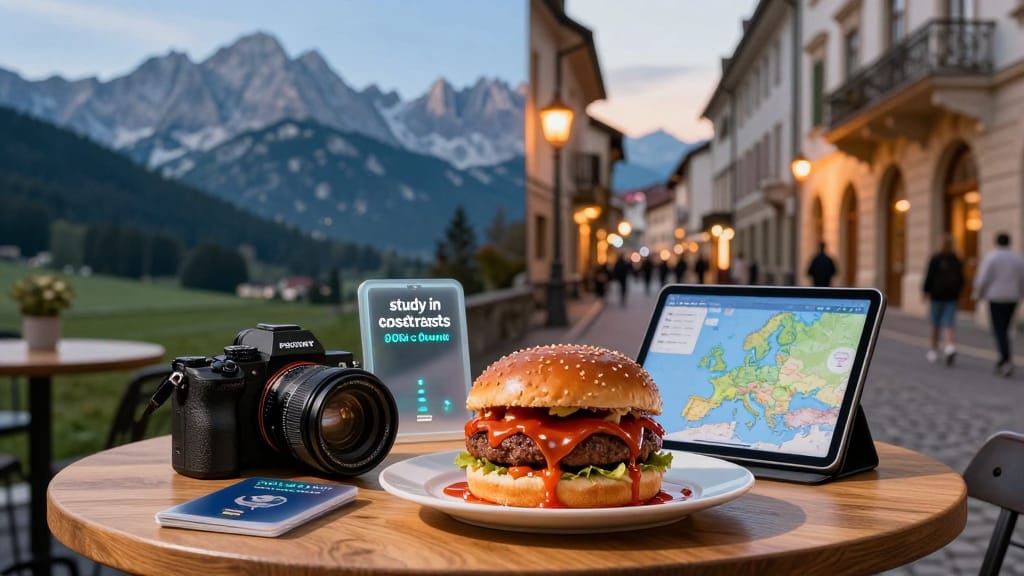
If you’re anything like me, your "saved" folders on Instagram are a chaotic, beautiful mess. One minute I’m scrolling through misty Tatra Mountain peaks that make me want to lace up my hiking boots, and the next, I’m obsessed with aesthetic street food from a hidden corner of Krakow or scouting hacks for a 12-hour flight to Tokyo. But lately, the vibe of global travel and lifestyle is shifting faster than I can swap a lens on my Sony A7IV. We are entering 2026—a year where our collective desire to explore the world is crashing head-first into new bureaucratic walls, while simultaneously, our "Old Continent" is finding a fresh sense of swagger and self-reliance. It’s a wild study in contrasts: one day the US is weighing social media checks for tourists, and the next, China is suddenly rolling out the red carpet for Brits.
This isn't just about where we pin our locations on a map; it’s about how we actually live when we get there. Whether it’s the "Golden Age of Condiments" taking over our kitchens or the high-stakes game of European defense and diplomacy, the world feels smaller and more complicated all at once. For those of us living in Poland or anywhere across the EU, the "rough winds" mentioned by our leaders aren't just political rhetoric—they are the headwinds we feel when booking flights or watching the news. But you know what? Our determination to keep moving, keep shooting, and—honestly—keep eating damn good food while we do it is stronger than ever. In this deep dive, I’m breaking down the trends, the drama, and the data shaping our adventures this year. From the ethics of wildlife photography to the "two-speed Europe" debate, buckle up—this is the reality of 2026.
The Visa Seesaw: Open Borders in the East, Digital Walls in the West
As a seasoned traveler and a bit of a tech nerd, there is nothing more annoying than a visa application that feels like a background check for a high-security spy agency. We are living through a bizarre paradox. On one side of the globe, doors that were once locked tight are swinging open with surprising speed. During a recent visit to Beijing—the first by a British PM in eight years—the BBC reported that China will now allow visa-free travel for Britons. This is a massive win for spontaneity. As further detailed by Reuters, British citizens can now visit China for up to 30 days without a visa, a move framed by the UK government as a significant boost for business and cultural exchange. Imagine just booking a flight to Shanghai on a whim? That’s the kind of energy I live for.
But while the East is playing it cool, the West is getting weirdly invasive. The United States is moving toward a much more "main character energy" approach to security that feels more like an episode of Black Mirror than a welcoming committee. Sky News reports that US plans to check tourists' social media accounts are actively putting people off traveling. According to the World Travel & Tourism Council, this policy could damage job creation and cost the US economy billions in lost revenue. From a photography and meme-loving perspective, the idea of a border agent scrolling through my private memes or critiquing my lighting on an old Instagram post is a total "no thanks." It feels like a violation of the digital self, and travelers are voting with their feet. This friction is even fueling talk of major boycotts; The New Republic notes that some European fans are contemplating a boycott of the U.S.-hosted World Cup matches, reflecting a deeper distaste for certain American political directions and surveillance tactics.
Why does this matter? Because travel thrives on the "low-friction" model. When you add layers of digital scrutiny, you aren't just catching bad actors; you're alienating the creative class, the digital nomads, and the casual tourists who just want to see the Grand Canyon without having their Twitter history audited. The long-term impact could be a massive shift in tourism flows toward regions that actually value privacy and ease of entry. For us Europeans, this might mean spending more time exploring the hidden gems of Central Asia or North Africa rather than jumping through hoops for a trip to NYC. It’s a shift in the global power dynamic of tourism, and frankly, the US might find itself on the losing end if it doesn't rethink its digital "walls."
The Bulletproof Traveler: Health, Insurance, and Economic Reality
Despite the "rough winds" of global politics, we aren't staying home—we’re just getting more tactical. We’ve become "bulletproof" in our planning. A survey by The Points Guy and YouGov reveals that 72% of Americans are bullish about 2026, planning to spend the same or more on their trips. This tells me that travel has shifted from a "luxury" to a "non-negotiable" for our generation. However, this optimism isn't blind; it’s tempered by a growing anxiety about the skyrocketing costs of just... existing. The Washington Post reports that healthcare costs, rather than food or rent, have become the top concern for Americans, with one in three "very worried" about affordability.
This financial anxiety is making travelers way smarter about risk management. In the US, the stakes are terrifyingly high. For the college crowd heading out for Spring Break, Atlanta News First emphasizes that emergency medical coverage starting at just $29 is a non-negotiable insurance against financial ruin. Coming from Poland, where we take our (admittedly imperfect) socialized healthcare for granted, the idea of a $50,000 hospital bill for a broken ankle while snowboarding in Colorado is enough to make my heart stop. We are seeing a boom in "niche insurance"—policies that cover everything from flight cancellations due to climate protests to emergency medevacs from remote hiking trails.
The implications here are profound for the travel industry. If 72% of people are maintaining their spend despite economic pressure, they are likely cutting back elsewhere—maybe fewer luxury dinners in favor of street food (which is better anyway, let’s be real) or choosing "second-city" destinations that offer more bang for the buck. We’re also seeing a "health-first" travel mentality. Travelers aren't just looking for a beach; they're looking for a destination where they feel safe and where the food won't kill them. This "survivalist" approach to travel planning is the new norm. Whether it’s researching the nearest high-quality hospital or obsessing over travel insurance fine print, the 2026 traveler is less "influencer-wandering-aimlessly" and more "tactical-explorer-prepared-for-anything." It’s about resilience, and quite honestly, it makes the reward of reaching that mountain summit or finding that perfect café feel even more earned.
Sauce Obsessions and Food Safety: The Golden Age of Condiments
When we aren't hiking or snowboarding, what are we doing? We’re eating. And right now, the culinary world is going through a full-blown "sauce era." I’m not talking about basic ketchup. The Washington Post points out that we are living in the "Golden Age of Condiments," where people are so obsessed with chili crisp, dill pickle ranch, and hot-honey barbecue that they won't leave home without their own stash. It’s a total mood—I’ve definitely been that person carrying a small bottle of Polish horseradish or some artisanal hot sauce in my backpack while traveling through countries with "milder" palates. It’s about personalizing the experience; we want global flavors, but we want them to taste exactly how we like them.
But the culinary world isn't all glitter and hot honey. There are serious logistics and safety issues behind the scenes that affect how we eat while traveling or living abroad. The New York Times reports that new, confusing rules for SNAP benefits (food stamps) in the US are leaving both grocery stores and consumers in a daze, highlighting a growing divide in food security. Meanwhile, a massive recall by Local 12 involving Gold Star Distribution, Inc. and products like Pringles—yes, my favorite hiking snack!—has highlighted the risks of rodent and bird contamination in the supply chain. This is a wake-up call for anyone who relies on processed snacks while on the road. When "bird contamination" starts popping up in news alerts, you start looking at that bag of chips a little differently.
For the budget-conscious traveler or student, the strategy is shifting away from expensive fresh produce toward frozen alternatives. AOL suggests that buying frozen is often better than fresh for items like peas or corn, offering a way to eat nutritiously without the "fresh food" price tag or the guilt of food waste. As travelers, this is a lesson in sustainability. If we can’t find quality "garden-to-table" meals in a tourist trap, we're becoming savvy about sourcing our own nutrition. The trend is clear: we want flavor control (sauces!), safety (supply chain transparency), and value (frozen over fresh). It’s a pragmatic approach to gastronomy that mirrors the way we plan our trips—high quality, high control, and zero tolerance for mediocrity or safety risks.
Beyond the Lens: The Ethics and Patience of Modern Photography
As someone who spends way too much time obsessing over composition, I found the recent news in the photography world particularly striking. Photography isn't just about the loud "click" or the quick share to a Story; it's about the soul and the wait. Bored Panda recently showcased work by Anette Mossbacher, illustrating why patience is everything in wildlife photography. She describes sitting for hours, sometimes days, watching a lion do absolutely nothing, just waiting for that one fleeting moment of truth. This sentiment was echoed by a photographer who was moved to literal tears after finally capturing a tawny owl after years of dreaming of the moment. In a world of AI-generated images that look "perfect" but feel hollow, these stories signify a return to the "authentic hunt" for an image.
However, the industry also has a darker, more frustrating side that we need to talk about. In Raleigh, the NC Attorney General is investigating Holly Christina Photography after nearly 90 complaints from couples who never received their wedding photos. It’s a heartbreaking reminder that while we love the art, it’s still a business that requires deep trust. When a photographer ghosts a client, they aren't just stealing money; they are stealing memories. This is why I always tell my friends to vet their photographers like they vet their doctors—look at the track record, not just the filter.
On a more inspiring note, photographers like Eric Woo with Par x Design are reinventing niche genres like golf photography, steering away from generic stock imagery toward something with real visual identity and grit. We are also mourning the loss of a legend; Derek Ruttan, who spent 28 years chronicling the "good, bad, and ordinary" of London, Ontario, passed away recently. His legacy is a testament to what it means to truly document a community over decades. For those of us picking up a camera in 2026, the message is clear: whether you're shooting a protest in Warsaw or a tiger in India, the value of the image is in its truth, its effort, and its ethical execution. Stop chasing the algorithm and start chasing the story. It’s way more rewarding, I promise.
"Europe First": The Rise of Continental Self-Respect
Living in Poland, the talk of "European sovereignty" isn't just some abstract buzzword we hear on the news; it's our daily reality and a topic of heated discussion over coffee. German Chancellor Friedrich Merz has been vocal about Europe finding its "joy of self-respect" to defend a rules-based world order. This isn't just about military spending; it's about a psychological shift. Merz is pushing for a stronger European pillar within NATO and even initiating discussions about a shared nuclear umbrella, as reported by The Guardian, to complement ties with the US. While the US remains a crucial ally, the uncertainty of their political climate (and those invasive border checks!) is forcing Europe to grow up and stand on its own two feet.
This push for a more proactive, unified Europe is being led by a core group who are tired of waiting for the slow-movers. According to Reuters, six leading European economies, including Germany and France, are vowing to drive progress on projects stalled by the EU’s complex bureaucracy. It’s a "two-speed Europe" approach. Essentially, if you want to move fast, go together; if you want to move very fast, go with the countries that actually have their act together. This is crucial for things like digital infrastructure, defense, and green energy. Interestingly, while our internal focus is often on border security and defense, The Conversation points out that our anxieties about migration are often based on skewed data; most African migration actually happens within the African continent, not toward Europe. We need to ground our policies in reality rather than fear.
Of course, we can't talk about European defense without acknowledging the shadow of the ongoing conflict nearby. The war in Ukraine remains the primary driver for this new "European Renaissance." As Denmark and the US discuss the security of Greenland, and Poland continues to bolster its Eastern border, the realization is sinking in: our lifestyle—our ability to hike in the Bieszczady mountains or snowboarding in the Alps—depends on a continent that is secure and self-reliant. The "two-speed Europe" isn't just about economics; it's about survival. It’s about ensuring that the next generation of Europeans doesn't just look to Washington for answers, but looks to Brussels, Berlin, and Warsaw. It’s a bold, slightly scary, but ultimately empowering time to be a European citizen. We are finally starting to realize that we have everything we need right here.
Navigation and Synthesis: The 2026 Perspective
Whether we are debating the nuances of a Shared Nuclear Umbrella or simply trying to navigate the new, confusing rules of food benefits and supply chain recalls, the world in 2026 is a complex puzzle with a lot of missing pieces. As travelers and residents of this beautiful, messy continent, our best bet is to stay informed, stay patient (like that owl photographer!), and maybe carry a bottle of hot honey in our luggage—just in case the local food needs a little kick. We are moving toward a future that is more fragmented in its politics but more unified in its desire for authenticity and safety.
The takeaways for the year are clear: travel is no longer just about the destination; it’s about navigating the friction of the journey. We are going to see more people choosing destinations based on data rather than just vibes—looking for visa-free ease in places like China while potentially cooling off on regions that treat tourists like suspects. We are going to see a "foodie" culture that is both more obsessed with flavor and more concerned with the purity of the supply chain. And most importantly, we are going to see a Europe that is finally finding its voice, demanding respect on the world stage instead of just asking for it. It’s a "rough wind," as Friedrich Merz said, but I’ve always found that the best photos are taken when the weather is a little wild. So, keep your batteries charged, your passports ready, and your sauces spicy. 2026 is going to be one hell of a ride, and I wouldn't want to be anywhere else but right here, in the middle of it all.