Beyond the Postcard: Navigating the New Era of European Identity, Global Adventure, and Visual Storytelling

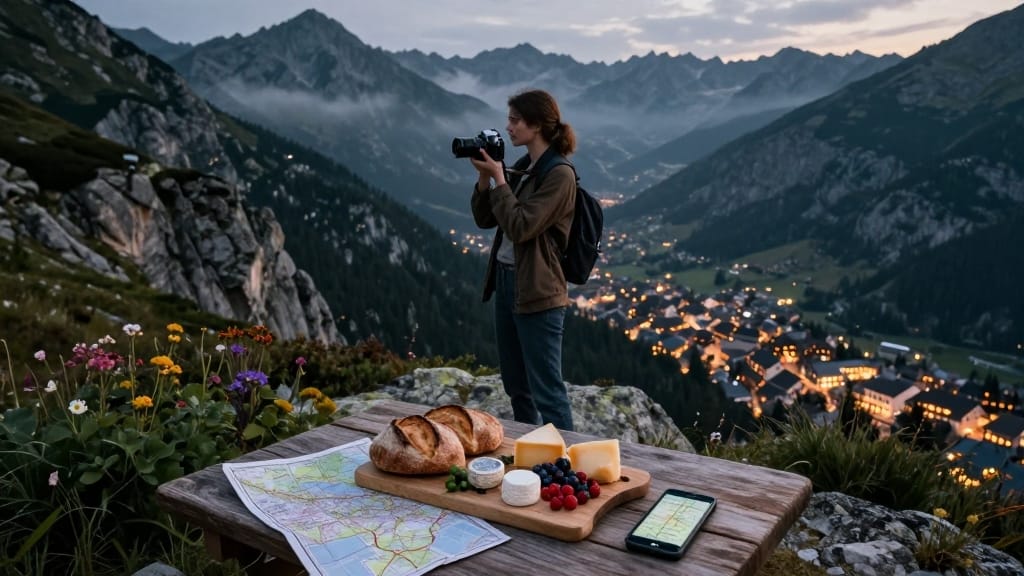
Cześć! I'm Anya. If you’re like me—a 19-year-old Pole who spends half her time hiking the Tatra Mountains and the other half scrolling through photography forums—you’ve probably realized that traveling in 2026 isn't just about pretty filters and cheap flights anymore. We are living through a massive shift in how we move, eat, and see the world. As a photographer, I see the world through a 35mm lens, but as a European, I see a continent at a crossroads. From the geopolitical shifts in our backyard to the way "wellness" is redefining our dinner plates, the vibe is shifting. We’re moving away from that "disposable" vacation era and into something much more raw and, honestly, a bit more serious. It’s not just about the "main character energy" we all love to meme; it’s about actually understanding the landscape we're stepping into. This year feels different. Whether it's the security situation on our borders or the way we're rediscovering nature as a form of therapy, there's a new depth to our wanderlust. Let’s dive into what’s actually happening out there, from the streets of Warsaw to the national parks of the US, through a lens that’s a little sarcastic, totally curious, and very much Polish.
The New European Narrative: Unity, Survival, and the Euro
Living in Poland, the war in Ukraine isn't just a news headline; it’s a reality felt at our registers, our borders, and our dinner tables. It’s that shadow in the back of your mind when you’re planning a trip to a neighboring country. We’re all waiting for peace, but it has to be a just one—not some half-baked compromise that leaves us looking over our shoulders for the next decade. According to Reuters, the US has recently held critical talks with Ukraine and European allies regarding the next steps to end the conflict. This is huge for us in the East. Peace isn't just a moral goal; it’s the ultimate "survival strategy." We’ve spent the last few years being the "hub" for aid and refugees, and while I’m incredibly proud of how Poland stepped up, we’re all feeling the exhaustion. This sentiment is echoed by Euronews, which argues that Europe needs more than just well-wishing to thrive in this era of global instability. We need actual, hard-coded strategies for defense, energy, and digital sovereignty.
But hey, it’s not all doomscrolling and tactical vests. There are genuine signs of hope for European integration that make me feel like the EU might actually survive its mid-life crisis. As reported by Bloomberg, Christine Lagarde recently highlighted Bulgaria’s accession to the Euro as a powerful symbol for the continent. For someone in Poland, where we still use the Złoty and argue about the Euro every single election cycle, seeing Bulgaria make the jump is wild. It’s a reminder that the EU project is still pulling people in, even as Reuters notes that Germany's Friedrich Merz is calling for Europe to assert itself more strongly against external players like China and the US to safeguard prosperity. Merz’s stance is a vibe—it’s essentially saying "Europe first," which is a spicy take but maybe necessary when you realize how much we rely on others for, well, everything. We’re also staring down a massive year for democracy; Euronews points out that the elections in 2026 will be instrumental in shaping our collective future. For a Gen Z Pole, this matters because it dictates where we can work, how we travel, and how we defend our liberal values against the rising tide of "edgy" populism. If we don’t vote, someone else will decide the price of our train tickets and the freedom of our borders. It’s that simple.
The implications here are massive. If Bulgaria’s entry into the Eurozone is successful, it could push countries like Poland, Romania, and Hungary to stop dragging their feet. Moving to a single currency isn't just about making travel easier (though, god, I hate exchange fees); it's about cementing our place in a bloc that can actually stand up to the US and China. In a world where global trade is becoming a weapon, being part of a 450-million-person market is basically our only shield. We're seeing a shift from "Europe as a museum" to "Europe as a fortress," and while that sounds a bit intense, it’s the reality of 2026. We want to be able to hike the Alps and film TikToks in Paris without worrying if the entire system is going to collapse because of a supply chain hiccup in the East.
Evolution of the Explorer: Solo Trips and National Parks
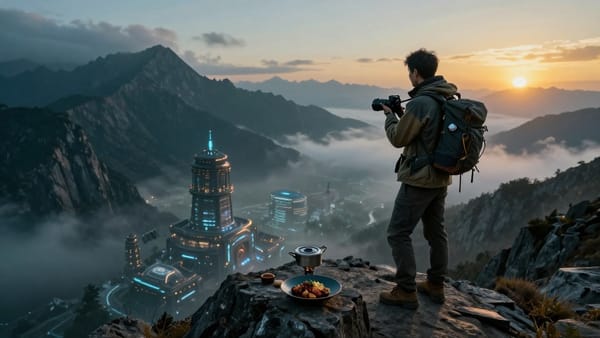
When I’m not worrying about the state of the Union or the price of pierogi, I’m planning my next escape. But here’s the thing: the way we travel is getting way more intentional. Forget the "all-inclusive" vibe where you sit by a pool and stare at other tourists for a week—that's so 2015. We want immersion, dirt under our fingernails, and maybe a little bit of a mid-trip existential crisis. According to CNBC, 2026 travel predictions show a massive surge in solo trips and visits to national parks. I totally get this. As a photographer, there’s nothing worse than trying to find the perfect light while your friends are complaining that they’re hungry or that their legs hurt. Solo travel is the ultimate "main character" move, and it's becoming the standard for Gen Z and Millennials who are tired of waiting for their group chat to actually agree on a date.
However, the world is also getting more complicated, and the "open world" map we grew up with is getting some locked zones. For instance, Reuters reports that Mali and Burkina Faso have announced reciprocal travel bans with the US. This is a stark reminder that global mobility stands on shaky ground. For us Europeans, visa-free travel within the Schengen zone is something we take for granted, but the moment you try to go further, you realize how much "geopolitics" actually affects your Instagram feed. Our ability to see the world is a privilege, and in 2026, that privilege is being squeezed by rising tensions. It makes you appreciate the stability we do have, but it also makes "off the beaten path" travel a lot stickier than it used to be. You can't just bumble into any country anymore; you have to do your homework.
In the United States, travelers are rediscovering the classics but with a much-needed "vintage" twist. My New Orleans suggests that traveling along Route 66 remains a quintessential bucket-list item for those seeking soulful Americana. It’s that nostalgia for a time before everything was a franchise—the kitschy motels, the neon signs, the weird diners. It’s basically a movie set for photographers. Meanwhile, Southern Living identifies specific 2026 trends across the American South that lean heavily into "slow travel" and local heritage. Think less "theme park" and more "staying in a cottage in the Blue Ridge Mountains and learning how to make biscuits." For those of us on a budget—because let’s be real, inflation has been a nightmare—Fox News argues that while Costco vacations offer hard-to-beat value, the service style might not be for everyone. Personally, I’d rather sleep in a van, eat instant noodles, and spend my money on a new Zeiss lens, but if you want a pre-packaged deal that doesn't break the bank, apparently buying your vacation the same place you buy 50 kilograms of toilet paper is a legit strategy now.
What’s driving this? I think it’s burnout. We’re over-stimulated. Every second of our lives is documented, liked, or shared. Going to a National Park where there's literally zero cell service—like some parts of Zion or the Tatras—is the only way to actually reset. We aren't traveling to *show* people where we are; we're traveling to *forget* where we are. The rise of solo travel specifically points to a deeper need for autonomy. In a world where we feel like we have very little control over big things (like the climate or the economy), deciding exactly when to wake up and where to hike is a powerful form of self-care. Plus, the photos you get when you aren't rushing to keep up with a group? Chef’s kiss.
The Politics of the Plate: What We Eat (And Why)
Travel and food are basically the same thing in my book—try to change my mind. If I go to Italy and don't spend 40% of my time eating pasta, did I even go? But lately, what we put in our bodies has become a battleground for policy and health. It’s not just about "organic" vs "not organic" anymore; it’s about government intervention. In the US, there’s a major crackdown on processed goods that honestly sounds a bit like something out of a dystopian novel, but might actually be good? According to the Herald Tribune, Florida is moving to ban soda, candy, and energy drinks from SNAP benefits. This is a spicy take on food policy that reflects a broader cultural shift toward "cleaner" living and the government basically saying, "We aren't paying for your sugar rush." This shift is also reaching the highest levels of government; Politico reports on new leadership at the FDA focusing on transformative food policies. The vibe is very much "Make America Healthy Again," but the drama around how they do it is real.
What’s actually going to be in our bowls when we’re out exploring? According to National Post, food trends in 2026 will focus on sustainability and "mood-boosting" ingredients. I’m talking about things like adaptogens in your coffee and mushrooms in everything. It sounds like something a witch in the woods would feed you, but apparently, it’s the future. People and Whole Foods predict that we'll be seeing even more focus on transparency and plant-forward innovations. We want to know exactly which farm our oat milk came from and if the oats were happy. It’s peak Gen Z energy, but honestly, after decades of eating mystery chemicals, can you blame us? Even the fast-food landscape is being forced to evolve. For those in the Northeast US, 943 The Point reports on Arby’s locations closing in New Jersey, signaling a shift in what the "quick bite" market looks like as consumer tastes move toward higher-quality, "fast-casual" options. The era of the sad, gray burger is dying, and honestly? Good riddance.
As a Pole, our food is traditionally pretty heavy—bread, meat, potatoes, more bread. But even in Warsaw, I’m seeing vegan pierogi spots and sugar-free pączki everywhere. It’s part of a global "wellness" movement that is sometimes a bit eye-roll-inducing (no, I don't need a $15 'activated charcoal' smoothie to survive the morning), but overall, it’s about longevity. We want to travel well into our 80s. The "politics of the plate" also touches on food security. With the war in Ukraine—which used to be the "breadbasket of Europe"—cereal prices have been a rollercoaster. This makes sustainable, local farming not just a lifestyle choice for hipsters, but a necessity for national security. When you realize that your lunch is tied to global supply chains and geopolitical stability, you stop taking that "farm-to-table" salad for granted. It’s all connected.
The Visual Revolution: Capturing the Soul of 2026
As a photography nerd, I have to talk about how we’re documenting all of this. We are finally moving away from the "perfectly staged" Instagram aesthetic—you know the one, where someone is looking at a mountain while wearing a dress that makes zero sense for hiking. We’re moving toward something much more raw, grainy, and "ugly-beautiful." It’s about the soul of the moment, not the saturation slider. The power of a single, authentic image can still stop you in your tracks, even in a world saturated by AI-generated slop. For example, Digital Camera World recently featured a hauntingly beautiful photo of torchlight meeting tusks, redefining wildlife photography by moving away from clinical, bright shots to something more atmospheric and narrative. It feels like a still from a movie, and that’s the trend: Narrative over Clarity.
We’re also seeing a massive appreciation for technical mastery that feels "human." 121 Clicks showcased the winner of the minimalist long-exposure awards, reminding us that sometimes "less is more." In an age of TikToks where everything is moving at 100mph, a long-exposure photo that stays still and breathes is almost a form of rebellion. It’s a way of saying, "I stood here for four minutes and actually looked at this." The "night vibe" is also huge right now. 121 Clicks highlighted incredible winning images in night photography that capture the world when it’s most vulnerable. There’s something about a city at 3 AM or a forest under the moon that feels more "real" than the midday sun. It’s less about showing off and more about exploring the shadows.
Meanwhile, the raw reality of nature continues to captivate us, with 121 Clicks also curating the best breathtaking wildlife photos of the past year. These aren't just "cute animal" shots; they’re documentations of survival. Even mainstream media is leaning into this visual storytelling as a way to punch through the "news fatigue" we all feel. The Guardian recently released a compilation of the best photos taken by their Australian photographers, showcasing the power of photojournalism in documenting climate change and social shifts. When you see a photo of a bushfire or a protest, it hits different than a 280-character tweet. As someone who always carries her camera, I feel like our job in 2026 is to be "truth-tellers." We need to capture the beauty, sure, but we also need to capture the mess. The mess is what makes it real.
This "Visual Revolution" is also a reaction against AI. Everyone is terrified that photography is dying because an algorithm can generate a "perfect" sunset. But here’s the thing: AI can’t feel the wind on its face. It can’t feel the shaky hands of a photographer who just climbed a peak at 4 AM. That’s why we’re seeing a return to film photography and "lo-fi" digital styles. We want the imperfections—the light leaks, the grain, the slightly-off focus. Those are the things that prove a human was there. For my fellow creators, the advice for 2026 is simple: stop trying to be perfect. Start trying to be present. Your camera is a witness, not just a tool for engagement. Capture the things that make you feel something, even if they aren't "traditionally" pretty. That’s where the magic is.
Conclusion: The Future is Authentic (And a Little Sarcastic)
So, what have we actually learned from this deep dive into the vibe of 2026? It’s pretty clear that the "postcard" version of the world is dead. We aren't interested in the airbrushed, sanitized version of travel, food, or politics anymore. Europe is in the middle of a massive identity shift, trying to find its soul and its strength in a world that feels increasingly unstable. From Bulgaria joining the Euro to the tactical discussions about Ukraine’s future, the theme is resilience. We’re learning that being European isn't just about a passport; it's about a collective survival strategy and a commitment to shared values, even when things get "spicy" with our global neighbors.
On a personal level, our adventures are becoming more inward-looking. Whether you’re solo-hiking through a US National Park or driving down Route 66, the goal is more about soul-searching and less about social climbing. We’re eating better—or at least trying to—as we realize that our health is the only thing we actually have control over. And through it all, we’re documenting the world with a new sense of honesty. We’re done with the fake stuff. We’re done with the staged shots and the corporate-approved "wellness" speak. The future of 2026 is about being raw, being real, and maybe being a little bit sarcastic about the whole thing because, honestly, how else are we supposed to cope?
As I look through my viewfinder at the mountains here in Poland, I realize that the "new era" isn't something to be afraid of—it’s something to capture. It’s an invitation to engage with the world on a deeper level. So, my fellow travelers, photographers, and pierogi-lovers: stay curious. Keep your shutter speed fast enough to catch the truth but slow enough to let the light in. Don’t be afraid to travel alone, don’t be afraid to eat things that look like they came from a forest floor, and for the love of everything, don't forget to pack a power bank. The world is changing, but it’s still incredibly beautiful if you know where to look. See you out there, somewhere between the shadows and the light!