Beyond the Postcard: How Geopolitics, Diet Culture, and Visual Storytelling are Redefining the 2026 Travel Landscape

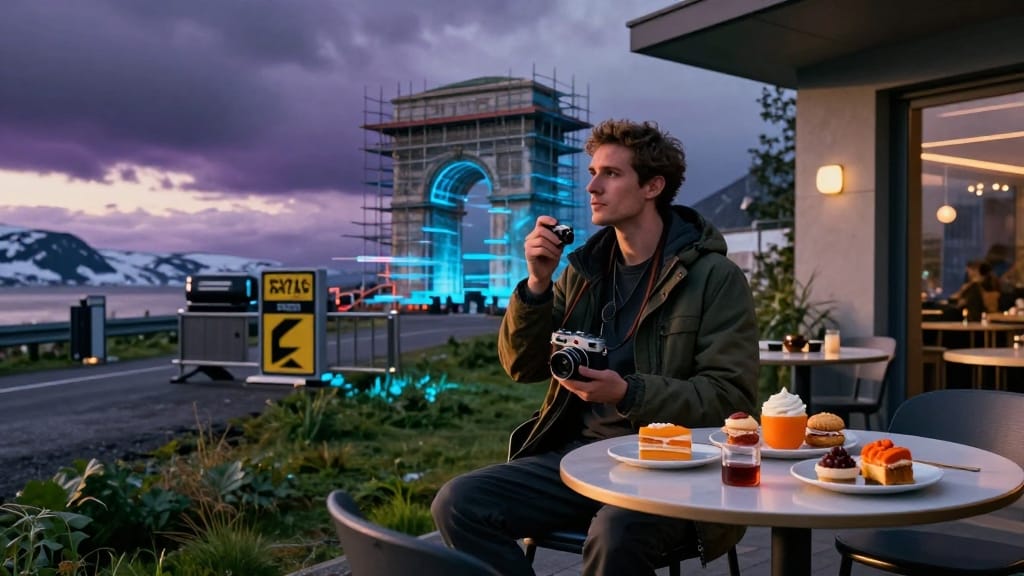
If you’ve been doom-scrolling through travel memes lately, you know that the "wanderlust" vibe is hitting some serious turbulence. We aren't just looking at a change in how we book flights; we are witnessing a massive shift in how we experience the world, from the food on our plates to the very borders we cross. As someone who grew up in Poland—a place that knows a thing or two about shifting borders, the weight of history, and the absolute necessity of European unity—watching the current global friction is like seeing a high-speed camera capture a car crash in slow motion. Between a diplomatic standoff in the Arctic and a total 180-degree flip of dietary guidelines in the States, the 2026 travel season is shaping up to be anything but "business as usual." We are moving past the era of the curated, filtered vacation and into something much more raw, politically charged, and frankly, a bit unpredictable. It’s a weird time to be a traveler, but if you’re like me and find beauty in the chaos of a well-composed shot or the adrenaline of a new trail, there’s plenty to unpack.
In this deep dive, I’m breaking down how the travel industry has mutated over the last quarter-century and why your next big trip might involve more "authentic" desert landscapes and fewer overcrowded Hollywood landmarks. We are also seeing a massive rift in the Atlantic alliance over Greenland, proving that even the most remote corners of the globe aren't safe from political drama. Whether you’re a photography nerd like me or just looking for a decent meal on the road, the world is rebranding itself in real-time. I remember taking my first budget flight across Europe years ago—everything felt open, easy, and almost permanent. Now, that continental stability is being tested by external pressures and shifting alliances. From the "meat-heavy" revolution in American kitchens to the military maneuvers in the North, let's get into what’s actually happening on the ground and why the "postcard" version of travel is officially dead.
The 25-Year Evolution: From Paper Maps to Geopolitical Tensions
Checking out the 25 ways travel has changed this century as discussed by the Washington Post, it’s wild to think how much we’ve moved from unfolding physical maps to relying on AI-driven itineraries. In the early 2000s, getting lost was a rite of passage; today, it’s an algorithmic error. But while technology has made the world smaller, politics is making it feel a lot more complicated. For those of us in the EU, the current tension in the North is particularly chilling. It’s not just about "soft power" anymore; it’s about boots on the ground in places we used to think of as pristine icy escapes. As reported by the BBC, European military personnel are arriving in Greenland even as the Trump administration suggests the U.S. needs the island. This isn't just a minor dispute over territory; it’s a fundamental clash of worldviews regarding sovereignty and resources.
The situation represents a "big win for Putin," according to the Danish parliament’s defense chair in an interview with Talking Europe on France 24. From a Polish perspective, any fracture in Western unity feels personal. We know what happens when larger powers start treating neighboring territories like squares on a chessboard. Denmark is making it clear that it is expanding its military presence in cooperation with NATO allies to show that an American takeover is unnecessary, a move that NBC News describes as a signal of European unity. This is European defense in its most literal form—protecting the edges of our collective home. For travelers, this means the Arctic is no longer just a "bucket list" destination for photography; it’s a zone of active diplomatic friction. While troops from France, Germany, Norway, and Sweden land in Nuuk to boost the island's security as noted by NPR, European officials are even discussing "last-resort options" to counter U.S. threats, according to POLITICO.
The implications here for the travel industry are massive. Greenland was poised to be the "next Iceland," but with increased militarization, the luxury expedition cruise market and independent trekking sectors may face new restrictions or at least a much grimmer atmosphere. As a photographer, the idea of capturing the Northern Lights while military cargo planes roar overhead is a stark reminder that nowhere is truly isolated anymore. The "peace dividend" of late 20th-century travel has evaporated, replaced by a world where the EU must flex its muscles to maintain its integrity. This shift changes the narrative of travel from one of pure consumption to one of witness—where we travel isn't just about the scenery, but about the stability of the world order itself. This geopolitical tightening in the North sets the stage for a broader reassessment of how we value "safe" destinations versus those caught in the crossfire of power plays.
The Death of the Tourist Trap and the Rise of "The Inlands"
If you've ever been to Los Angeles, you’ve probably felt that crushing disappointment when you realized the stars on the sidewalk are mostly surrounded by dirty tchotchke shops and people dressed as slightly-off-brand superheroes. A recent study reported by Fox News has officially ranked the Hollywood Walk of Fame as the "worst" tourist destination, exposing the massive gap between marketing hype and reality. It’s the ultimate "meme vs. reality" moment. Travelers are tired of the bait-and-switch. We want grit, we want history, and we want things that haven't been sanitized for a 5-second TikTok clip. This fatigue with traditional "hotspots" is driving a migration toward more rugged, less-curated landscapes.
Southern California is leaning into this by rebranding its lesser-known regions to combat the "Hollywood slump." According to Travel And Tour World, a new regional brand called "The Inlands" is uniting the High Desert, Inland Mountains, and Southern Vineyards to offer something real. This is where the photography nerd in me gets excited—shooting the stark shadows of the Joshua Tree area or the golden hour in a vineyard feels much more rewarding than dodging crowds on a smoggy LA street. However, the U.S. tourism industry overall is hurting from more than just bad reviews. As reported by Travel And Tour World, states like California, Florida, and New York are facing a steep decline in international visitors due to stringent anti-immigration policies. It turns out that when a country makes it harder to get in, people eventually stop trying.
Add to that an economic downturn, and the situation is dire; Travel And Tour World also highlights a catastrophic decline in Canadian air traffic to traditional hotspots like Las Vegas. When even our neighbors to the north aren't coming over for a weekend of bad decisions, you know the vibe is off. This shift highlights a deeper trend: the "democratization" of travel via social media has led to the death of the middle-ground destination. You either go for the ultra-authentic "Inlands" or you don't go at all. For those of us traveling from Europe, the cost and the hassle of U.S. travel are increasingly outweighing the appeal of seeing a landmark we've already seen a thousand times on a screen. We are looking for the "blank spots" on the map, the places that haven't been over-saturated by influencers. This movement away from the over-commercialized coastlines toward the rugged interior reflects a broader desire for authenticity in an increasingly "fake" digital world.
The Meat-Heavy Revolution: A New American Food Pyramid
For those of us who travel for the food—which, let’s be honest, is the main reason I go anywhere—the latest news from the States is a total plot twist. The U.S. government has flipped the old dietary guidelines on their head, and it’s going to make the American road trip look very different. As reported by Patch Atlanta, the new advice is to "eat real food," with a major emphasis on animal products. This isn't just a minor tweak; it’s a full-on structural change that feels like a rejection of the last thirty years of nutritional science. According to KPFA’s Terra Verde, Health and Human Services Secretary Robert F. Kennedy Jr. and Agriculture Secretary Brooke Rollins have upended the pyramid to prioritize red meat and whole-fat dairy—items that were previously criticized or treated as "occasional" treats.
As a Pole, I’m used to a diet that doesn’t shy away from butter, cream, and meat (shoutout to my grandma’s pierogi), but seeing this formalized into a national policy in the U.S. is wild. It’s like the "paleo" and "carnivore" subcultures finally won the lobbyist war. This "meat-heavy" pyramid is going to change everything from restaurant menus to school lunches and even travel food culture. Newscenter Maine reports that nutrition experts are still scrambling to respond to these changes, with many worried about the long-term health implications. For food startups, this means navigating a new reality where "plant-based" might lose its government-subsidized shine. Dana Peck of Pilot R&D noted in Food Business News that there is a massive difference between culinary concepts and mass-market products, and the current pivot toward "real food" and whole animal products will require a total rethink of supply chains.
Meanwhile, traditional retailers are doubling down on this trend; for example, Food Lion is expanding its presence in the Carolinas by opening four new stores, likely catering to a resurging demand for fresh, whole products. If you’re traveling to the U.S. soon, expect a lot more steak, artisanal butter, and full-fat milk, and a lot less soy-based substitution. This shift is deeply cultural; it reflects a "back to basics" mentality that rejects the industrial processing of the late 20th century. While it might be a dream for steak lovers, it adds a layer of complexity for the environmentally conscious traveler. We are seeing a clash between the "bio" movement in Europe and this newly empowered "meat-heavy" American traditionalism. For me, it’s a reason to keep my camera focused on the plate—food photography is about to get a lot moodier, richer, and more visceral than it’s been in years.
Capturing the Moment: Timing, Composition, and Identity
As someone who spends way too much money on lenses and far too much time trying to find the perfect angle for a shot of a snowy mountain peak, photographer culture is my "home." Lately, the world of photography has been delivering some serious inspiration. The recent World Sports Photography Awards are the perfect example of why "getting the shot" is an obsession. The grand prize went to an incredible shadow image of Carlos Alcaraz’s racket meeting the ball. This singular moment, beating over 23,000 other submissions, was hailed for its mind-blowing timing and composition by Digital Camera World. It captures the sheer physics of sports in a way that words can't—it’s about that millisecond where everything aligns. You can see more of these stunning entries at BBC Sport and PetaPixel, while Amateur Photographer emphasizes how that specific shadow work defined the competition.
But photography isn't just about the high-speed action of sports; it’s about the slower, more deliberate exploration of identity. The British Journal of Photography recently revealed its "Portrait of Britain" winners, featuring 99 portraits that capture the diverse faces of the UK. As PetaPixel notes, these images offer a profound look at the people behind the headlines. This is what I love about street photography—the ability to tell a whole story through a single expression. Whether it’s a tennis pro’s shadow or a local in a London suburb, photography remains our best tool for making sense of a chaotic world. It’s about more than just aesthetics; it’s about empathy. When we see a portrait of someone different from us, it bridges that gap that politics tries to widen.
For a traveler, photography is the ultimate way to engage with a new culture. It forces you to slow down, look at the light, and actually observe the people around you instead of just checking a monument off a list. In 2026, where the "truth" is often contested, a raw, unedited photograph feels more valuable than ever. We are seeing a move away from the "over-edited" aesthetic of early Instagram toward something more "documentary" in style. We want to see the dust in the air and the lines on people's faces. This shift in visual storytelling—from the polished to the profound—is a direct response to the "fake news" era. We are using our cameras to anchor ourselves in reality. Whether you’re shooting on a high-end mirrorless or just your phone, the goal in 2026 is the same: find the truth in the frame. This artistic search for reality mirrors our travel search for "authentic" destinations, creating a cohesive desire for honest experiences in a world that feels increasingly manufactured.
Conclusion: The Future of Global Movement
Looking ahead, the "travel lifestyle" is becoming less about passive consumption and more about navigating a world in flux. We are witnessing a massive transition period where the certainties of the last 25 years are being stripped away. We see a clear divide: on one hand, a push for "real" food, authentic local experiences like "The Inlands," and raw, honest photography that captures the soul of a place. On the other, we see the hardening of borders, the decline of traditional travel hubs due to protectionist policies, and a worrying geopolitical standoff in the Arctic that threatens to redraw the map of European security. As a Pole, I see this as a call to action—to value our European unity and our freedom of movement even more as it comes under pressure from all sides.
The future implications are clear: the travel industry must adapt to a more cynical, yet more adventurous traveler. We aren't looking for the "Hollywood" version of life anymore; we want the truth—in our food, in our photos, and in our destinations. As the U.S. and Europe face off over Greenland and the travel industry grapples with the fallout of anti-immigration sentiment, the most valuable currency for any traveler in 2026 will be flexibility and a good sense of humor. The world is getting weirder, but it’s also getting more interesting for those willing to look past the postcard. Whether you’re snowboarding in the Tatras, hiking through the California desert, or trying a steak the size of your head in Georgia, keep your camera ready. The world is changing faster than a shutter click, and you won’t want to miss the shot. Stay curious, stay skeptical, and for the love of all things holy, stop going to the Walk of Fame—there are much better stories to be found in the Inlands.