Beyond the Beaten Path: The 2026 Shift in European Travel, Gastronomy, and Visual Culture

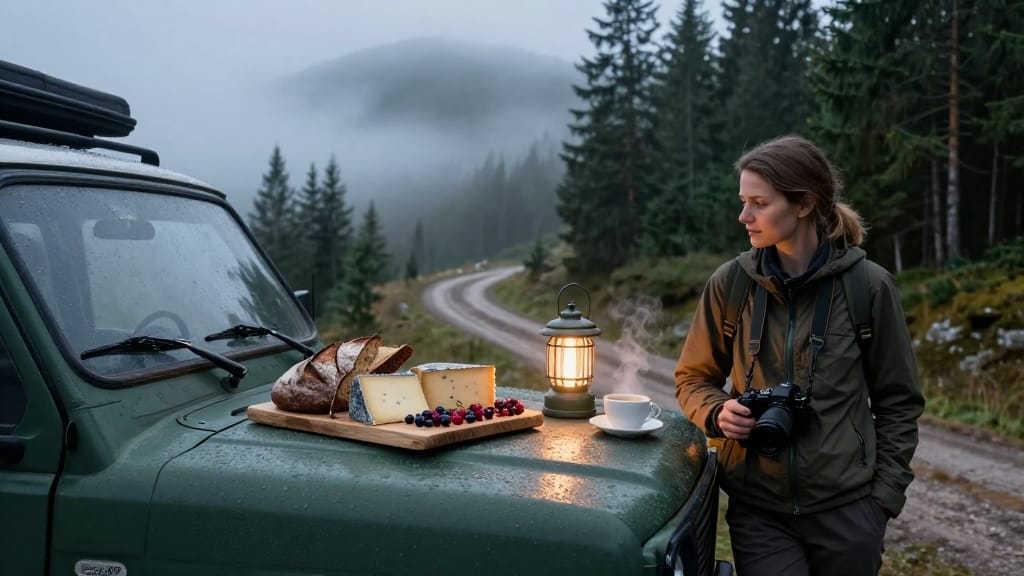
Cześć! I’m Anya, and if you’re like me, your "must-visit" list for 2026 is already looking a bit chaotic—in the best way possible. Living in Poland, I’ve always felt like Europe is this giant, evolving playground, but lately, the vibes are shifting in a way that feels heavy yet exciting. We’re finally moving away from the "Instagram-perfect" crowded squares where you have to elbow a tourist just to see a fountain, and we’re heading deeper into the wild, the weird, and the authentic. Whether it’s trekking through our own Tatra Mountains, navigating the complex geopolitics of our border with Ukraine, or watching how technology is literally changing how we eat, 2026 is about depth over surface-level aesthetics. As someone who spends half her life behind a camera lens and the other half planning the next snowboarding escape, I've noticed that we aren't just traveling anymore; we are searching for something that feels real in a world that’s increasingly digital and, frankly, a bit fragile. From the perspective of a 19-year-old Pole watching the world change from the heart of Europe, let’s dive into how our lifestyles are being redefined for the year ahead.
The Great European Pivot: Seeking Solitude in the Wild
There is something absolutely magical about a landscape that hasn’t been trampled by millions of tourists. As we look toward 2026, the trend of "hidden gem" travel isn't just a marketing buzzword or a Pinterest aesthetic; it's a sheer necessity for those of us who want to actually breathe. We are witnessing "overtourism exhaustion," and the response is a hard pivot toward the periphery. According to Travel and Tour World, destinations like Sardinia, the Lofoten Islands, and my personal favorite, the Tatra Mountains, are becoming the new frontiers for those seeking unmatched beauty and adventure. As a Pole, seeing the Tatras recognized alongside Sicily and Transylvania makes me so proud—there’s nothing like the sharp, jagged peaks of Zakopane to make you feel tiny in the best way possible.
Why does this matter? Because we are reaching a breaking point with "Disneyfied" cities. When you visit the Tatras in 2026, you aren't just looking at a view; you're engaging with a culture that has resisted the bland homogenization of global tourism. This shift impacts local communities by redistributing wealth away from saturated hubs like Venice or Paris and into the hands of mountain guides in Romania or cheesemakers in the Polish highlands. However, the future implication is a double-edged sword: as we "discover" these gems, we risk bringing the very crowds we are fleeing. This is why 2026 travel is becoming more regulated and intentional. It’s no longer just about the destination; it’s about the itinerary. As reported by Travel and Tour World, new extraordinary itineraries are linking cities like Brussels and Prague with the rugged Romanian Carpathians and the spiritual beauty of Voronet. It’s a mix of high-culture urbanism and raw, natural wonder that feels very "New Europe"—sophisticated yet deeply connected to the land. We’re seeing a rise in "rail-and-trail" packages where you can take a high-speed train across the EU and be on a hiking path by sunset. For my generation, this is the ultimate flex: being disconnected from the grid while enjoying the perks of a borderless Europe.
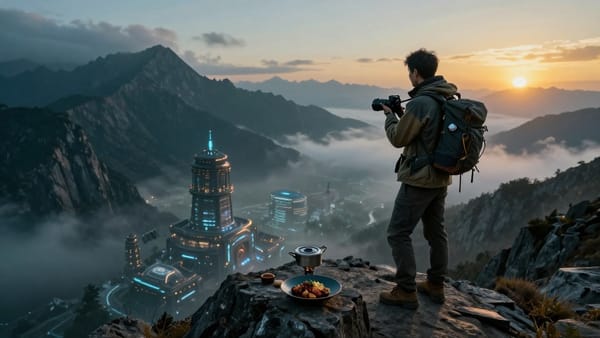
From a photography perspective, this "Wild Europe" movement is a dream. We are moving away from saturated, bright "influencer" colors and toward a moody, "Nordic Noir" aesthetic. The jagged peaks of the Lofoten Islands or the misty forests of Transylvania offer a texture that you just can't get in a city center. As an artist, I want to capture the struggle of the climb and the unpredictability of the weather. We aren't just looking for "pretty"; we’re looking for "sublime," in that old-school Romanticism way where nature is both beautiful and slightly terrifying. It’s a vibe that resonates deeply with the current global mood—searching for beauty in a world that feels a bit on edge.
Winter Realities and the Tech-Infused Table
Of course, my love for adventure doesn’t mean I’m blind to the risks. Travel isn't always a smooth montage set to a lo-fi beat, especially when the climate reminds us who’s actually in charge. While many of us are chasing the northern lights, others are dealing with the harsh reality of winter "snowpocalypses." For example, Syracuse.com and WIVB Buffalo have recently highlighted how extreme snow can shut down entire counties, serving as a reminder that adventure always requires a "Plan B." Even in Pennsylvania, CNHI News has noted travel advisories that disrupt the seasonal flow. In Europe, we are seeing similar patterns—unpredictable alpine conditions making snowboarding trips a bit of a gamble. This "climate volatility" is changing the lifestyle industry, pushing us toward more flexible, last-minute booking habits and a deep appreciation for indoor comforts.
But even when we are stuck indoors by a blizzard, the way we experience lifestyle and food is evolving rapidly. It’s not just about what’s on the plate; it’s about how it got there. According to North Penn Now, technology is fundamentally altering how people eat and drink, reflecting a global trend where digital convenience meets artisanal quality. We’re seeing "smart" supply chains that tell you exactly which farm in Poland your potatoes came from, or apps that use AI to suggest wine pairings based on your previous digital orders. This tech-infusion isn't about replacing the human element; it's about amplifying it. It's about using data to support small-scale producers who would otherwise get lost in the noise of global corporations.
Speaking of food, 2026 is going to be about a massive psychological mindset shift. Gone are the days of over-complicated, stressful "chef-y" cooking that requires twenty ingredients and a degree in molecular biology. According to Salon, the key to better cooking in the coming year is simplicity and intuition. This mirrors the culinary highlights of the past year; Bloomberg’s review of the 13 best dishes of 2025 showcased everything from Taipei to London, proving that the best flavors often come from high-quality, focused ingredients. Looking forward, The New York Times predicts that 2026 will see food trends that prioritize sustainability and cultural heritage over "foodie" gimmicks. This is huge for me—it means pierogi are finally getting the global respect they deserve! We're seeing a return to ancestral techniques—fermentation, open-fire cooking, and foraging—that feel like a "soft reboot" of our relationship with food. It’s less about the "clout" of eating at a Michelin-star restaurant and more about the "soul" of a meal shared after a long day of hiking.
Capturing the Strange and the Beautiful: A New Era of Photography
As a total photography nerd, 2025 was a wild ride for gear, and 2026 is looking even crazier. The tech is getting so good it’s almost scary—it's like we’re reaching the "uncanny valley" of image quality. According to DPReview's 2025 Reader's Choice Awards, the community is rewarding gear that pushes the boundaries of what’s possible in low light and speed. This is a game-changer for people like me who love capturing the blue hour in the mountains or the high-speed action of a snowboarder catching air. But it’s not just about the cameras; DPReview notes that 2025 was the most interesting year in lenses, with glass that allows us to see the world with a clarity that almost feels hyper-real. We are seeing a resurgence of "character lenses"—glass that has imperfections, flares, and "soul," rather than just clinical sharpness. It’s a rebellion against the AI-generated perfection we see all over our feeds.
But let’s be real: photography is about more than just expensive lenses and megapixels; it's about the stories we tell in a world that feels like it’s being rewritten daily. The Guardian recently looked back at the photographs that defined 2025, reminding us that an image can capture a geopolitical shift or a personal moment of grief better than any headline. Photography in 2026 is moving toward "subjective realism." We aren't just documenting; we’re interpreting. We are also seeing a fascination with the surreal; PetaPixel discusses the "strangeness of colors" and how we perceive the world through a digital filter. This is something I play with a lot in my own work—how can I make a forest in Poland look like something out of a fantasy RPG? How can color grading express the "vibe" of a place better than a realistic shot?
The work of photographers like Luke Stackpoole continues to be a huge inspiration. His ability to capture the raw power of nature while maintaining a distinct, almost cinematic style is what I strive for. When I’m snowboarding in the Alps or hiking in the Bieszczady, I’m trying to channel that same energy—capturing the "feel" of the cold, the biting wind on your face, not just the sight of it. I think the future of photography lies in this sensory immersion. We want images that make us feel something, especially as we spend more time staring at screens. We want to see the texture of the snow, the grain of the wood, and the "human-ness" in the eyes of our subjects. It’s about fighting back against the "flatness" of modern digital life.
The Geopolitical Landscape: Travel in a Changing Europe
We can't talk about lifestyle and travel in Europe without getting real about the politics that shape our borders. Being Polish, I don’t have the luxury of ignoring the news; the situation with our neighbors in Ukraine is our daily reality. It’s not just a "crisis" on TV; it’s our friends, our classmates, and our common future. I am firmly pro-EU and pro-Ukraine, and I believe that our travel choices in 2026 should reflect our values. According to the LA Times, leaders from Europe and Canada are still in deep discussions regarding peace efforts as tensions continue to spike. This instability has practical effects on how we live; Reuters reports that Russia’s pipeline gas exports to Europe have fallen by 44%, hitting the lowest levels in decades. This energy shift is forcing Europe to be more resilient and independent, which I honestly think is a good thing for our long-term sovereignty. It makes us tougher, more innovative, and more committed to a green energy transition that doesn't rely on autocrats.
This resilience is showing up in some truly mind-blowing ways. For instance, did you know an entire Swedish city is literally being moved? As reported by CNBC, Kiruna is being relocated to allow for more mineral mining, a move sparked by Europe’s push for resource independence. Imagine waking up and your favorite cafe is being flat-packed and moved three kilometers down the road! It sounds like a meme, but it’s the reality of a Europe that is preparing for a new era. Even the "final frontier" is getting crowded; Politico reports that Europe is ramping up its space security to protect our satellite networks from hacks. It’s a strange, sci-fi world we’re living in, and it affects everything from our GPS during a road trip to the stability of our economies. For a travel addict like me, this means being more aware of the "infrastructure of freedom" that allows us to zip across borders so easily.
Even our friends across the pond are looking at us differently, perhaps seeing that the "Old World" has a new kind of energy. Travel and Tour World mentions that Canadians are increasingly discovering Europe and Mexico as part of their new winter travel trends. They’re trading the usual ski resorts for something with a bit more history and "Old World" grit. This cultural exchange is vital; the more we travel and share our stories—whether through a vlog or a photo essay—the harder it is for political divisions to tear us apart. However, even the world of luxury is feeling the pressure of this new, sober reality. According to the Financial Times, there’s a growing "frugality" even among the wealthy when it comes to high-end fashion, suggesting that "quiet luxury" might be turning into "practical luxury." We’re seeing a shift toward buying things that last—gear that can actually survive a mountain trek rather than just looking good on a runway.
Conclusion: The Future is Authentic
So, what does this all mean for 2026? If you’ve stuck with me through this whole rant, you probably see the pattern: whether we’re talking about the food on our plates, the lenses on our cameras, or the mountains we choose to climb, the trend is moving toward **meaning over volume**. We are officially done with the era of mindless consumption. We want stories that feel real, even if they’re a bit messy. We want to travel to places like Transylvania or the Tatras not just to check a box or post a reel, but to feel the heavy history and the raw grit of the place. We want to cook in ways that nourish our souls without burning us out, and we want gear that helps us see the world’s "strange colors" with clarity and intent.
The future isn't just about where we go; it’s about how we choose to show up. As a young European, I’m optimistic because I see my generation leaning into these challenges with humor, sarcasm (honestly, memes are our love language), and a deep sense of solidarity. We want to stand with a pro-EU, pro-Ukraine vision that ensures our "European playground" remains free, vibrant, and inclusive for everyone. The road ahead might be snowy and the geopolitics might be a "hot mess," but that’s where the best stories happen. From where I’m standing—hopefully with a camera in one hand and a snowboard in the other—the view looks incredible. It’s a world that demands more of us, and I think we’re ready for the adventure. Happy adventuring, everyone—stay wild, stay curious, and maybe keep a "Plan B" for the snow! Do zobaczenia!