AI's Ascendancy: Navigating Innovation, Geopolitical Dynamics, and Ethical Challenges in 2025

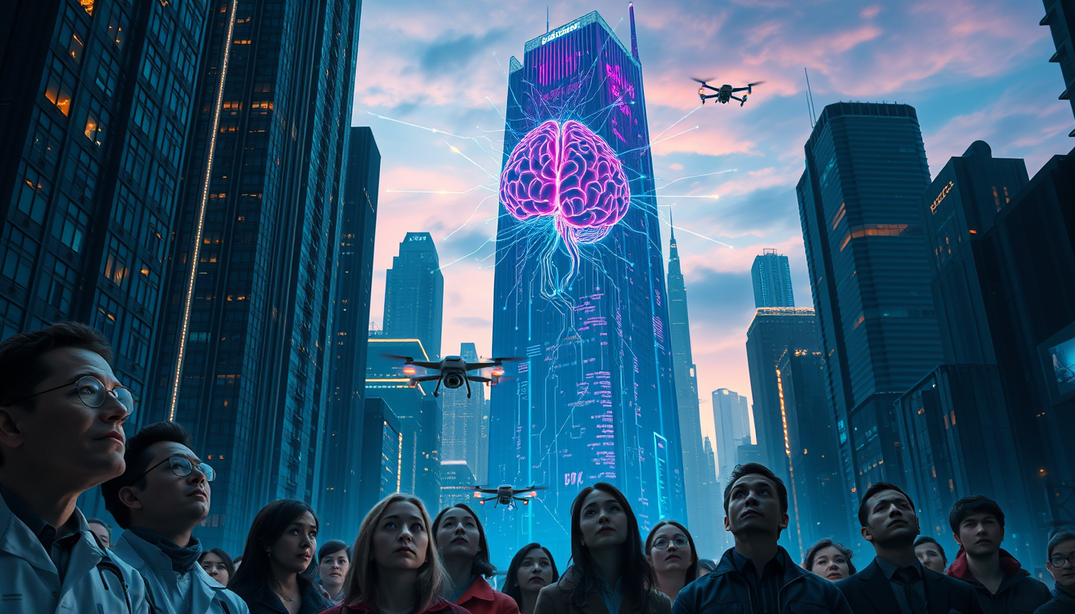
Artificial intelligence (AI) has transitioned from a futuristic concept to a tangible force reshaping industries and societies at an unprecedented pace. In 2025, we're not merely witnessing incremental technological advancements but a profound transformation marked by a complex interplay of geopolitical strategies, ethical considerations, and inevitable market corrections. The proliferation of AI-driven solutions is impacting everything from national security and economic competitiveness to personal privacy and the very nature of work. This article delves into the multifaceted landscape of AI, meticulously examining its impact on various sectors, analyzing the strategic rise of AI in China, dissecting the escalating privacy risks associated with increasingly sophisticated AI agents, and evaluating the evolving strategies of tech giants as they navigate this disruptive technological wave. We'll also explore the increasingly critical intersection of AI with global politics and economics, providing a comprehensive overview of the current state and projecting the future trajectory of this transformative technology, offering insights into the challenges and opportunities that lie ahead. Understanding these dynamics is crucial for policymakers, business leaders, and individuals alike to navigate the complexities of the AI era effectively and responsibly.
The Geopolitical Landscape of AI: China's Strategic Ascent and Global Implications
China's AI boom is reaching astonishing proportions, signaling a significant and potentially paradigm-shifting change in the global technological and economic landscape. As reported by The Economist, this surge is primarily driven by substantial, targeted government investment initiatives, access to a vast and largely unregulated pool of data, and a rapidly expanding ecosystem of domestic AI companies. This strategic development has profound implications for international competition, as China explicitly aims to not only compete with but surpass the United States and other Western nations to become the undisputed global leader in AI development and deployment. The scale of China's ambition, coupled with its unique approach to data governance and technological innovation, presents both opportunities and challenges for the rest of the world. The rise of Chinese AI also raises critical questions and concerns about data privacy, cybersecurity, intellectual property rights, and the potential for AI technologies to be used for surveillance, social control, and military applications. This complex geopolitical dimension adds significant layers of complexity to the AI landscape, requiring careful consideration of both the potential benefits of collaboration and the inherent risks of strategic competition. For example, China's focus on facial recognition technology and its application in social credit systems raises concerns about the erosion of individual liberties and the potential for misuse of AI-powered surveillance. Furthermore, the lack of stringent data protection laws in China allows AI companies to train their algorithms on massive datasets, potentially giving them a competitive advantage but also raising ethical questions about data privacy and consent. The US and European countries are grappling with how to balance innovation with ethical considerations and maintain their competitive edge in the face of China's rapid advancements.
The implications extend beyond mere economic competition. As AI becomes increasingly integrated into military systems and critical infrastructure, the potential for cyber warfare and espionage increases. The US Department of Defense, for instance, has expressed concerns about China's advancements in AI-powered autonomous weapons systems. The geopolitical landscape, therefore, demands a multifaceted approach that includes fostering domestic AI innovation, strengthening cybersecurity defenses, and engaging in international dialogues to establish ethical guidelines and norms for AI development and deployment. The future of AI will be shaped not only by technological advancements but also by the geopolitical dynamics that govern its development and use.
AI Hardware and Infrastructure: The Quest for Technological Independence and Optimization
The development and control of specialized hardware are increasingly recognized as crucial for advancing AI capabilities and achieving technological independence. Meta's recent move to begin testing its first in-house AI training chip represents a significant step towards gaining greater control over its AI infrastructure and reducing its reliance on external chip suppliers. According to Reuters, this strategic decision aims to optimize performance for Meta's specific and increasingly demanding AI workloads, particularly those related to its metaverse initiatives and advanced AI research. This trend of major tech companies designing their own custom chips reflects a broader recognition of the fundamental importance of hardware-software co-design in achieving significant AI breakthroughs. By meticulously tailoring hardware to the unique demands of specific AI algorithms and applications, companies can unlock new levels of efficiency, performance, and innovation that would be impossible to achieve with off-the-shelf components. This vertical integration allows for greater control over the entire AI pipeline, from data processing to model training and deployment.
The implications of this trend are far-reaching. As AI models become increasingly complex and computationally intensive, the demand for specialized hardware will continue to grow. Companies that can design and manufacture their own chips will have a significant competitive advantage, allowing them to optimize their AI systems for specific tasks and reduce their reliance on external suppliers. This could lead to a more fragmented hardware market, with different companies developing chips tailored to their specific needs. Furthermore, the development of specialized AI hardware could also drive innovation in other areas, such as energy efficiency and materials science. For instance, Google's Tensor Processing Units (TPUs) have demonstrated significant performance gains compared to traditional CPUs and GPUs for specific AI tasks. Other tech companies, including Amazon and Microsoft, are also investing heavily in custom silicon to gain a competitive edge in the AI race. This trend is likely to accelerate in the coming years, as companies seek to optimize their AI infrastructure and achieve greater technological independence. The ability to design and manufacture custom AI chips will be a key differentiator in the AI era, allowing companies to innovate faster and deploy more powerful AI systems.
Beyond Meta, other tech giants are also making significant investments in AI-specific hardware. Amazon's AWS division offers custom silicon solutions like Inferentia and Trainium, designed to accelerate inference and training workloads, respectively. These chips are optimized for the specific needs of AWS customers, providing a cost-effective and high-performance alternative to general-purpose processors. Microsoft, similarly, is exploring custom silicon options for its Azure cloud platform, aiming to enhance its AI capabilities and offer differentiated services. This trend underscores the growing importance of hardware acceleration in the AI landscape and the strategic imperative for companies to control their own hardware destiny.
Ethical Considerations: Navigating Prompt Privacy Risks and Ensuring Responsible AI Agent Oversight
As AI agents become increasingly sophisticated, ubiquitous, and deeply integrated into our daily lives, concerns about prompt privacy and the ethical implications of their deployment are growing exponentially. Forbes highlights the potential and very real risks of AI agents collecting, storing, analyzing, and potentially mishandling sensitive user data provided through prompts. The prompts we provide to AI systems, whether through text, voice, or other modalities, can inadvertently reveal highly personal information, intimate preferences, deeply held beliefs, and even hidden vulnerabilities, making it absolutely essential to establish robust and comprehensive privacy safeguards. Ensuring transparency in data collection and usage practices, establishing clear lines of accountability for data breaches, and providing users with meaningful control over their data are crucial for building and maintaining public trust in AI technologies. The absence of such safeguards could lead to widespread privacy violations, discrimination, and other unintended consequences.
The review of Manus AI, as reported by Technology Review, further underscores the critical need for ongoing evaluation, rigorous testing, and proactive oversight of AI systems to prevent unintended consequences, detect and mitigate biases, and ensure that AI technologies are used responsibly and ethically. AI systems, particularly those used in high-stakes applications such as healthcare, criminal justice, and autonomous vehicles, must be thoroughly vetted to ensure that they are fair, accurate, and reliable. Bias in training data can lead to discriminatory outcomes, while algorithmic errors can have life-threatening consequences. A proactive and comprehensive approach to ethical AI development is therefore essential to mitigate potential harms and ensure that AI benefits all segments of society equitably.
Beyond individual privacy, the ethical considerations surrounding AI extend to broader societal impacts. The potential for AI to automate jobs and exacerbate economic inequality is a major concern. Policymakers need to consider the implications of AI-driven automation on the workforce and implement policies to mitigate job losses and ensure that workers have the skills they need to adapt to the changing economy. Furthermore, the use of AI in surveillance and social control raises fundamental questions about civil liberties and the balance between security and freedom. It is crucial to establish clear legal and ethical frameworks to govern the use of AI in these areas and prevent the erosion of democratic values. The European Union's AI Act is a notable example of an attempt to regulate AI and address its ethical implications. The Act proposes a risk-based approach, with stricter rules for AI systems that pose a high risk to fundamental rights and safety. This is an ongoing global conversation as AI continues to rapidly advance.
Market Dynamics: The Shifting Sands of Consumer Electronics in the Age of AI
The consumer electronics market is currently experiencing a significant and potentially long-lasting shift as the initial gadget boom begins to fizzle out amidst the overwhelming and increasingly dominant focus on artificial intelligence. Yahoo Finance reports that consumers are increasingly prioritizing AI-powered devices, AI-driven services, and AI-enhanced experiences over traditional, standalone gadgets. This evolving consumer preference is directly reflected in the recent performance of major tech indices, where prominent members like Amazon, Nvidia, and Tesla are experiencing noticeable declines in their stock prices. According to Yahoo Finance, this tech-heavy index recently broke a significant winning streak, signaling a potential market correction as investors reassess the long-term prospects and valuations of various tech companies in the rapidly evolving age of AI.
This market correction suggests a fundamental shift in investor sentiment and a growing recognition that the future of technology lies not simply in creating new gadgets but in seamlessly integrating AI into existing products and services to enhance their functionality, personalize user experiences, and create entirely new value propositions. Companies that can successfully and strategically integrate AI into their core offerings are likely to thrive and capture a disproportionate share of the market, while those that fail to adapt to this new reality may face significant challenges and potentially become obsolete. The key to success in the AI era lies in understanding how AI can solve real-world problems, create tangible value for customers, and differentiate products and services from the competition. Companies that can demonstrate a clear vision for AI and a proven ability to execute on that vision are likely to attract investment and succeed in the long run. For example, companies like Microsoft, which have made significant investments in AI and are integrating it into their core products like Windows and Office, are well-positioned to benefit from this trend.
The decline in the gadget boom also reflects a growing awareness among consumers of the potential downsides of technology, such as privacy concerns, security risks, and the potential for addiction. Consumers are becoming more discerning about the technology they use and are increasingly demanding products and services that are not only innovative but also safe, secure, and ethically responsible. This trend is likely to accelerate in the coming years, as consumers become more aware of the potential risks and benefits of AI. Companies that can build trust with consumers by prioritizing privacy, security, and ethical considerations will be best positioned to succeed in the long run. The future of the consumer electronics market will be shaped by the ability of companies to integrate AI into their products and services in a way that is both innovative and responsible.
Specific Applications and Industry Impacts: AI's Expanding Footprint from Defense to Emerging Sectors
AI is rapidly finding applications in an increasingly diverse array of industries, ranging from enhancing defense capabilities to transforming emerging sectors like cannabis technology. L3Harris Technologies, a prominent defense contractor, is likely leveraging AI to significantly enhance its defense capabilities, as discussed on Yahoo Finance. The strategic integration of AI into advanced defense systems can dramatically improve situational awareness, accelerate decision-making processes, enhance operational efficiency, and enable the development of entirely new weapons systems. AI-powered surveillance systems, autonomous drones, and predictive maintenance algorithms are just a few examples of how AI is transforming the defense industry. These advancements have the potential to revolutionize military operations and reshape the global balance of power. However, they also raise serious ethical questions about the use of AI in warfare and the potential for unintended consequences.
Meanwhile, in the burgeoning cannabis industry, companies like Ispire Technology are innovating with devices like the Sprout. According to Yahoo Finance, Ispire Technology Inc. unveiled Sprout, though the specific application of AI in this context isn't explicitly detailed in the source, it's reasonable to infer that AI could be used for optimizing growing conditions, personalizing user experiences, or improving the efficiency of cannabis production. The application of AI in the cannabis industry is still in its early stages, but it has the potential to revolutionize the way cannabis is grown, processed, and consumed. AI-powered sensors and data analytics can be used to optimize growing conditions, improve yields, and reduce waste. AI can also be used to personalize user experiences, recommend specific strains based on individual preferences, and ensure product safety and quality. These examples vividly illustrate the broad and rapidly expanding applicability of AI across diverse sectors, driving innovation, transforming traditional business models, and creating new opportunities for growth and disruption.
Beyond these specific examples, AI is also transforming other industries such as healthcare, finance, and transportation. In healthcare, AI is being used to diagnose diseases, develop new treatments, and personalize patient care. In finance, AI is being used to detect fraud, manage risk, and automate trading. In transportation, AI is being used to develop self-driving cars, optimize traffic flow, and improve logistics. The potential applications of AI are virtually limitless, and its impact on the global economy is likely to be profound. As AI continues to evolve, it will be crucial for businesses and policymakers to understand its potential and adapt to the changing landscape. The companies that can successfully integrate AI into their operations and develop innovative AI-powered products and services will be best positioned to succeed in the AI era.
Political Entanglements: Navigating the Complex Intersection of AI, Innovation, and Public Perception
The intersection of AI and politics is becoming increasingly visible and often fraught with challenges. As reported by Fox News, Vice President Kamala Harris faced significant criticism and ridicule for attempting to connect seemingly unrelated concepts such as "love" and "Doritos" with the complex topic of big tech innovation during an AI conference. This incident serves as a stark reminder of the inherent challenges of effectively communicating complex technological concepts to the general public and the potential for political messaging to be easily misinterpreted, misrepresented, or even ridiculed. Effective communication strategies, coupled with comprehensive public education initiatives, are absolutely essential for fostering widespread public understanding, building broad-based support for AI innovation, and ensuring that policymakers are well-informed about the potential benefits and risks of AI technologies.
Furthermore, the public's overall perception of AI can significantly influence policy decisions, shape investment priorities, and ultimately determine the trajectory of AI development. It is therefore crucial for policymakers to actively engage in informed, transparent, and inclusive discussions about the future of AI, involving experts, stakeholders, and the general public. These discussions should address not only the technical aspects of AI but also its ethical, social, and economic implications. By fostering a deeper understanding of AI and its potential impacts, policymakers can make more informed decisions and create policies that promote responsible innovation and ensure that AI benefits all of society. The political landscape surrounding AI is complex and constantly evolving, requiring ongoing dialogue and collaboration between policymakers, researchers, industry leaders, and the public.
The political entanglements surrounding AI also extend to international relations. As AI becomes increasingly integrated into military systems and critical infrastructure, the potential for conflict and competition between nations increases. The US and China are engaged in a technological arms race, with both countries investing heavily in AI research and development. The outcome of this competition will have significant implications for the global balance of power. Furthermore, the use of AI in surveillance and social control raises concerns about human rights and democratic values. It is crucial for international organizations and governments to work together to establish ethical guidelines and norms for AI development and deployment and to prevent the misuse of AI technologies.
Conclusion: Navigating the Complexities and Harnessing the Potential of the AI Revolution
The AI landscape in 2025 is characterized by a confluence of rapid innovation, intense geopolitical competition, complex ethical dilemmas, and inevitable market adjustments. As AI continues its relentless evolution, it is absolutely crucial for individuals, organizations, and governments to proactively address the multifaceted challenges and capitalize on the unprecedented opportunities that it presents. From China's ascendance as a major AI superpower to Meta's strategic foray into custom chip development and the escalating concerns surrounding prompt privacy and data security, the stakes are incredibly high. Effective governance frameworks, robust ethical guidelines, and informed public discourse are essential for ensuring that AI is developed and deployed responsibly, ethically, and in a manner that benefits all of humanity. The future of AI depends on our collective ability to navigate these complex issues and harness its transformative potential for the greater good.
Looking ahead, we can anticipate further groundbreaking advancements in both AI hardware and software, broader adoption of AI technologies across a wide range of industries, and increased scrutiny of its potential societal impacts. The convergence of AI with other emerging technologies, such as blockchain, quantum computing, and biotechnology, is likely to create entirely new possibilities and challenges. It is essential for businesses and policymakers to stay ahead of these trends and adapt to the changing landscape. The successful integration of AI into society will require a collaborative effort involving researchers, industry leaders, policymakers, and the public. By working together, we can ensure that AI is used to create a more prosperous, equitable, and sustainable future for all. The journey into the age of AI is just beginning, and its ultimate destination will depend on the choices we make today.