Adventures in Transit and Taste: Navigating a Changing Global Landscape

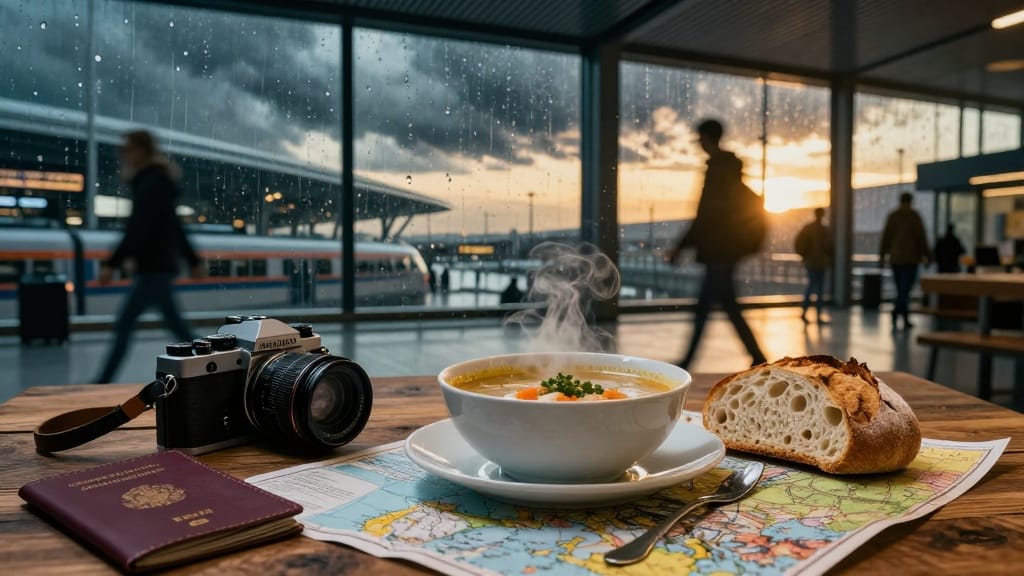
Hey there! If you’ve been following my travels, you know I’m usually the first one to pack a bag for a weekend in the Tatra Mountains or a quick flight to a new city. But lately, things have been getting... complicated. Between massive winter storms grinding airports to a halt and a geopolitical reshuffle that feels like a high-stakes game of Civilization, being a traveler in 2026 requires more than just a good camera and a sturdy pair of boots. We are seeing a massive shift in how we move, how we eat, and even how we perceive the world through our lenses. As someone who grew up in Poland, I’ve always appreciated the freedom of the Schengen Area and the ease of jumping on a train to Berlin or Prague, but the current atmosphere feels different. It’s heavier, but also more intentional.
Whether you're dodging cancellations at Newark or trying to understand why Brussels is suddenly standing its ground against trade threats, there’s a common thread: we’re all looking for authenticity and reliability in a chaotic world. From the cozy comfort of a chocolate-hazelnut baklava to the raw, visceral power of award-winning travel photography, this is a moment where lifestyle meets legacy. In this deep dive, I’m looking at the newest travel hurdles, the culinary "healthy" revolution, and why Europe is finally finding its spine on the global stage. It’s an era where "business as usual" has left the building, replaced by a need for strategic autonomy and a serious craving for food that doesn't come out of a chemistry lab. So, grab a coffee (or a shrub!), and let’s get into the weeds of how the world is shifting right under our feet.
The Great Transit Debate: Rail Gains as Skies Turn Gray
As someone who loves a good window seat, the current state of air travel is making me want to stick to the tracks forever. We’ve seen a "monstrous" winter storm slamming the tri-state area recently, making travel a total nightmare that essentially broke the logic of the modern commute. According to NBC New York, conditions have become perilous for both drivers and transit users across New York and New Jersey. This isn't just a local hiccup; as reported by North Jersey, the storm has snarled travel across the US, specifically hitting Newark Airport hard with a wave of cancellations that left thousands stranded.
Even down south, the situation hasn't been much better, revealing just how fragile our hub-and-spoke aviation system really is. ABC11 Raleigh-Durham noted that Sunday was expected to be one of the worst travel days in years, with over 70 flights canceled at RDU. This consistent instability in aviation is driving a massive resurgence in rail travel. However, it isn't always cheap. As analyzed in The New York Times, Amtrak has implemented dynamic pricing to strengthen its finances—a move that essentially mimics airline pricing models where the last person to book pays the "I’m desperate" premium.
From a photography perspective, there is something incredibly cinematic about a train journey that flying just can't match. When you're flying, you're in a pressurized tube at 30,000 feet; when you're on a train, you're witnessing the landscape change in real-time. In Europe, we’ve always known this. Taking the PKP Intercity from Warsaw to Krakow is a ritual for me—watching the Polish countryside blur past, the gray concrete of the city giving way to the rolling greens and eventually the mountains. In the US, the shift toward rail isn't just about nostalgia; it’s about a desperate need for reliability. When the Newark departures board turns into a red sea of "Cancelled," the Northeast Regional looks less like a slow alternative and more like a lifeline. The implications are huge: if rail can prove it’s more resilient than air travel during extreme weather, we might finally see the infrastructure investment that advocates have been screaming about for decades. While travelers might grumble about the cost of a last-minute ticket, the ability to avoid the airport "hellscape" is becoming a premium worth paying for. It’s a shift from quantity (fastest speed) to quality (actually arriving at your destination).
Culinary Revolutions: From Comic Strips to "Healthy" Overhauls
When I'm not hiking or snowboarding, I'm usually eating—and the food industry is currently having a mid-life crisis. In the US, there's a massive push against what many are calling the "industrial food complex." According to Fortune, Robert F. Kennedy Jr. is redefining the healthy American diet, leading food companies to make five major changes to keep up with the "Make America Healthy Again" (MAHA) movement. We’re talking about the potential removal of seed oils, dyes, and ultra-processed additives that have been the backbone of the Western diet for half a century. It’s a wild time when government policy targets the very additives we’ve taken for granted, and while the politics are polarizing, the move toward transparency is something I think we can all get behind. As someone from Poland, where we still have outdoor markets and seasonal produce is the norm, the "plastic" feel of some American snacks has always been a bit of a culture shock.
But food isn't just about nutrition; it's about culture and comfort. I’m obsessed with the modern twist on tradition, like the Chocolate-Hazelnut Baklava highlighted by Food & Wine, which draws inspiration from Greg Malouf’s creative Middle Eastern flavors. It’s basically the "final boss" of desserts. Speaking of traditions, did you know the massive, multi-layered Dagwood sandwich actually has its roots in pop culture? As Food Republic points out, we can thank the *Blondie* comic strip for that specific delight—a stack so high it requires structural engineering to consume. For those of us hosting at home and wanting to impress our gaming group or hiking buddies, the newest secret weapon for drinks isn't a fancy gin, but "shrubs." The Washington Post describes these sweet, sour, and sharp syrups—like pear, chamomile, and lavender—as the key to superior cocktails and non-alcoholic beverages. They offer a complexity that basic soda or juice just can't touch.
The "why" behind this shift is deeply personal for many. We are tired of feeling sluggish. We are tired of "food-like products." Even the way we get this food is being scrutinized. Daily Meal recently ranked nine food delivery services, including Uber Eats and DoorDash, finding that convenience doesn't always equal quality or fair pricing. The high fees for lukewarm fries are finally catching up with the tech giants. As a photography nerd, I can't help but feel that the best meals are the ones you actually travel for—the ones where you can smell the kitchen and see the person who made it—rather than the ones that arrive in a lukewarm paper bag after a 40-minute bike ride through the rain. The future of food is looking less like a laboratory and more like a garden, and honestly, it’s about time.
The Lens as a Witness: Capturing a Changing World
Photography is how I make sense of my travels; it’s the bridge between the experience and the memory. The latest Travel Photographer of the Year winners remind me why I carry a heavy DSLR on every hike through the Sudetes or the Alps. These images aren’t just "pretty pictures"; they are documents of human resilience and ecological fragility. From sacred rituals in remote valleys to the raw survival of wildlife in disappearing habitats, these images capture the soul of our planet. It’s not always about having the most expensive glass, though. The Guardian recently featured Aung Chan Thar’s stunning phone picture of fabric by a lake in Myanmar, proving that a "best picture" can come from the device in your pocket if you have the eye for it. This democratization of photography is one of my favorite things about the current era—everyone has the potential to be a witness.
For those looking to level up their own shots without breaking the bank, Fstoppers suggests experimenting with macro photography on the cheap. You don't need a $2,000 macro lens; sometimes a simple reverse-ring or a set of extension tubes can open up the "micro-world" of insects and textures. It’s about creativity over expensive kits. However, photography also serves a more somber, vital purpose: documenting history as it happens, often in its most painful forms. We see this in the TIME coverage of protests in Minneapolis following a federal shooting, where the cold, stark imagery mirrors the social tension. Similarly, BBC’s documentation of Highfield Road stadium captures the final years of a landmark before it disappeared into the archives of history.
Even at private celebrations, the way we capture moments is evolving. NetNewsLedger argues that professional event photography is essential because it "slows things down," giving us something solid to hold onto in an age of fleeting Instagram stories. As a Pole, I feel this deeply; our history is often found in the grainy, black-and-white photos of places that were destroyed and then rebuilt. Every time I take a photo of a cobblestone street in Gdańsk, I’m aware that I’m documenting a moment that exists only because of the preservation of memory. Photography is our way of saying "I was here, and this mattered." In a world that feels increasingly digital and ephemeral, a well-composed photograph is an anchor of truth.
Europe’s Stand: Defending Sovereignty and Trade
Finally, we have to talk about the "elephant in the room"—the changing geopolitical landscape that is forcing Europe to grow up, and fast. We are currently navigating a very tricky tightrope between the US and China. Following threats of massive tariffs from across the Atlantic, a deal was reportedly secured after NATO Chief Mark Rutte discussed Arctic security with the US administration, as noted by Yahoo Finance. While threats against European allies were scrapped, the tension remains palpable. Denmark has remained remarkably firm: their sovereignty—specifically regarding Greenland and its strategic Arctic position—is not for sale to the highest bidder. It’s a moment of pride for many of us in the EU to see a member state refuse to be treated like a real estate listing.
This "Greenland Crisis" has been a massive wake-up call for Brussels. The New York Times reports that territorial integrity is now seen as a core European tenet at risk from both Russian aggression and American unpredictability. In response, Brussels is seeking a "divorce" from the old, dependent way of doing things. As The Guardian reports via Phillip Inman, some investors at the World Economic Forum in Davos are already ditching US government bonds in favor of more stable, or at least more predictable, European assets. This "shock therapy" might actually leave Europe healthier in the long run, as the Atlantic Council suggests. By being backed into a corner, the continent is being forced to solve its chronic problems—like fragmented defense spending and energy dependence—and stop surrendering its global relevance.
In the midst of this, Europe is widening its horizons and looking East with a renewed sense of purpose. We are finally seeing real progress on a massive free trade pact between India and the EU, a move that would significantly help the bloc face the dual challenges of China’s dominance and American protectionism. These negotiations, nearly two decades in the making, are finally nearing the finish line because the stakes are now too high to ignore. Furthermore, as Russian strikes on Ukraine continue to target civilian infrastructure and pressure the negotiation table, according to The Guardian, the EU is proving that its defense of sovereignty and democratic values stays at the heart of its identity. We are seeing a more unified European defense posture, with Poland often leading the charge on the eastern flank. Being pro-EU, I find it empowering to see Europe finally acting as a unified powerhouse rather than just a collection of nice vacation spots for the rest of the world. We are a bloc with teeth.
Conclusion: The Future is Authentic and Local
If 2026 is teaching us anything, it’s that the "old ways" of mindless travel and industrial eating are being challenged by a global reality that demands more of us. Whether it’s choosing a train over a plane to ensure you actually arrive at your destination, or demanding that food companies remove deceptive chemicals from our labels, the trend is toward intentionality. We are documenting our lives with more purpose, moving away from "fast content" and toward meaningful photography that tells a story. We are also seeing a Europe that is refusing to be sidelined, protecting its borders and trade routes with a renewed sense of vigor and unity. It’s about time we stopped being the world’s museum and started being its engine again.
The implications for our lifestyle and travel are clear: the future is going to be more localized, more resilient, and—hopefully—more authentic. We can't always control the weather, the tariffs, or the geopolitical shifts, but we can control how we capture the world and what we choose to put on our plates. For me, that means more hiking in the Tatras, more train rides across the border, and a lot more attention to the ingredients in my baklava. The world is changing, but that’s where the adventure is. Stay adventurous, stay curious, and maybe keep a train timetable and a camera handy at all times. You never know when you’ll need to bypass a blizzard or document a piece of history in the making. Let’s keep moving forward, together, as a much more conscious global community. See you out there!