Adventures in Flux: Navigating the New Landscape of Global Travel, Food, and Heritage

Hey everyone, it’s Anya. If you’ve been following my feed lately, you know I’m obsessed with how the world is changing—not just the scenery through my camera lens, but the actual rules of the game. Lately, it feels like we’re living in a massive open-world RPG where the devs keep dropping chaotic patches without reading the patch notes. From the rolling mountains of Georgia (the US state, though you know I love the Caucasus too!) to the bustling political halls of Warsaw, the way we move, eat, and even play is being radically rewritten. Whether you’re a budget backpacker, a foodie looking for that authentic "hand taste," or a gamer waiting for the next big sandbox to drop, there’s a whole lot to unpack. To be honest, being Polish adds a specific layer to this; we’ve always been at the crossroads of history, so seeing these global shifts feels both familiar and deeply unsettling.
In this deep dive, I’m looking at how shifting travel bans and economic policies are hitting the tourism industry, the weirdly controversial Return of the Food Pyramid, and why Poland is currently at the center of a European tech and security tug-of-war. We aren't just talking about trends; we're talking about the infrastructure of our daily lives. I’ve noticed that while the borders in our digital worlds are expanding—giving us more freedom than ever in places like Hytale—the physical borders around us are becoming increasingly jagged. It’s a strange time to be a traveler, but a fascinating time to be a storyteller. Grab a coffee—or maybe a sourdough horse—and let’s get into the weeds of how 2026 is shaping up to be a year of radical transitions.
The 2026 World Cup Hurdles: Travel Bans vs. Sportsmanship
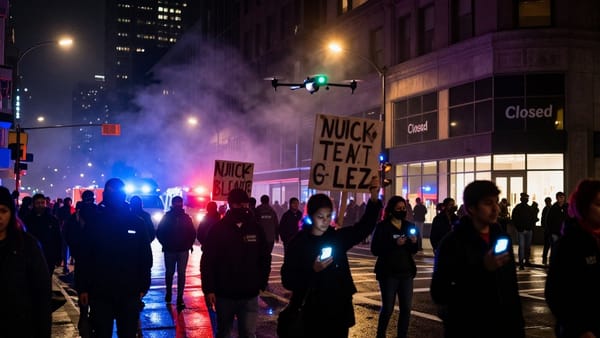
As a Pole, I know how much football means to us—it’s basically a religion, complete with its own saints and sinners. But for many fans, the road to the 2026 World Cup in the U.S. is looking more like a locked gate than a celebration of the "beautiful game." According to Fox News, supporters from over 30 countries are facing severe restrictions due to the implementation of President Trump’s travel ban. This isn’t just about politics; it’s about the spirit of the game and the cultural exchange that defines a World Cup. As reported by ESPN, fans from top African nations like Senegal and Ivory Coast are currently in limbo, wondering if they’ll ever get to see their heroes play in person. Imagine qualifying for the biggest tournament on earth only to be told you can’t watch your team from the stands because of your passport.
What’s particularly frustrating is the selective nature of these rules and the "vibe check" they send to the global community. While Yahoo Sports points out that exceptions exist for players and officials, the actual heartbeat of the stadium—the supporters—are left out in the cold. From a photography perspective, a World Cup without its diverse fans is like a portrait with the subject's soul missing. The color, the chants, and the raw emotion of fans from Senegal or the Ivory Coast are what make the telecast feel alive. If you ban the fans, you lose the vibrant energy (and the massive tourism revenue) that makes the World Cup a profitable venture. This also creates a massive logistical headache for the travel industry, which had banked on a "no borders" approach to the North American games. It makes me appreciate my EU passport even more; being able to move across 27 countries without a second thought is a privilege we often forget until we see others fighting for a single visa. The future of sports diplomacy is at a tipping point—if the world’s biggest event becomes exclusive to a few "approved" nations, it loses its claim to being a "World" Cup.
Beyond the immediate disappointment, the economic ripple effects are huge. Host cities in the U.S. have invested billions in infrastructure, expecting a surge in international visitors. If fans from dozens of countries are barred, occupancy rates at hotels will plumet and local businesses will miss out on the diverse spending power global fans bring. It’s an "own goal" for the economy. Furthermore, this creates a precedent for future global events. Will FIFA look at the 2026 experience and decide that hosting in the U.S. is too risky due to political volatility? As a European looking in, it feels like the U.S. is closing its doors right when it should be showing them off. We have to ask: at what point does "national security" start to compromise "national character"?
From Vegas to Vintage: Budget Travels and the Search for "Authenticity"
If the U.S. travel bans have you stressed out, the good news is that the travel market is reacting with some surprisingly affordable pivots. If you’re like me and always hunting for that perfect golden-hour shot without spending a fortune, Skyscanner’s latest data is essential reading. According to Travel And Tour World, Las Vegas is surprisingly joining the list of the cheapest travel hotspots for 2026, alongside heavy hitters like Milan and Cancun. It’s a great reminder that even "expensive" cities have budget windows if you’re smart about it and avoid the marquee weekend events. I’ve always found that the desert light in Nevada makes for incredible photography, even if you never set foot in a casino.
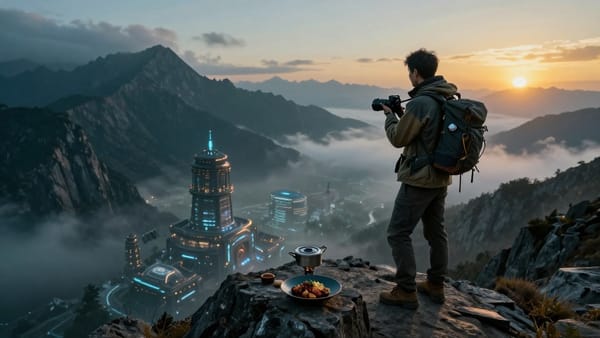
For those who prefer mountains over neon lights, there’s a hidden gem in the Blue Ridge Mountains that’s giving me serious wanderlust. As The Travel highlights, the town of Ellijay, Georgia, is blending Napa Valley vibes with rugged outdoor adventure. It’s the kind of place made for solo travelers like Rebecca Crowe, who shares how these underrated spots offer the best opportunities for self-discovery and "slow travel." In a world that feels increasingly frantic, the move toward "Napa-style" relaxation in more affordable, accessible regions is a major trend. People are trading the overpriced prestige of California for the authentic, grit-and-glory charm of the South. It’s about finding that "vintage" feel without the vintage price tag. From my POV, capturing the mist on the Blue Ridge Mountains is ten times more rewarding than fighting crowds in a more "mainstream" destination.
Speaking of self-discovery, the way we travel is also getting a tech upgrade. Have you seen the new Airstream World Traveler 22RB? It’s a minimalist masterpiece. As reported by Gear Patrol, this ultralight model is perfect for those manifesting a life of escape from the routine. For digital nomads or photographers like myself, this is the ultimate tool. It’s small enough to tow with a mid-size SUV but stylish enough to look like a high-end apartment. We’re seeing a shift from "vacationing" to "living on the road." This isn’t just for retirees anymore; it’s for twenty-somethings who want to wake up in a new national park every Tuesday. The 22RB is designed for the modern traveler who needs a stable workstation and a comfortable bed but wants to keep their footprint small. It allows for a level of spontaneity that traditional hotels just can't match. I can already see myself editing a batch of photos by a glacial lake, using the Airstream's panoramic windows as my inspiration. It’s the "new American dream," but it’s one that resonates globally as we all look for ways to disconnect from the grid while staying connected to our work.
The "Hand Taste" and the Hungry Debate over Modern Nutrition
Food is the soul of travel, right? It’s the universal language that doesn’t require a translator. But what we’re being told to eat is becoming a massive, confusing mess. In the U.S., the government just face-lifted the food pyramid, and the backlash has been intense. As WJTV notes, Dr. Timothy Quinn recently discussed the new "upside down" food pyramid designed to modernize nutrition for a generation that’s increasingly sedentary and health-conscious. However, this shift is causing a localized migraine for health professionals. A dietitian writing for STAT News argues that these federal guidelines actually make their job harder by muddying the waters on saturated fats and complex carbohydrates.
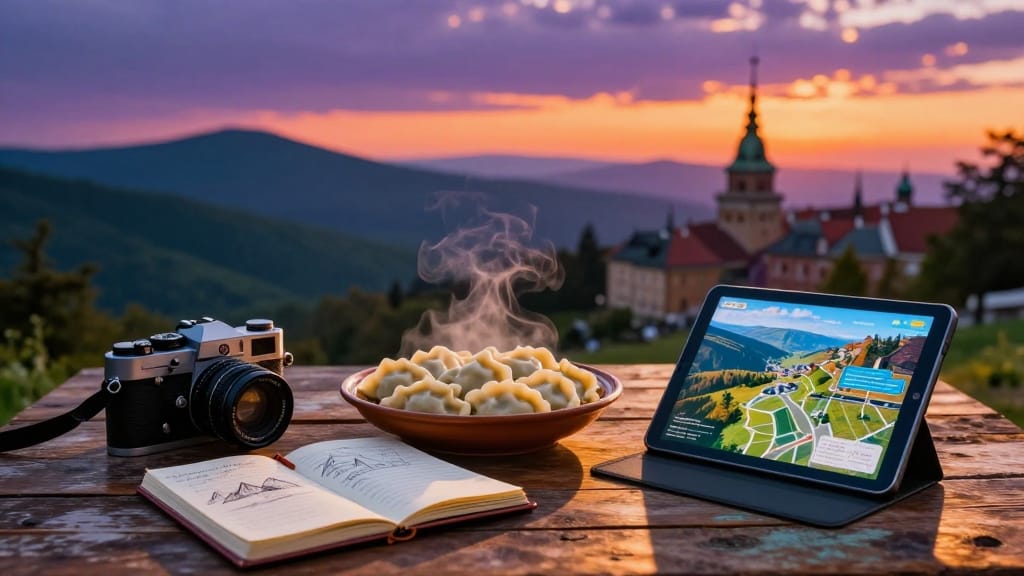
The 2025-2030 guidelines were intended to "Make America Healthy," but according to WAMC, the return of the pyramid has drawn intense scrutiny for potentially over-simplifying nutrition to the point of being useless. As someone from Poland, where we value hearty, traditional foods like pierogi and bigos, these graphic "pyramids" always look a bit clinical to me. While the feds argue about blocks and tiers, I’m more interested in the cultural side of eating. I absolutely love the concept of "hand taste" (Son-mat) mentioned by West Hawaii Today—the idea that a cook’s (often a grandmother’s) instinct, history, and physical touch infuse a dish with a flavor no sterilized recipe can replicate. No food pyramid can account for the love and tradition baked into a meal.
And for something totally fun—and probably not on the pyramid—if you find yourself at Disney California Adventure, you have to try the new "Year of the Horse" sourdough. As WDW Info reports, it’s a must-have for the 2026 Lunar New Year celebration. It’s that perfect mix of tradition and pop culture that really speaks to me as a millennial traveler. It shows how food can be a bridge between cultures, even in a theme park setting. But on a more serious note, food security remains a major issue that doesn't care about "hand taste" or cute sourdough shapes. Organizations like the Great Plains Food Bank are seeing leadership changes to meet the growing demand for food assistance; as reported by InForum, Ann Prifrel has been named the new CEO to lead their mission against hunger. It’s a sobering reminder that while some of us are photographing our "upside down" meals, others are struggling to find a meal at all. The contrast is sharp, and as a documentarian, I think it’s important to see both sides of the plate.
Poland in the Hot Seat: Tech, Security, and Sovereignty
Back in my home country, things are getting a bit spicy with the EU, and honestly, it’s stressful to watch from a citizen’s perspective. Our president, Karol Nawrocki, recently vetoed a major tech bill, and it’s creating a massive diplomatic storm. According to POLITICO, this move could lead to millions in EU fines as it reignites the long-standing dispute over the rule of law and national sovereignty over digital infrastructure. It’s a classic tug-of-war: the EU wants a synchronized digital market with shared rules, while the Polish government wants to maintain control over its own tech regulations. As an EU citizen, I’m a fan of the block's unified strength, but as a Pole, I see why people are wary of "Brussels" overstepping. It’s a delicate balance that we haven't quite figured out yet.
Economically, we’re playing a very high-stakes waiting game. As reported by Bloomberg, the Polish Central Bank held interest rates steady at 4% recently to see how previous easing is affecting consumer prices and inflation. We’re also keeping a very close eye on the U.S. political circus; Bloomberg also reports that Poland is monitoring Trump’s investigation into the Federal Reserve before deciding on our own dollar bond issuances. It’s a wild realization: what happens in a committee room in D.C. directly affects whether a person in Warsaw can afford their mortgage or a new camera lens. We are all deeply interconnected, whether we like it or not.
But it’s not all spreadsheets and political bickering. Poland is increasingly stepping up as a regional leader in human rights and defense. President Nawrocki recently met with Belarusian democratic leader Sviatlana Tsikhanouskaya, reinforcing the message that Poland will never abandon its Belarusian neighbors in their struggle for freedom. Being on the frontline of the EU means we don't have the luxury of being indifferent. We’re also beefing up our literal defenses. In what experts call an "era of rising threats," POLITICO reports that the UK and Poland have agreed to closer air defense ties, specifically to counter potential aerial aggression and Russian drone incursions. Living in Poland, these safety measures feel very real. When you hear about drone incursions, it’s not just a news story—it’s our airspace. This collaboration with the UK is a vital part of EU defense and shows that while we might fight about tech bills, the "security spine" of Europe is actually getting stronger. It’s about keeping our skies clear for everyone, including those of us who just want to fly our own photography drones in peace.
Digital Frontiers: Sandbox Adventures and Gaming Hype
To blow off steam from all that heavy geopolitical news, I usually turn to gaming. It’s my ultimate "do not disturb" mode. There’s something so therapeutic about building a world where the physics make sense and the quest markers are clear. I’ve been keeping a predator’s eye on Hytale lately. Even though the developers warned that the sandbox adventure "isn't good yet" in its current state, a hands-on preview from PC Gamer suggests it’s already feeling pretty impressive. It’s been in development for so long it’s basically a legend at this point, but seeing it come together is exciting. The game offers a mix of "Exploration" and "Creative" modes—as The Gamer explains, you can choose between hardcore resource gathering and combat or just pure, peaceful building. For me, that creative mode is essentially a photography simulator in a fantasy world. I can’t wait to see what the lighting engine looks like.
And if you’re a Fortnite fan (I mean, at this point, who isn't secretly addicted?), the Adventure Time Wave 2 bundle is about to drop and it’s pure nostalgia bait. As reported by SportsRant, we’re getting skins for Fionna, Cake, and even Lemongrab. Can you imagine getting "boxed" in Fortnite by a Lemongrab skin? Unacceptable! It’s these little crossovers that keep the lifestyle fun—blending the cartoons of our childhood with the high-stakes, sweat-inducing gaming of today. It reminds us that even when the real world gets a bit too serious with travel bans and tech vetoes, we have these digital hubs where we can just be weird and creative. For me, gaming is the perfect "third space"—the place between work and rest where I can explore a different version of reality.
The rise of these massive sandbox games also hints at a larger trend in travel: "virtual tourism." If a visa to the U.S. is too hard to get, or if a flight to Japan is too expensive, more people are turning to meticulously crafted game worlds to get their fix of adventure. Hytale looks like it might be the next big platform for this. We’re moving toward a future where being a "traveler" means having both a well-stamped passport and a high-level character in an online world. It’s an expansion of our horizons that doesn't require a boarding pass, just a solid fiber connection. And honestly? I’m kind of here for it. As long as I can still find a way to take a "photo" of a dragon at sunset, I’m happy.
Forward-Looking Thoughts: A World in Transition
Looking at all these stories together, it’s clear that 2026 isn't just another year; it’s a year of massive, structural shifts. We’re seeing a world where physical travel is becoming more localized, budget-focused, or even restricted due to political barriers, while our digital worlds are expanding at light speed to fill the gap. Whether it’s the USDA trying to simplify our diets with an "upside down" pyramid or Poland trying to navigate its complicated place in the EU, the common thread is a search for stability and identity in a very fast-moving environment. We are all trying to figure out what the "new normal" looks like, and the answer seems to change every time we refresh our feeds.
As a photographer and a traveler, I see these changes as new opportunities to document a world in flux. We might face more hurdles at the airport, and the prices of our favorite gear might fluctuate with the Polish Zloty, but the core things don't change. The "hand taste" of a home-cooked meal, the eerie silence of a mountain trail in Ellijay, or the thrill of a new game world—these are the things that ground us. My advice? Stay curious, stay adventurous, and maybe don't listen to the food pyramid too closely—trust your gut instead. It’s usually right. Whether you’re planning a road trip in an Airstream or gearing up for a World Cup despite the odds, remember that the story is in the journey, not just the destination. Let's make sure we're telling the right ones. See you on the road—or in the lobby!