2026 Gaming Outlook: Remasters, New Hardware, and the Rise of "Critical Gaming"

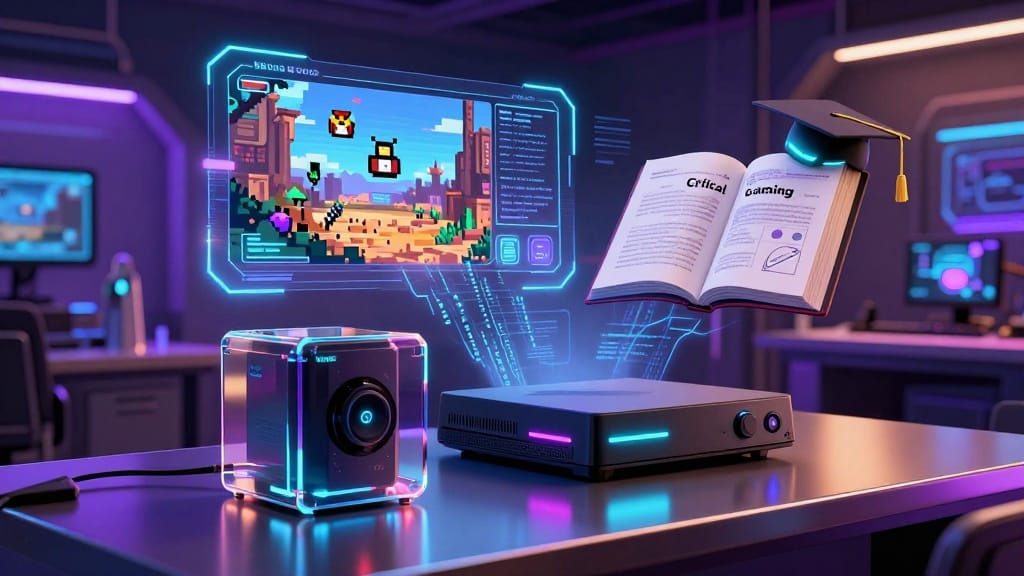
Buckle up, nerds, because the gaming landscape is shifting faster than a speedrunner on a caffeine glitch. We aren’t just looking at the usual cycle of sequels anymore; we’re witnessing a massive convergence of nostalgia, experimental hardware, and a serious academic push into how we play. From the rumors of Bethesda reviving wasteland classics to Valve trying to reclaim our living rooms with a new "cube," the industry is basically in "God Mode" right now. Whether you're a PC master race devotee or a console peasant, there is no escaping the hype train that is 2026. This year isn't just about playing games; it's about analyzing their DNA, as seen in 980 CJME's report on video games becoming actual university homework to foster critical thinking. We've officially reached the point where your professor might actually get tilted if you don't finish your Elden Ring DLC analysis by Monday morning. It’s a wild timeline where "git gud" translates to "get an A," and frankly, I’m here for it. This isn't just a leisure activity anymore; it's a sociocultural tectonic shift that's redrawing the lines between entertainment, education, and high-end tech. We're looking at a year that will "dwarf anything around it" in terms of sheer hype, a sentiment echoed by The Star's preview of the year's most anticipated projects.
In this deep dive, we’re going to look at why remasters of Fallout are suddenly the hottest gossip in the vault, how Valve is pivoting its hardware strategy to dominate your TV, and why your next mobile game might actually involve your physical charging cable in a literal tug-of-war. It’s a weird time to be alive, but a great time to have a controller in your hand. We are moving past the "dark ages" of hardware shortages and entering a golden era of accessibility and high-fidelity nostalgia. If you thought 2023 was stacked, 2026 is holding its beer while it prepares to break the internet. We’re talking about a paradigm shift where the games we loved as kids are being rebuilt with the power of modern engines, while new tech is trying to make sure we never have to deal with Windows Update mid-boss fight again. Let's drop into the details.
The Remaster Renaissance: Why the Wasteland is Calling Again
Nostalgia is the ultimate buff, and Bethesda knows it. As Season 2 of the Prime Video TV series keeps the hype levels at "Maximum Radiance," the whispers of a return to the Capital Wasteland and the Mojave are getting loud. According to indy100, rumors of Fallout 3 and New Vegas remasters are swirling through the industry. This isn't just about a quick cash grab; it's about preserving the move to 3D that Fallout 3 pioneered back in 2008 for a new generation of players who only know the series from their TV screens. Let’s be real: trying to run a vanilla copy of New Vegas on a modern PC is essentially a game of "how many minutes until the engine explodes." We need these remasters not just for the 4K textures, but for the stability. If I have to lose three hours of progress to a corrupted save file one more time, I’m joining the Enclave out of pure spite. These rumors suggest Bethesda is finally listening to the fans who have been begging for a Creation Engine 2 port of the Mojave wasteland.
The trend shows that gamers are increasingly craving polished versions of titles that defined their childhoods. This craving is what makes the move by Xbox and Playground Games regarding the new Fable so risky yet potentially rewarding. As Eurogamer notes, sticking closely to Fable's specific history after over a decade and a half is a bold play. The challenge here is balancing that "British humor" and quirky vibe with modern RPG expectations. You can't just give us a "Chicken Kicker" simulator and expect a 10/10 in 2026; the mechanics need to feel as tight as The Witcher 3 but with the soul of Peter Molyneux's wildest (and often broken) promises. It's a tightrope walk between honoring the legacy and updating the gameplay loop so it doesn't feel like a relic. In an age where even bad box art is remembered more vividly than some gameplay—as highlighted by SVG’s look at infamously bad video game covers—developers are learning that brand identity is everything. A remaster is more than a facelift; it's a vibe-check for the entire franchise.
Why does this matter? Because we are in an era of "Transmedia Dominance." When a show like Fallout or The Last of Us hits the mainstream, the player base spikes by massive percentages. If Bethesda doesn't have a functional, modern version of Fallout 3 ready for the "TV noobs" to buy, they are literally leaving caps on the table. The future implications are clear: every major franchise is going to stay in a "perpetual update" cycle. We’re moving toward a world where "old" games never actually die; they just get re-skinned, re-patched, and re-released to coincide with their silver screen counterparts. It’s a feedback loop of hype that keeps these IPs alive for decades. Just wait until the Elder Scrolls IV: Oblivion rumors start hitting—I’m already stockpiling my healing potions. These remasters also serve as a "bridge" to keep the community engaged while we wait 15 years for the next numbered entry in a series, maintaining a constant stream of revenue and community engagement without the decade-long dev cycle of a brand-new AAA title.
Hardware Evolution: Valve’s Cube and the Linux Frontier
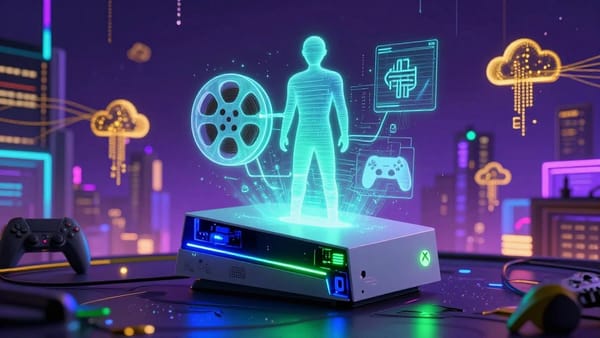
Valve is back at it again, and they’ve clearly decided that the Steam Deck was just the tutorial level. While the handheld proved that portable PC gaming isn't just a meme, Valve is now turning its sights back to the living room to finish what the original Steam Machines started. As reported by indy100, the new Steam Machine is rumored to be a cube-shaped powerhouse designed to push 4K resolution at 60 fps without breaking a sweat. This isn’t just a console; it’s a shot across the bow for the PS5 Pro and whatever mid-gen refresh Xbox is cooking up. Valve is essentially trying to bring the flexibility of the Steam ecosystem—complete with its massive sales and "no-subscription-required" multiplayer—to the big screen. It’s curated for the person who wants PC power but has zero interest in cable management or applying thermal paste. If Valve can nail the price point, this "Cube" could be the ultimate console-killer, especially for the millions of us who already have 500+ games in our Steam libraries collecting digital dust.
On the software side of hardware, the rise of specialized operating systems like CachyOS—a German Linux distribution—shows that the enthusiast market is finally done with Windows' "bloatware" nonsense. According to PC Games Hardware, CachyOS is positioning itself as a top-tier choice for gamers with features like FSR 4 Redstone integration and kernel-level optimizations that make Windows 11 look like a sluggish dinosaur. For the uninitiated: Linux gaming used to be a nightmare of terminal commands and "Wine" wrappers, but with SteamOS and now CachyOS, it's becoming the superior way to play. We’re talking about more FPS, lower latency, and an OS that doesn't try to sell you a Microsoft 365 subscription while you're trying to clutch a 1v5 in Counter-Strike 2. The "Linux Year" has been a meme for a decade, but 2026 might actually be the year the enthusiasts finally flip the bird to Redmond.
This push for optimization is even reaching the mobile sector, though in way more "galaxy brain" ways. Take "Charchery," for example; as discussed by Digital Trends, this game turns your physical charging cable into a bow-and-arrow mechanic using your phone's haptics and charging sensors. It’s absolutely unhinged, and I love it. This kind of "out of the box" thinking is what keeps the industry from becoming a repetitive grind of battle passes and cosmetics. It shows that even with mobile gaming, there’s room for hardware-software synergy that isn't just a Genshin Impact clone. Between 4K living room cubes and bow-and-arrow charging cables, the hardware landscape in 2026 is less about "more teraflops" and more about "how can we make the physical act of playing more immersive?" The shift toward specialized OS choices and modular hardware suggests that the future of gaming is choice—choosing your performance, your privacy level, and your platform without being locked into a single ecosystem's walled garden.
Xbox’s Strategy: Developer Directs and Game Pass Dominance
Microsoft isn’t playing around this year. After a few years of "steady but slow" first-party releases, 2026 is looking like the year the "Big Green Machine" finally hits its stride. Their first Developer Direct of 2026 was a vibes-heavy event that featured industry legend Tim Schafer in an unscheduled cameo, proving that Xbox is leaning hard into its "developer-first" identity. According to Yahoo Tech, the showcase successfully spotlighted upcoming titles while maintaining a "strong effort all the way around." This transparency is crucial for maintaining subscriber numbers for Game Pass, which has become the "Netflix of Gaming" but with much higher stakes. The Developer Direct format works because it cuts out the "corporate suit" fluff and lets the actual creators nerd out about their lighting engines and combat mechanics. It’s basically a Twitch stream with a massive budget, and as a result, it builds much more trust with a community that is notoriously allergic to marketing speak.
As Generacion Xbox points out, February 2026 is loaded with potent launches and Game Pass additions that ensure players have zero excuses to touch grass. From day-one indie darlings to the heavy hitters we’ve been tracking for years, the value proposition of Game Pass is becoming undeniable. If you’re not on the sub, you’re basically paying a "noob tax" at this point. Meanwhile, the broader tech world is watching companies like Samsung, who The Street reports has dropped a "bombshell" in the streaming market. This could mean deep integration of Xbox Cloud Gaming or similar services directly into every smart TV without the need for a console or even a "dongle." If your TV *is* your Xbox, the barrier to entry for AAA gaming effectively vanishes. This is the "Endgame" for Microsoft: they don't care if you buy an Xbox Series X; they just want you paying $15 a month to access their library on your TV, phone, or toaster.
But let's look at the "Why." Why the focus on Developer Directs? Because the traditional E3-style "hype train" is dead. Gamers want constant, bite-sized updates and deep dives into the "how" of game development. It creates a sense of ownership and community. By February 2026, Game Pass will likely be moving toward a more tiered structure, potentially offering "early access" or "director's cut" content to premium members. The impact on stakeholders—from developers to consumers—is massive. For devs, it means guaranteed eyes on their projects from day one. For us, it means our backlogs are going to grow to an unmanageable size. But the real win is the democratization of gaming. When high-end gaming becomes a streaming service on a standard Samsung TV, the global player base could double overnight. The future implications involve a shift from hardware sales to "average revenue per user" (ARPU), which will fundamentally change how games are designed, likely leading to more "live service" elements to keep those subs active. It’s a brave new world, and Microsoft is currently the one holding the map.
Cultural Satire and the "Brainrot" Meta
Gaming culture has always been a little unhinged, but Saturday Night Live (SNL) recently proved that even the NFL isn't safe from gaming-style trolling. Following an injury to Bo Nix, Bleacher Report noted how Jarrett Stidham and the Broncos were memed into oblivion in an SNL video. This crossover between sports, comedy, and gaming-style "trolling" is becoming the standard for modern entertainment. We are living in an era where "brainrot" isn't a pejorative; it's a genre. The terminology of the internet—AFK, OOM, Skill Issue—has completely colonized the real world. When SNL is using gaming tropes to roast elite athletes, you know the cultural war is over. Gaming won. We aren't the weirdos in the basement anymore; the world has just become one giant, chaotic Discord server.
This "brainrot" culture is also being met by a serious academic counter-movement that is trying to harness all those dopamine hits for something productive. As students at ECU "level up" their real-world development skills—as reported by reflector.com—we see that the industry is maturing into a legitimate academic pursuit. The "it’s all fun and games until the dragon kills you" mantra is becoming a career path for developers who are learning the complex math, physics, and psychology behind the screen. It’s not just about making things look pretty; it's about systems design and social engineering. At the same time, we have the ironic side of this culture, like the "Steal a Brainrot" update, where TechWiser details the addition of 8 new items including the mythic "Hydra Dragon Cannelloni." It’s a hilarious, self-aware nod to how absurd gaming memes have become, and it shows that developers are in on the joke.
The significance of this cannot be overstated. We are seeing the "gamification" of everything. From education where games are literal homework to political discourse where "NPC" is a standard insult, the logic of games is the logic of 2026. This matters because it changes how we process information. We’re moving toward a "Critical Gaming" era where we don't just consume the content; we deconstruct its mechanics and its bias. The future implications? Expect more "serious games" in the workforce and more "gamified" civic engagement. It sounds like a Black Mirror episode, but with better loot drops. This cultural convergence means that being a "gamer" is no longer a subculture; it's the baseline of digital literacy. If you don't understand the mechanics of "grinding" or "RNG," you’re going to find the modern world increasingly confusing. We’re all players now, whether we have a controller or not.
Anime Convergence and Cross-Media Streaming
The bond between anime and gaming has never been tighter, and 2026 is the year the seal finally breaks. Beyond the typical updates, Toei Animation has officially announced the "Moro Arc" adaptation for Dragon Ball Super, a move The Outerhaven describes as one of the most anticipated returns in franchise history. This isn't just huge for weebs; it's massive for the gaming industry. Why? Because every major anime arc is now a blueprint for an Arena Fighter or a DLC expansion. This coincides perfectly with Bandai Namco revealing "Project Age 1000," a new Dragon Ball game that, as The Outerhaven also reports, will have more details spilled at the Dragon Ball Games Battle Hour 2026. This isn't just another Xenoverse kludge; the rumblings suggest a radical shift in how anime combat is handled—possibly moving toward more technical, FighterZ-style mechanics with the scale of an open-world RPG.
While we wait for those releases, streaming services are filling the gaps with hidden gems and "gamer-adjacent" content. If you’re tired of the grind and need a mental reset, SlashFilm suggests checking out Harrison Ford in The Age of Adaline on Peacock. It’s a nice break from the neon and pixelated explosions. But if you prefer live-action real-world stakes—which, let's face it, is basically just Survival Mode IRL—you can watch WMBF News' overnight winter storm radar or catch the high-intensity cricket action between India vs New Zealand via NDTV or the Republic World live stream. The point is: the "always-on" nature of streaming is the glue holding 2026 together. Whether it's an esports final or a T20 cricket match, we are consuming media through the same high-speed, interactive pipes.
This cross-media convergence is the ultimate endgame for entertainment conglomerates. They want you in an ecosystem where you watch the Dragon Ball anime on Friday, play the Project Age 1000 beta on Saturday, and watch the competitive "Battle Hour" streams on Sunday. It’s a 360-degree immersion strategy. The impact on the gaming industry is a "Quality Arms Race." As anime-style visuals reach parity with their 2D sources (thanks, Unreal Engine 5!), the line between "watching" and "playing" is blurring. Future implications suggest that "seasons" of a game will be released simultaneously with "seasons" of a show, with narrative threads weaving between the two. Imagine a world where your performance in a specific game event actually influences the "fan-vote" plot of the following anime season. We’re almost there, and 2026 is the testing ground for this kind of meta-narrative synergy. The "always-on" gamer isn't just a market segment anymore; they're the engine of the entire entertainment economy.
Conclusion: The Final Level of 2026
2026 is shaping up to be the year where the "Gamer" identity stops being a niche and starts being the core of global culture. From university classrooms where Elden Ring is on the syllabus to 4K-capable cubes sitting in our living rooms, the way we interact with digital worlds is becoming more immersive and more critically analyzed. The move toward remasters suggests we aren't ready to let go of our past—and why should we be? If we can have the soul of New Vegas with the stability of a modern engine, everyone wins. But hardware like the Steam Machine and OS pivots like CachyOS prove we are also desperate to push toward a more optimized, player-controlled future. We are demanding better performance, better value, and better respect from the "Big Three" (Sony, Microsoft, Nintendo) and the PC platform holders alike.
Gaming is no longer just a hobby; it’s an academic subject, a professional sport, and a multi-billion dollar engine of nostalgia and innovation. As we've seen, whether it's the satirical "brainrot" that SNL parodies or the high-stakes world of international T20 cricket streaming on the same devices we use for Dragon Ball, the lines between our various forms of entertainment are effectively gone. We are entering a "Total Media" era where your console is your TV, your TV is your PC, and your phone is a bow-and-arrow. The future looks like it has a high frame rate, zero latency, and more content than we could possibly play in ten lifetimes. So, keep your drivers updated and your controllers charged (even if they're acting as bows). GG, everyone—we've reached the final level of the digital age, and the boss loot looks incredible. 2026 is going to be legendary. See you on the leaderboard!