2026 Gaming Outlook: Hardware Hybrids, Streaming Wars, and the Quest for the Ultimate GG

Welcome to 2026, besties, where the gaming landscape is officially more chaotic—and more exciting—than a 100-player high-stakes lobby in a sweaty battle royale. We've officially moved past the cringey "next-gen" growing pains and into a wild era where hardware borders are collapsing like a poorly built fort in Fortnite. Subscription models are mutating faster than a Resident Evil boss, and the industry is currently grappling with its own massive growth spurts and the inevitable growing pains that come with them. Whether you’re a frame-rate snob pushing 240Hz on your liquid-cooled PC, a console loyalist stuck in the eternal blood feud between PS5 and Xbox, or a handheld hero desperately refreshing your feed for "Switch 2" news, the rules of the game are shifting beneath our feet. This isn't just about pixels and polygons anymore; it’s about how we consume media, the tech that drives it, and the existential dread of realizing our backlogs are now legally large enough to be considered sovereign nations.
In this massive deep dive, we’re breaking down everything from the hardware modders who are basically modern-day digital alchemists sticking it to the "exclusives" era, to the latest research on how our 10-hour grinds actually affect our physical meat-suits. We’re looking at why tabletop giants are suddenly swimming in Scrooge McDuck levels of gold and how streaming deals are locking down your favorite superheroes for the next decade like a long-term contract in a sports league. This is 2026, and the meta has changed. Grab your overpriced energy drink of choice, adjust your ergonomic chair (save your spine, please!), and let’s get into the spicy patch notes for the gaming industry. It’s a long ride, but don't worry—I've got the map, the loot, and enough snark to get us through the final boss. Let's go!
Hardware Evolution: The End of Console Tribalism?
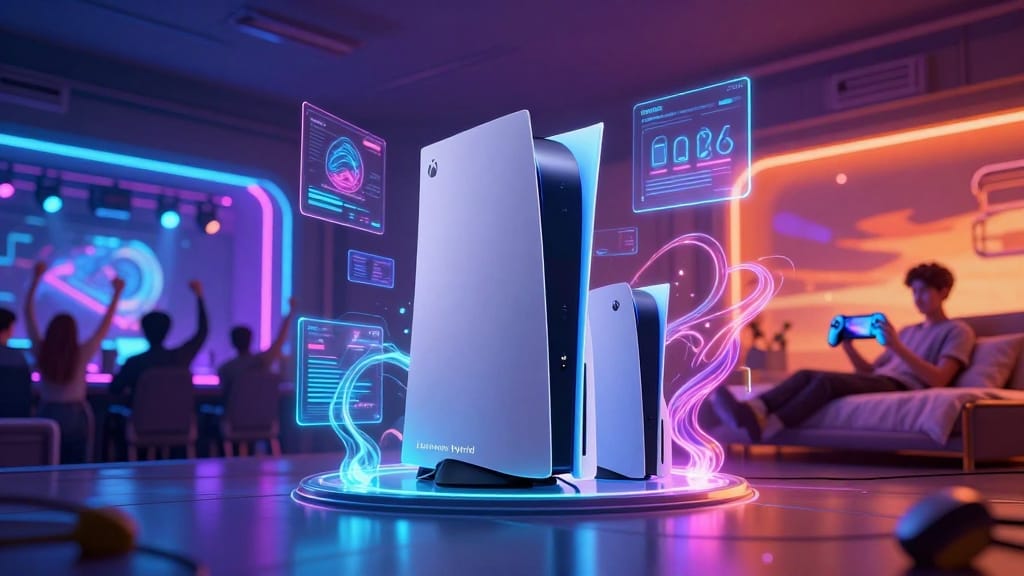
For years, the "Console War" has been the ultimate toxic playground for people who make a corporation their entire personality. But in 2026, we’re starting to see real, undeniable cracks in the walls between platforms. While Sony and Microsoft keep their first-party titles close to their chests (mostly to keep those shareholders from having a meltdown), the community is taking matters into its own hands. In one of the most insane, galaxy-brain builds I’ve seen this decade, a Chinese modder named 小宁子 XNZ actually solved the "which console should I buy" dilemma by hand-crafting the "Ningtendo PXBOX 5." As reported by Tom's Hardware, this absolute beast of a machine crams a PS5, Xbox Series X, and the highly anticipated Switch 2—which is basically the Holy Grail of 2026—into a single custom chassis using traditional lost-wax casting. Is it overkill? Obviously. Is it legendary? 100%. It’s a literal physical manifestation of our collective frustration: gamers just want to play everything in one place without needing a massive entertainment center that looks like a server room for three different boxes.
But the hardware evolution isn't just about these Frankenstein's monsters built by geniuses; it’s about the games that define these machines. 2026 is shaping up to be a total banger year for releases, assuming we don't see another wave of "delay-itis." If you're trying to track your ever-growing backlog (and let's be real, it's already a lost cause), PCMag has a full breakdown of the hottest titles dropping for PC, PS5, and the Switch 2 this year. We’re seeing a massive shift where developers are pushing Unreal Engine 5 to its absolute breaking point, though not everyone in the creative world is clapping. Pirates of the Caribbean director Gore Verbinski recently went on a bit of a tear, blaming video game engines like Unreal Engine for what he considers "terrible" modern CGI in films. It’s a spicy take, but it highlights a critical intersection: the line between gaming tech and Hollywood has been completely obliterated. This matters because as game engines become the standard for film VFX, we run the risk of every movie looking like a pre-rendered cutscene. It’s great for speed, but maybe not so great for that "soul" filmmakers are always crying about. If everything looks like a video game, does anything feel real anymore?
The implications of this are huge. We’re reaching a point where the hardware is no longer the bottleneck—it’s the human imagination (and maybe the electricity bill). The Ningtendo PXBOX 5 uses a shared 250W power supply, proving that efficiency is starting to catch up with raw power. For the average gamer, this means the future might not be about buying a new "box" every seven years, but rather a central hub that delivers content regardless of the logo on the front. We are seeing a move toward "hardware agnosticism," even if the big three are kicking and screaming the whole way. When a modder can build an all-in-one unit that works, it makes the corporate-mandated exclusivity feel more like a forced inconvenience than a badge of honor. As we move further into 2026, expect more "Pro" console refreshes and handhelds that try to be your one-and-only portal into the digital realm.
Subscription Shifts and the Rise of "Free" Cloud Gaming
If you're an Xbox Game Pass sub like me, you know that the "Leaving Soon" section is a total vibe-killer. It’s like watching your favorite roommates move out without warning. According to TrueAchievements, we’re losing seven more titles this month, including the atmospheric Citizen Sleeper 2 and the chill-yet-stressful 涼しい山: Snow Riders (Lonely Mountains). It’s the classic "rent-not-own" struggle that defines our modern era. You don't own your games; you're just paying for an all-access pass to a digital library that can change its mind whenever it feels like it. However, Microsoft is trying to balance the scales by bringing in the heavy hitters to keep us from canceling. Pure Xbox notes that Ubisoft’s open-world epic Star Wars Outlaws has finally hit the service. This is a massive win for anyone who wanted to live their best scoundrel life but didn't want to drop seventy bucks on a game that might have been riddled with day-one bugs. Getting a AAA Star Wars title on a sub service is peak 2026 energy.
But the real earthquake in the subscription space isn't just about what games are there—it's about how you access them. We've been hearing whispers, and now they're getting loud: there's a leaked "Free" tier for Xbox Cloud Gaming on the horizon. As reported by GameRant, an ad-supported version with a one-hour limit could be coming soon. Think of it like Spotify but for Halo. This is a literal game-changer for accessibility. If you can’t afford a $500 Series X, you might soon be able to stream games to your phone or a cheap laptop just by sitting through a few thirty-second ads for laundry detergent or the latest Marvel movie. For "noobs" who haven't touched a controller since the Wii era, this is the lowest barrier to entry the industry has ever seen. It’s Microsoft’s "Trojans Horse" strategy: get them in the door with free play, then hook them on the convenience of the cloud.
Meanwhile, the mobile front is still dominated by the absolute unit that is gacha gaming. If you think the "real" gaming happens on PC, your wallet clearly hasn't met the Umamusume fanbase. If you're wondering should you pull for Fine Motion in Umamusume: Pretty Derby, the technical deep dives over at Yahoo Tech show just how much math and strategy go into these "waifu collectors." This is a critical point: the gaming industry's financial health in 2026 isn't just propped up by $70 blockbusters. It’s fueled by the long-tail engagement of mobile and live-service games that people play for years. Whether it’s pulling for a horse girl or grinding for a lightsaber skin, the subscription and microtransaction models are merging into a single, massive "lifestyle" expense for many gamers. The impact on stakeholders is clear: developers are shifting toward games that can be "infinite," which sometimes leads to the "grindfest" games we love to hate. But hey, as long as it’s "free" to start, we keep coming back for more, don't we? GG, Microsoft, you've figured out our weaknesses.
Streaming Wars: From Spider-Man to Hyper-Niche Content
Outside of the direct gaming world, the battle for our eyeballs—and our monthly subscription fees—is getting more intense than a final circle in Warzone. Sony is playing a very different game compared to Disney or Microsoft. Instead of burning billions to launch their own massive streaming service (remember the failure of PlayStation Vue? RIP), they’re sticking with the "arms dealer" strategy. Gizmodo reports that Sony and Netflix are extending their partnership, which means Netflix keeps the first-run rights to Sony's entire film slate. This is absolutely massive for Marvel fans and gamers alike. As NoobFeed points out, this "Spider-Man picking a side" move is going to dictate where major comic book and game-related properties live for the next decade. If you want Miles Morales or Peter Parker on your screen after they leave the theater, you’re staying subscribed to Netflix. It’s a symbiotic relationship that keeps Sony’s content relevant without the overhead of maintaining a platform.
This matters because the "cross-media" push is at an all-time high. We aren't just playing The Last of Us; we're watching it on HBO. We aren't just playing Fallout; we're streaming it. If you're waiting for the next big theatrical hit like James Cameron’s Avatar: Fire and Ash to hit your TV so you can pause it and look for hidden details, Forbes is already tracking the windows for when it will land on streaming services. The delay between the "big screen" and the "home screen" is shrinking, and for gamers who are used to instant gratification, this is a welcome trend. We’re seeing a world where a game release and a movie release are timed to create a "culture bomb" that takes over social media for weeks at a time.
But the fragmentation is also getting a bit ridiculous. It’s not just movies anymore; live sports and hyper-specific niche content are keeping us glued to our screens. Whether it’s hardcore fans following the UNC Wilmington vs. Drexel women’s basketball matchup or people diving into "fact-driven storytelling" through documentary-focused streaming services, the era of the "one app to rule them all" is dead and buried. We are now in the age of hyper-specific niche subscriptions. For gamers, this means your "lifestyle budget" is being attacked from five different directions. You need Game Pass for your titles, Netflix for your shows, and maybe a specialized app for your favorite esports or documentaries. The future implication? "Subscription Burnout" is very real, and we might see a massive "Great Consolidation" by 2027 where these services start merging just to survive the churn.
The Business of "Niche" and the Tipping Point of Playtime
Let’s talk about something that’s actually making more money than some of your favorite AAA studios: Warhammer. What used to be a hobby for "people who paint tiny plastic men in their basements" (no shade, I love them) is now a financial nuclear reactor. The Guardian describes it as a £6bn success story, with revenues rising by 10.9% recently. It’s proof that in 2026, "niche" is the new mainstream. Between the Space Marine games and the upcoming Henry Cavill cinematic universe, Warhammer is everywhere. It shows that when you treat a community well and give them deep, complex lore, they will basically hand you their entire bank account. The same logic applies to the digital gambling side of gaming; Casino.org reports that New Jersey set yet another annual revenue record in 2025, largely driven by the explosive growth of iGaming. People aren't just playing for high scores anymore; they're playing for high stakes, and the industry is more than happy to cash those checks.
But with all this growth, the universe is trying to send us a warning. I know, I know—we love our 12-hour Saturday marathons where we forget to drink water or see sunlight. But there’s a literal biological limit to how much we can grind. According to a heavy-hitting study highlighted by ScienceDaily, researchers have found a definitive "tipping point" for gaming and health. The data suggests that students and young adults who game more than 10 hours a week often suffer from significantly poorer sleep, worse diets, and higher body weight. This "High Gamer" risk category isn't just about being a "basement dweller" stereotype; it’s about how sedentary lifestyles affect our brain chemistry and physical health. This is echoed by Outlook Respawn, which warns that crossing that 10-hour-a-week threshold is where the negative physical impacts really start to ramp up.
This is honestly a huge wake-up call for the industry. If the "whales" who spend the most money are also the ones whose health is deteriorating the fastest, that’s a bad long-term business model. We’re starting to see "digital wellness" features being built directly into consoles—not just those annoying "please take a break" messages, but actual gameplay mechanics that reward you for taking downtime. The 10-hour rule is something we all need to keep in the back of our heads. It’s a bummer, but GG to the scientists for looking out for our physical frames. We can't carry our teams if we're too tired to hold the controller, right? The future of gaming might actually be about *less* time, but *higher quality* experiences. Quality over quantity, people!
The Industry Grinds On: Trends and Tired Tropes
Despite all the billions of dollars and the fancy hardware that can ray-trace a glass of water from three rooms away, we aren't exactly living in a "Golden Age" of player satisfaction. GameRant recently went off on the "most frustrating trends" in the industry, and honestly? No lies were detected. We're still dealing with predatory microtransactions that feel like they were designed by a casino architect, and the "Early Access" plague where games stay in development hell for five years while the devs sell you $20 skins. We’re also seeing a lot of "copycat" culture that’s making the Steam front page look like a hall of mirrors. While some games do it right—like the best games like Mortal Kombat that actually improve on the fighting formula—others feel like lazy cash-grabs trying to ride the coattails of whatever went viral on TikTok last week.
Even the most dedicated fans—the "collectors" who usually buy everything—are starting to get picky. One gamer shared a sentiment on EZDLC that hit me right in the feels: they have "enough racing games to last a while," specifically citing the loss of beloved, authentic series like Project Cars as a reason for being more selective. This is a huge trend for 2026: **Selectivity.** We are no longer buying every game that drops. We are looking for depth, for soul, and for developers who don't treat us like a walking ATM. The "Forever Game" (think Fortnite, Roblox, or Destiny 2) is great, but it’s making it harder for new, creative indie titles to get the oxygen they need to survive. We're in a survival-of-the-fittest era where only the most polished or the most "viral" games make it to the top of the charts.
As we wrap our heads around the 2026 landscape, the narrative is clear: we are in a period of consolidation, health consciousness, and technical hybridity. Between Microsoft's aggressive push into ad-supported streaming to capture the "casual" market and the massive licensing deals that are turning movies into 100-hour interactive experiences, the industry is trying to find its new equilibrium. For us players, the challenge remains the same: finding the balance between the RNG of our real lives and the grind of our favorite digital worlds. We've got more choices than ever, but less time to enjoy them. It's a paradox, but it's one we're willing to live through as long as the games keep getting better.
So, what’s the final verdict for 2026? It’s a year of transition. We’re seeing the birth of truly platform-agnostic gaming through cloud tech and modder ingenuity. We’re seeing a massive financial bloom for tabletop and niche hobbies that have finally escaped the "nerd" stigma to become cultural foundations. But we're also being told to go outside and touch grass once in a while by the scientific community. My advice? Get that "Switch 2" (if you can find one that isn't being sold by a scalper for $1,000), try out that ad-supported cloud tier if you're on a budget, and for the love of everything holy, watch your 10-hour weekly limit. We need you healthy for the raids, okay? The future is bright, it’s high-resolution, and it’s probably going to try to sell you a battle pass—but it’s still the best time to be a gamer. Stay safe, stay hydrated, and stay winning. GG everyone!